Yazılar

Panasonic Boosts Battery Unit Outlook, Unveils Profitability Reform Plan

Panasonic Holdings has raised its full-year earnings forecast for its energy division, which supplies batteries to Tesla, citing strong sales of energy storage systems and improved profitability at its U.S. battery plant. The revised outlook increases the segment’s expected earnings by 14% to 124 billion yen ($798.35 million), following a 39% rise in operating profit during the third quarter.

The company also announced a new management reform plan, aiming to boost group profitability by over 300 billion yen ($1.93 billion) and achieve a return on equity above 10% by the fiscal year ending March 2029. It plans to improve profitability by 150 billion yen by fiscal 2026 and another 150 billion yen by fiscal 2028.

Panasonic’s energy unit benefited from higher sales of energy storage systems and lower material costs, offsetting an overall decline in automotive battery sales. Reduced production in Japan and increased costs related to a new U.S. battery plant and a renovated facility in Japan’s Wakayama prefecture impacted operations.

Expanding its North American footprint, Panasonic Energy currently operates a battery plant in Nevada supplying Tesla and is set to open a second U.S. facility in Kansas this year. The segment reported third-quarter operating income of 42 billion yen ($270.46 million).

Despite industry-wide concerns over slowing EV demand, Panasonic has retained its full-year profit forecast of 380 billion yen for the entire group. It continues to compete with major Asian battery makers, including China’s CATL and South Korea’s LG Energy Solution, the latter of which recently announced plans to cut capital expenditure by up to 30% due to weakening EV demand.
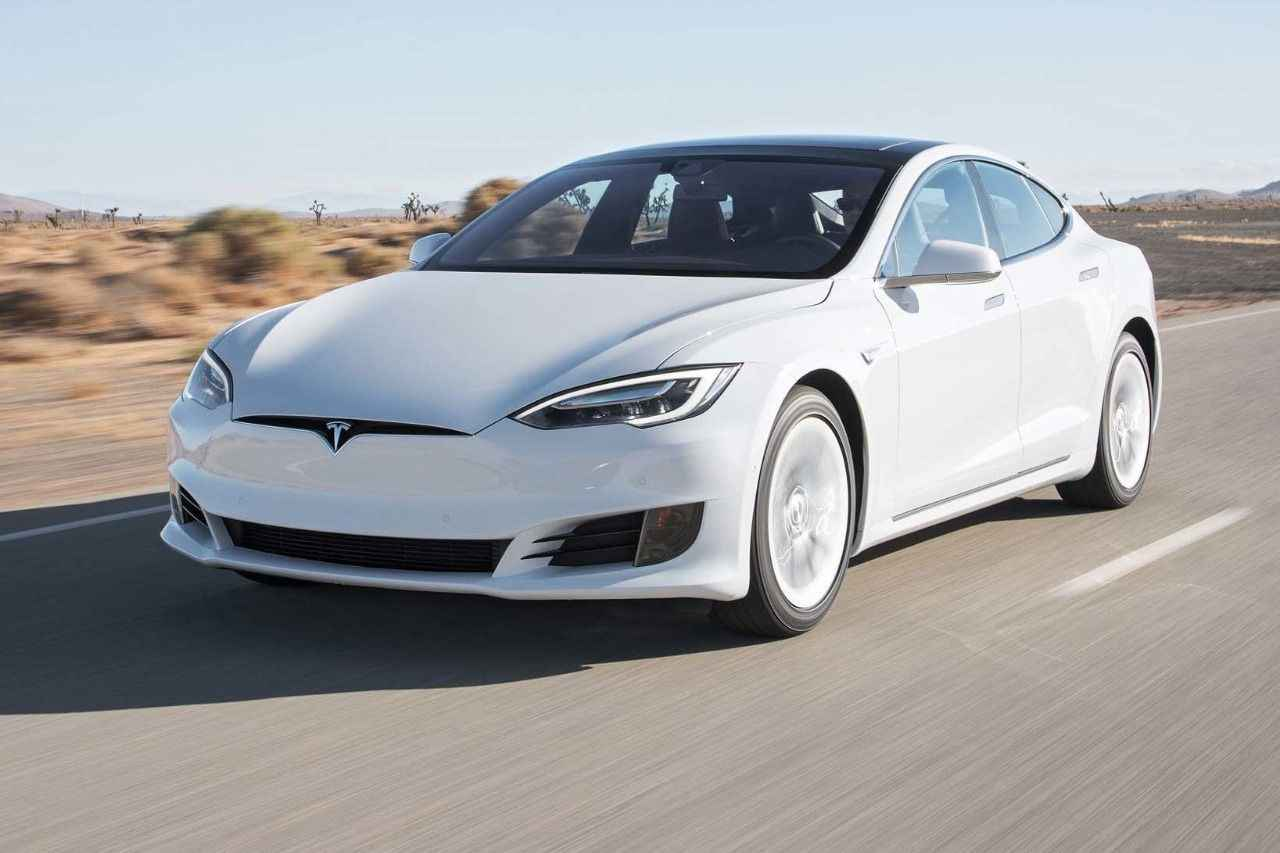
 

Tesla Shares Rise as Musk Promises Cheaper EVs and Autonomous Ride-Hailing

Tesla shares climbed more than 2% on Thursday after CEO Elon Musk announced plans to launch lower-cost electric vehicles (EVs) in the first half of 2025 and begin testing an autonomous ride-hailing service in June. These commitments helped investors look past a weaker-than-expected fourth quarter, which saw declining revenue and shrinking margins due to delayed model upgrades and rising competition.

Despite Tesla’s first annual decline in deliveries in 2024, the company assured investors that its vehicle business would return to growth in 2025. However, Tesla did not reaffirm Musk’s earlier forecast of a 20-30% sales increase for next year.

Morgan Stanley analysts noted that Tesla is shifting from being a traditional automotive company to a diversified player in AI and robotics. Investors remain optimistic, especially as Musk’s support for U.S. President Donald Trump could lead to more favorable regulatory conditions for Tesla’s robotaxi ambitions.

Musk revealed that Tesla will begin unsupervised testing of its autonomous ride-hailing service in Austin, Texas, though he did not provide specific details on how it would function. The company also did not share pricing details for its upcoming affordable EV models.

If Tesla’s stock gains hold, its market value could rise by approximately $28 billion. The stock surged 62.5% in 2024 and is currently trading at 118 times its 12-month forward earnings, significantly higher than Ford (6.07) and General Motors (4.48).

At least 19 brokerages have raised their price targets for Tesla stock, with a median target of $300, up from $278 at the end of December. Analysts believe that Tesla’s growth will be fueled by Full Self-Driving technology and the introduction of an affordable EV. However, some experts remain cautious about Musk’s timeline for launching robotaxis, citing regulatory challenges, particularly in Europe and China.

Tesla also announced an increase in its capital expenditure forecast, expecting to spend over $11 billion in 2025 and the following two fiscal years.


Hyundai Launches $18,000 EV in Japan to Target Market Dominated by Local Brands

Hyundai Motor has unveiled its plans to introduce the affordable Inster compact electric vehicle (EV) in Japan, priced at 2.85 million yen ($18,000). This marks the cheapest electric vehicle in Japan’s compact car market and is part of Hyundai’s strategy to penetrate a market long dominated by local giants like Toyota, Honda, and Nissan, who have well-established petrol and hybrid vehicle technologies.

The Inster, which debuted in Europe last year and was originally launched in South Korea as the Casper Electric, aims to appeal to Japanese consumers by offering an EV at a lower price point than competitors. For instance, BYD’s Dolphin, launched in 2023, is priced at 3.63 million yen, making Hyundai’s new model a more cost-effective alternative. Deliveries of the Inster in Japan are set to begin in May, as announced by Hyundai Mobility Japan CEO Toshiyuki Shimegi during the Tokyo Auto Salon.

The Japanese EV market has been slow to adopt electric vehicles, with the Nissan Sakura, the most popular EV in Japan, priced at 2.60 million yen, seeing a 40% sales drop last year, with fewer than 23,000 units sold. Despite this, Japan’s passenger car market remains sizable, with approximately 4 million vehicles sold annually.

Hyundai, which has set a goal to increase its sales in Japan by tenfold over the next five years, has faced stiff competition in the market. In 2024, Hyundai sold only 607 vehicles in Japan, while BYD sold 2,223 units. Hyundai’s return to Japan’s passenger car market in 2022, focusing exclusively on electric and fuel-cell vehicles, follows its exit in 2009 due to low sales. The Inster is expected to play a pivotal role in helping Hyundai gain recognition and grow its presence in the Japanese market, a sector largely dominated by Toyota and other local manufacturers.