Yazılar

Rights Advocates Raise Concerns Over U.S. Plan to Use AI for Student Visa Revocation

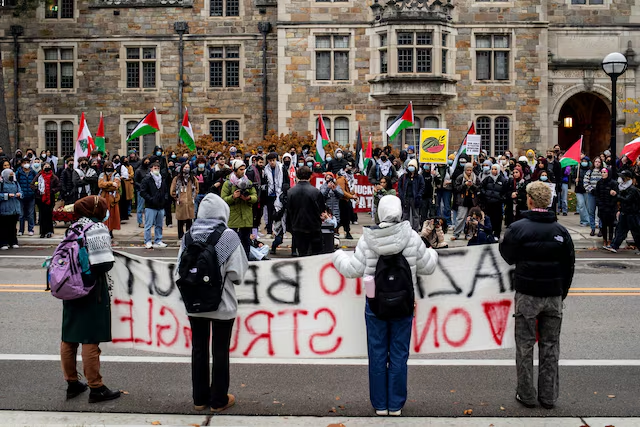
Rights advocates, including free speech groups, have expressed concerns after reports surfaced that the U.S. State Department plans to use artificial intelligence (AI) to revoke the visas of foreign students accused of supporting Palestinian Hamas militants. The initiative, dubbed “Catch and Revoke,” is set to involve AI-assisted reviews of social media accounts belonging to tens of thousands of student visa holders.

This move has raised alarm among groups like the Foundation for Individual Rights and Expression (FIRE) and pro-Palestinian organizations. They argue that AI cannot accurately assess the nuances of expressions related to the highly complex and long-standing Israeli-Palestinian conflict. They also warn that relying on AI for such sensitive matters could infringe on First Amendment rights to free speech and assembly.

According to reports, the State Department is reviewing news reports of anti-Israel demonstrations and lawsuits alleging antisemitism related to foreign nationals. Fox News additionally reported that the department had revoked the visa of a student involved in what it described as “Hamas-supporting disruptions.”

Sarah McLaughlin, a scholar at FIRE, emphasized that AI tools are incapable of grasping the subtleties of political expression concerning the Israeli-Palestinian conflict. The American-Arab Anti-Discrimination Committee called the reported plan an “alarming erosion of constitutionally protected free speech and privacy rights.”

While the State Department did not comment directly, Secretary of State Marco Rubio stated that the U.S. has “zero tolerance for foreign visitors who support terrorists,” reaffirming that violations of U.S. law, including by international students, could lead to visa denial, revocation, and deportation.

This initiative follows actions by the Trump administration, which has taken a hard stance on pro-Palestinian protests, including pledging to deport non-citizen students involved in such protests. Additionally, Trump has threatened to cut federal funding to educational institutions that allow what he deems illegal protests.

The broader context involves the U.S. designating Hamas as a “foreign terrorist organization,” following the group’s deadly October 2023 attack that killed over 1,200 people. Israel’s subsequent military actions in Gaza have led to significant casualties and displacement, further intensifying global debate.

Key Quotes from US Vice President JD Vance’s AI Speech at the Paris Summit

U.S. Vice President JD Vance delivered his first major international speech on Tuesday, outlining the artificial intelligence (AI) policies of the Trump administration. Emphasizing innovation, deregulation, and the protection of free speech and U.S. workers, Vance positioned AI as the dawn of a new industrial revolution. Below are key quotes from his address:

  • “I’m not here this morning to talk about AI safety, which was the title of the conference a couple of years ago. I’m here to talk about AI opportunity.”
  • “The Trump administration believes that AI will have countless revolutionary applications in economic innovation, job creation, national security, health care, free expression, and beyond. To restrict its development now would not only unfairly benefit incumbents in this space, but it would mean paralyzing one of the most promising technologies we have seen in generations.”
  • “This administration will ensure that American AI technology continues to be the gold standard worldwide, and we are the partner of choice for other foreign countries and certainly businesses as they expand their own use of AI.”
  • “Excessive regulation of the AI sector could kill a transformative industry just as it’s taking off. We’ll make every effort to encourage pro-growth AI policies, and I’d like to see that deregulatory flavor making its way into a lot of the conversations at this conference.”
  • “We feel very strongly that AI must remain free from ideological bias, and that American AI will not be co-opted into a tool for authoritarian censorship.”
  • “The Trump administration will maintain a pro-worker growth path for AI, so it can be a potent tool for job creation in the United States.”
  • “The United States of America is the leader in AI and our administration plans to keep it that way.”
  • “America wants to partner with all of you. We want to embark on the AI revolution before us with the spirit of openness and collaboration. But to create that kind of trust, we need international regulatory regimes that foster the creation of AI technology rather than strangle it, and we need our European friends in particular to look to this new frontier with optimism.”
  • “The Trump administration is troubled by reports that some foreign governments are considering tightening screws on U.S. tech companies with international footprints. America cannot and will not accept that, and we think it’s a terrible mistake.”
  • “At this moment, we face the extraordinary prospect of a new industrial revolution. But it will never come to pass if over-regulation deters innovators from taking the risks necessary to advance the ball.”
  • “The Trump administration will ensure that AI systems developed in America are free from ideological bias and never restrict our citizens’ right to free speech.”
  • “We’ve also watched as hostile foreign adversaries have weaponized AI software to rewrite history, surveil users, and censor speech. Some authoritarian regimes have stolen and used AI to strengthen their military intelligence and surveillance capabilities.”
  • “We will always center American workers in our AI policy. We refuse to view AI as a purely disruptive technology that will inevitably automate away our labor force.”
  • “We must focus now on the opportunity to catch lightning in a bottle, unleash our most brilliant innovators, and use AI to improve the well-being of our nations and their peoples.”

Trump’s Executive Order on Free Speech Draws Criticism

On Monday, U.S. President Donald Trump signed an executive order aimed at restoring freedom of speech and ending censorship on online platforms. The order has sparked significant backlash, with critics pointing to Trump’s own controversial history regarding freedom of expression.

Key Points:

  • Purpose of the Order: Trump’s executive order is intended to address what he and his Republican allies have described as the suppression of free speech under the Biden administration, particularly in the context of social media platforms. The order is framed as a response to alleged censorship of political viewpoints and speech.
  • Criticism of Trump’s Past Actions: Critics have pointed out that Trump himself has a history of restricting free speech. Over the years, he has threatened and sued journalists, political opponents, and critics, often citing their comments as defamatory. His past actions, such as suing five media outlets including CNN and ABC News, and referring to journalists as the “enemy of the people,” have raised concerns about the authenticity of his commitment to free speech.
  • Legal Context: While Trump’s order seeks to address alleged censorship, the U.S. Supreme Court ruled in June that the Biden administration’s interactions with social media companies did not violate First Amendment rights. The federal government is already prohibited from interfering with citizens’ free speech, raising doubts about the impact of the new executive order.
  • Expert Opinion: University of California, Irvine, Professor David Kaye criticized the order as a “deeply cynical” public relations move. Kaye, a former UN Special Rapporteur on free speech, argued that the government is already restricted from interfering with First Amendment rights, and the order would not change that. He also questioned the consistency of Trump’s stance on free speech, noting the contradiction between his criticisms of the media and his supposed defense of free speech.