Yazılar

Exclusive: Micron to announce memory chip manufacturing investment in Singapore

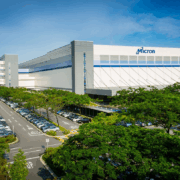
U.S. memory chipmaker Micron Technology is set to announce a new investment to expand memory chip manufacturing capacity in Singapore, according to sources familiar with the matter. The move comes as global industries face an acute shortage of memory chips driven by rapid expansion in artificial intelligence infrastructure and growing demand from consumer electronics.

Sources said the announcement could come as soon as Tuesday, with at least part of the investment expected to focus on NAND flash memory. Micron already has a significant manufacturing presence in Singapore, where it produces nearly all of its flash memory chips. The company is also building a $7 billion advanced packaging plant for high-bandwidth memory used in AI chips, which is scheduled to begin production in 2027.

The investment reflects intensifying competition among major memory producers as supply struggles to keep pace with demand. Rivals including Samsung and SK Hynix have announced new production lines and accelerated factory timelines, yet analysts warn the global memory shortfall could persist until late 2027.

Micron has also been exploring ways to boost output elsewhere. The company recently said it was in talks to acquire a fabrication site in Taiwan to expand DRAM wafer production, underscoring the scale of investment required to stabilize the memory market amid the AI boom.

Nvidia CEO Jensen Huang Reports Surging Demand for Blackwell Chips

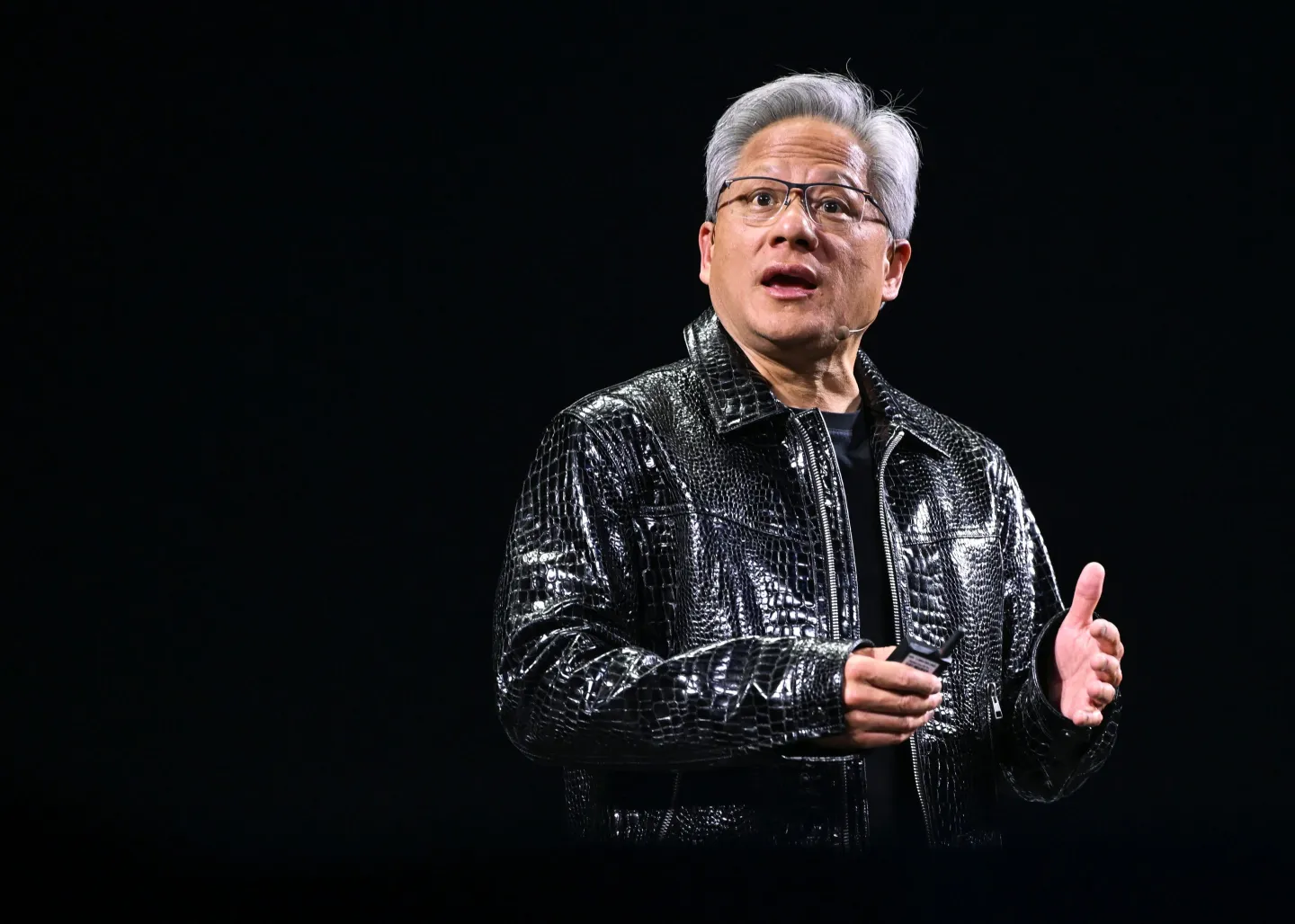
Nvidia CEO Jensen Huang said on Saturday that demand for the company’s cutting-edge Blackwell AI chips is “very strong,” as the semiconductor giant deepens its partnership with Taiwan Semiconductor Manufacturing Co (TSMC) to meet soaring global demand.

Speaking at an event hosted by TSMC in Hsinchu, Taiwan, Huang said Nvidia’s Blackwell platform — which integrates GPUs, CPUs, networking, and switching systems — requires an extensive supply of wafers and components. “We build the GPU, but we also build the CPU, the networking, the switches… there are a lot of chips associated with Blackwell,” he explained.

TSMC CEO C.C. Wei confirmed that Huang had “asked for wafers,” but declined to disclose quantities. “TSMC is doing a very good job supporting us,” Huang said, emphasizing that Nvidia’s record-breaking success “would not be possible without TSMC.”

In October, Nvidia became the first company to surpass a $5 trillion market value, prompting Wei to call Huang a “five-trillion-dollar man.”

When asked about supply challenges, Huang acknowledged there would be “shortages of different things,” though memory makers SK Hynix, Samsung, and Micron have expanded capacity to meet demand. Nvidia has already received next-generation memory samples from all three suppliers.

SK Hynix recently said it had sold out all production for 2026, forecasting a long-lasting chip “super cycle” driven by AI growth. Samsung is also in “close discussion” to supply HBM4 memory to Nvidia.

Huang reiterated that Nvidia has no active discussions to sell Blackwell chips to China, as U.S. restrictions remain in place.

China’s CXMT Plans $42 Billion Shanghai IPO to Fuel AI Chip Ambitions

ChangXin Memory Technologies (CXMT), China’s leading memory chipmaker, is preparing for a Shanghai initial public offering (IPO) as early as the first quarter of 2026, targeting a valuation of up to 300 billion yuan ($42.1 billion), according to sources familiar with the matter. The listing would mark one of China’s largest tech IPOs in years and a major step in Beijing’s drive for semiconductor self-sufficiency.

Founded in 2016 with state backing, CXMT is China’s main producer of dynamic random access memory (DRAM) chips — a market long dominated by Samsung, SK Hynix, and Micron Technology. The company aims to raise between 20 billion and 40 billion yuan, two sources said, while a third suggested about 30 billion yuan, with a prospectus possibly unveiled in November.

CXMT’s IPO plans come amid a surge in Chinese semiconductor stocks, with the CSI CN Semiconductor Index up nearly 49% this year. The firm has already begun pre-IPO “counselling” procedures with China International Capital Corporation and CSC Financial, both state-backed investment banks.

The proceeds will help finance CXMT’s aggressive push into high bandwidth memory (HBM) — an advanced form of DRAM critical for AI chips and data center processors such as those used in Nvidia’s GPUs. The company is building an HBM packaging plant in Shanghai, targeting initial production by late 2025 and mass output of HBM3 chips by 2026.

CXMT’s expansion is especially vital after U.S. trade restrictions cut off China’s access to advanced HBM chips last year. Analysts at TechInsights estimate the firm’s capital expenditure at $6–7 billion across 2023–2024, with a further 5% increase in 2025. The company’s initial HBM wafer capacity will reach about 30,000 per month, roughly one-fifth that of SK Hynix.

If successful, the IPO could attract heavy domestic investor demand, seen as both a financial opportunity and a patriotic play in China’s race to achieve technological independence.