Yazılar

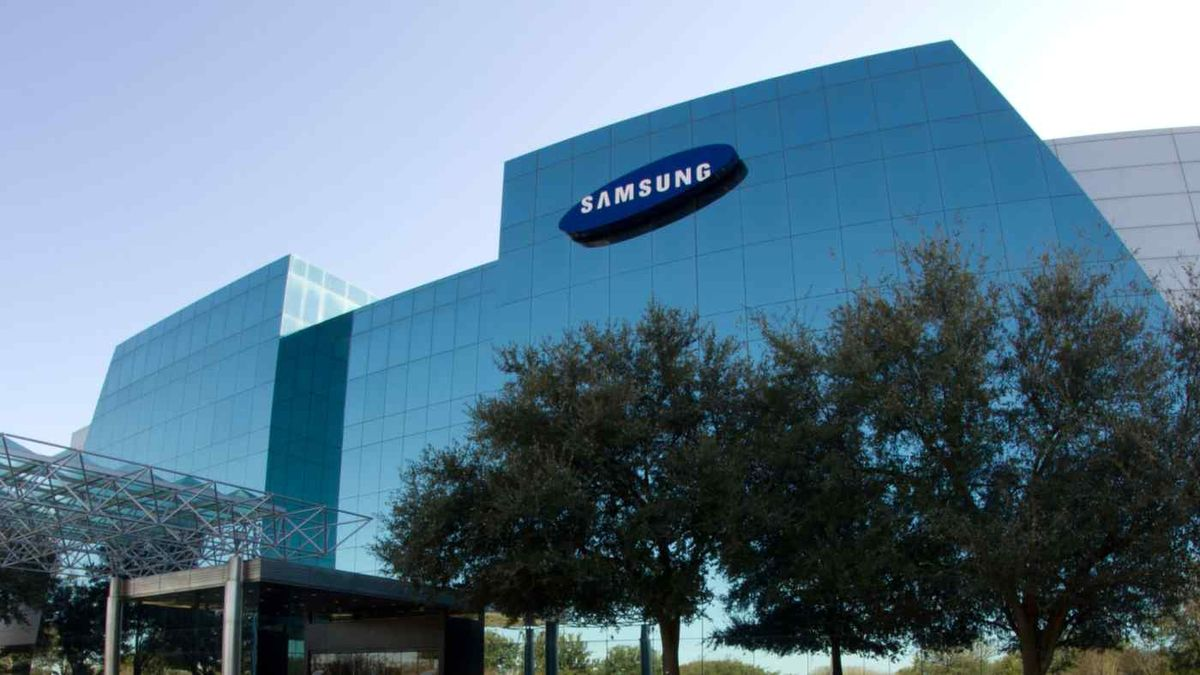
Samsung Profit Plunges 56% Amid AI Chip Woes, U.S. Export Curbs to China

Samsung Electronics reported a steep 56% year-on-year drop in Q2 operating profit, projecting earnings of 4.6 trillion won ($3.36 billion)—significantly below analyst expectations of 6.2 trillion won, according to LSEG SmartEstimate. This marks Samsung’s weakest quarterly performance in six quarters, as its semiconductor division continues to struggle with shifting global dynamics in the AI chip market.

The South Korean tech giant blamed its sharp decline on U.S. restrictions on AI chip exports to China, which have disrupted its sales pipeline. However, analysts pointed to delays in delivering high-bandwidth memory (HBM) chips to Nvidia as a major factor in its underperformance. Unlike rivals SK Hynix and Micron, which have seen strong AI-driven chip demand, Samsung has been slower to supply its latest HBM3E 12-layer chips, with customer evaluations still ongoing and no specific update on Nvidia shipments.

“Everything ultimately comes back to HBM,” said Ryu Young-ho, an analyst at NH Investment & Securities, noting that Samsung’s competitive edge hinges on reclaiming leadership in the HBM segment.

Revenue for the quarter is expected to come in nearly flat at 74 trillion won, down just 0.1% from a year ago. But the semiconductor division likely took the hardest hit, with analysts estimating its operating profit may have dropped over 90% to just 500 billion won, partly due to inventory value adjustments and unsold HBM stockpiles.

Adding to the challenges, potential U.S. tariffs and mounting competition in China—where Samsung still has a heavy market presence—are expected to weigh on both its chip and smartphone margins in the near term.

Samsung’s foundry business also saw falling earnings, attributed to low utilisation rates and inventory write-downs, stemming from the same U.S. AI chip export restrictions. However, the company expects foundry performance to gradually improve in the second half of 2025 as utilisation recovers with demand.

Despite the weak outlook, Samsung announced a 3.9 trillion won ($2.85 billion) share buyback, part of a broader 10 trillion won repurchase plan unveiled in late 2024. Investors remained cautious, with Samsung shares slipping 0.2%, while Korea’s benchmark KOSPI index rose 1.2% during morning trading.

Looking ahead, Samsung hopes to recover with upcoming phone launches and by expanding HBM sales beyond Nvidia to other customers. A full breakdown of business unit performance is expected on July 31, when the company releases its detailed Q2 earnings report.

Samsung Electronics Faces 39% Drop in Q2 Profit Amid Weak AI Chip Sales

Samsung Electronics is expected to report a 39% decline in its second-quarter operating profit, largely due to delays in supplying advanced memory chips to AI chip leader Nvidia, industry analysts said. The South Korean tech giant is forecast to announce an operating profit of 6.3 trillion won ($4.62 billion) for April to June, marking its lowest earnings in six quarters, according to LSEG SmartEStimate.

This downturn has raised concerns about Samsung’s ability to compete with rivals like SK Hynix and Micron in the rapidly growing market for high-bandwidth memory (HBM) chips used in artificial intelligence data centers. While its competitors have seen strong demand, Samsung’s growth has been limited by its heavy reliance on the China market, where U.S. export restrictions have curbed sales of advanced chips.

Analysts point out that Samsung’s latest HBM chips, specifically the HBM3E 12-high version, have not yet received Nvidia’s certification, slowing supply to the U.S. AI chip leader. Ryu Young-ho, senior analyst at NH Investment & Securities, noted that Samsung’s shipments to Nvidia are unlikely to be significant in 2025. Samsung has, however, started supplying the new chip to AMD since June.

Despite challenges in the chip segment, Samsung’s smartphone sales remain steady, supported by stockpiling ahead of potential U.S. tariffs on imported devices. Nonetheless, ongoing U.S. trade policies, including proposed tariffs on non-U.S.-made smartphones and possible restrictions on technology exports to Samsung’s Chinese plants, continue to create business uncertainty.

Samsung’s shares have underperformed this year compared to the KOSPI index, rising about 19% against the KOSPI’s 27.3% increase. As of Monday, Samsung shares dipped 1.9%, while the KOSPI rose 0.3%.

Trump Administration Renegotiates Biden-Era Chips Act Grants, Says Commerce Secretary Lutnick

The Trump administration is actively renegotiating semiconductor manufacturing grants originally awarded under the Biden-era CHIPS and Science Act, according to U.S. Commerce Secretary Howard Lutnick. Speaking before the Senate Appropriations Committee on Wednesday, Lutnick indicated that some of these awards may be significantly altered or even cancelled as part of efforts to secure better terms for U.S. taxpayers.

“Some of the Biden-era grants just seemed overly generous, and we’ve been able to renegotiate them,” Lutnick told lawmakers, emphasizing that the renegotiations aim to deliver greater value to the American public. “All the deals are getting better, and the only deals that are not getting done are deals that should have never been done in the first place.”

$52.7 Billion CHIPS Act Under Review

The $52.7 billion CHIPS and Science Act, signed by President Biden in 2022, was designed to bolster domestic semiconductor manufacturing and reduce reliance on Asia, particularly Taiwan and South Korea. Under the program, billions of dollars in grants were awarded to both U.S. and foreign chipmakers, including Taiwan’s TSMC, South Korea’s Samsung and SK Hynix, as well as U.S.-based Intel and Micron.

Though many of these awards were signed before Biden left office, most of the funds have yet to be fully disbursed. The grant payments are generally structured to be released as companies meet specific production and investment milestones tied to their U.S. plant expansions.

TSMC Award Revised Amid Expanding U.S. Investment

Lutnick cited Taiwan Semiconductor Manufacturing Co. (TSMC) as an example of successful renegotiation. Under the original agreement, TSMC was awarded $6 billion to support its U.S. manufacturing expansion. Lutnick revealed that TSMC subsequently increased its planned investment from $65 billion to $165 billion, while still receiving the same $6 billion in federal funds.

Although TSMC confirmed in March that it would invest an additional $100 billion in the U.S., the company has not commented on whether the new investment was directly tied to renegotiated CHIPS Act terms.

White House Seeking Delays and New Terms

The renegotiation efforts are not new. In February, Reuters reported that the White House was already seeking to renegotiate several awards and delay some upcoming disbursements to ensure better returns on government spending.

Lutnick’s comments suggest that the Trump administration intends to continue scrutinizing past agreements to maximize taxpayer value and may block deals it deems wasteful or excessive.

AI Computing Capacity Also a Focus

During the hearing, Lutnick also addressed concerns about the global race for artificial intelligence computing capacity. He emphasized the administration’s commitment to ensuring that over 50% of global AI compute power remains based in the United States. This statement comes amid criticism of a Trump administration deal allowing the United Arab Emirates to purchase advanced American AI chips, raising fears about exporting critical technology.