Yazılar

Russian Spacecraft Odor Forces Brief Lockdown on ISS Module

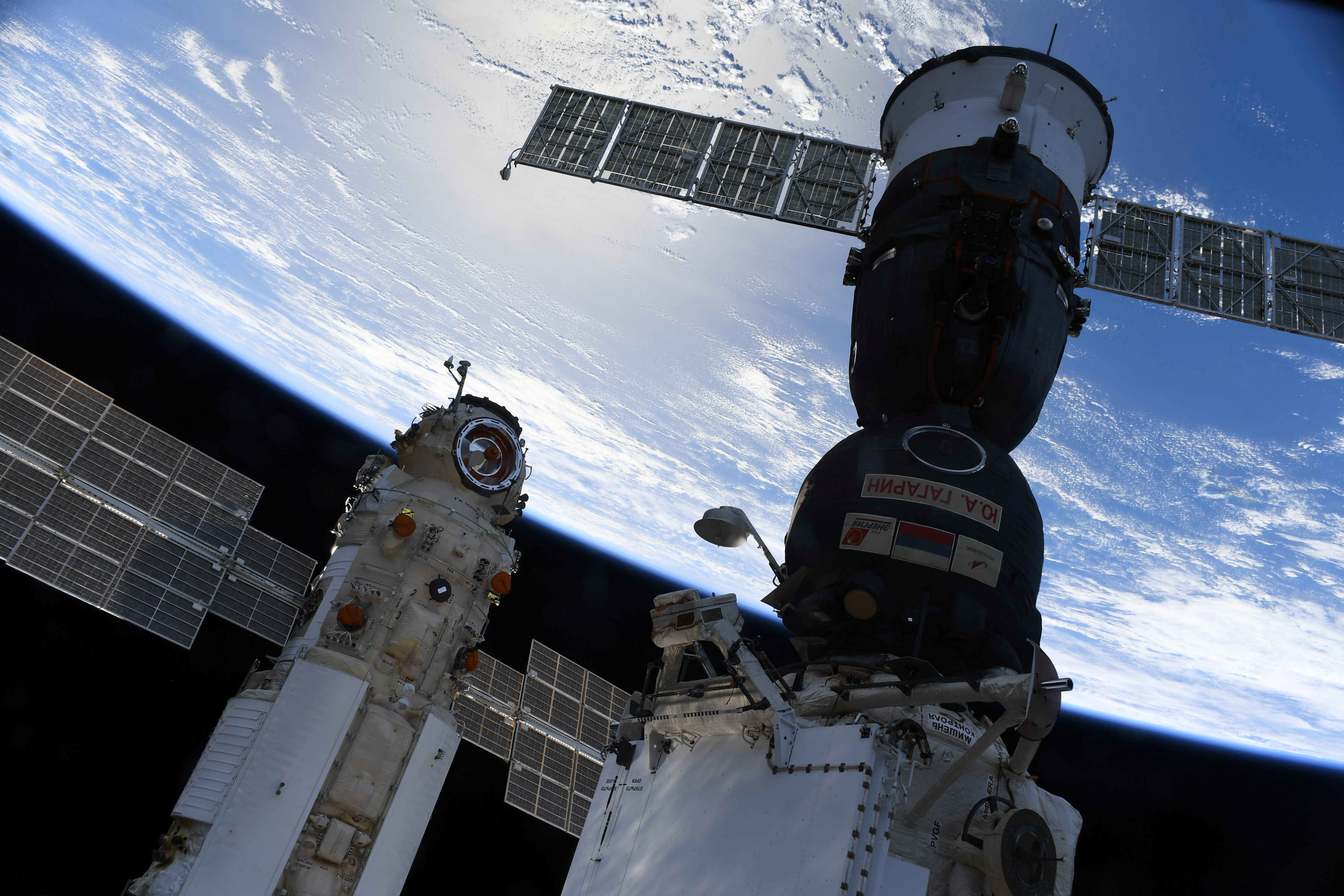
A recent incident on the International Space Station (ISS) prompted Russian cosmonauts to briefly seal off part of the station after detecting an “unusual odor” emanating from the Russian Progress 90 cargo spacecraft. This occurred over the weekend, with NASA reporting the situation on Sunday.

According to NASA, the smell, accompanied by “droplets” observed by the cosmonauts, was likely due to “outgassing” from materials inside the Progress capsule. NASA clarified that the issue was not related to the spacecraft’s fuel—unsymmetric-dimethylhydrazine and nitrogen tetroxide—which is highly toxic to humans. Instead, it stemmed from materials within the spacecraft that had been exposed to the harsh conditions of space.

Kelly O. Humphries, NASA’s news chief at Johnson Space Center, reassured that there were no immediate safety concerns for the crew. “Outgassing” is a common occurrence in space when materials release gases in the absence of Earth’s atmosphere, and the extreme temperatures and radiation of space exacerbate this effect.

Once the unusual odor was detected, the cosmonauts quickly shut the hatch connecting the Poisk module to the rest of the ISS. Ground control teams then activated air scrubbers as part of standard protocol, which helped clear the air inside the station. NASA confirmed that air quality remained normal and that cargo transfer operations continued as planned.

The uncrewed Progress 90 spacecraft, which arrived on November 21 from the Baikonur Cosmodrome in Kazakhstan, was carrying essential supplies including food, fuel, and scientific materials. Despite the odor-related setback, the cosmonauts were able to access the cargo without further delay.

This event adds to ongoing concerns about the Russian-controlled modules on the ISS, including the Zvezda module, which has been largely sealed due to a slow air leak. The ISS continues to operate as a joint venture between Russia, the United States, and several international space agencies, though Russia’s commitment beyond 2028 remains uncertain.

NASA’s Juno Spacecraft Reveals Breathtaking Images of Jupiter’s Storms and Moon Amalthea

NASA’s Juno spacecraft has once again provided stunning insights into the mysteries of Jupiter, offering up close and detailed images of the planet’s swirling storms and its intriguing moons. On October 23, 2024, Juno completed its 66th flyby of Jupiter, this time focusing on the planet’s polar regions. Among the highlights of this close encounter was a remarkable view of Jupiter’s fifth-largest moon, Amalthea. The spacecraft’s JunoCam captured these raw images, which were later enhanced by citizen scientists, revealing vibrant details of Jupiter’s complex atmosphere and its accompanying moon in unprecedented clarity.

One of the most striking images from Juno’s recent pass showcases a region on Jupiter known as the Folded Filamentary Region (FFR), located near the planet’s subpolar areas. These regions are characterized by their intricate cloud formations, including white, billowing clouds and delicate, thread-like filaments that swirl through Jupiter’s atmosphere. Citizen scientist Jackie Branc was responsible for processing this particular image, enhancing the colours and contrast to showcase the planet’s dynamic weather systems in breathtaking detail. The result is a vivid and detailed depiction of Jupiter’s stormy atmosphere, one that has never before been captured with such clarity.

Juno’s mission has not only provided fascinating images of Jupiter’s storms but has also opened up a collaborative space for both amateur and professional scientists. The spacecraft’s raw data, made publicly available, allows enthusiasts and researchers to adjust features like contrast and colour balance, providing new perspectives on the planet’s powerful weather patterns. These images have revealed everything from Jupiter’s characteristic atmospheric bands to its turbulent clouds and swirling vortices, offering a window into the planet’s ever-changing climate.

This ongoing collaboration between NASA and the global scientific community continues to yield exciting discoveries about Jupiter, a gas giant with a weather system that remains one of the most complex and active in our solar system. With every flyby, Juno brings back new details that enhance our understanding of the planet and its moons, helping to piece together the puzzle of how Jupiter’s atmosphere functions. These stunning images not only enrich our scientific knowledge but also fuel our fascination with the mysteries of space.

NASA’s Atmospheric Waves Experiment Detects Gravity Waves Triggered by Hurricane Helene Over Florida

On September 26, 2024, as Hurricane Helene unleashed its fury on Florida’s Gulf Coast, NASA’s Atmospheric Waves Experiment (AWE) aboard the International Space Station (ISS) captured a remarkable atmospheric phenomenon. The storm, which produced intense storm surges and affected communities along the coast, created gravity waves high above the Earth’s surface, approximately 55 miles in altitude. These waves, a rare sight from space, were detected as part of NASA’s ongoing research into space weather and its interactions with Earth-bound systems such as satellites, communication networks, and other technological infrastructure.

The AWE instrument, which was launched in November 2023, is designed to observe the impact of terrestrial weather events on the upper atmosphere. As the ISS passed over the southeastern United States during the height of Hurricane Helene, the AWE detected large, concentric gravity waves caused by the extreme conditions below. The waves, which are visually represented in red, yellow, and blue hues, illustrate changes in radiance within Earth’s mesosphere, offering a striking depiction of how violent weather events can send shockwaves into the higher layers of the atmosphere. The color enhancements in the imagery highlight variations in infrared brightness, helping to track the waves as they stretched westward from northern Florida.

Gravity waves, which are essentially ripples in the atmosphere caused by disturbances such as strong winds or storms, have a significant role in both weather and space weather dynamics. According to Ludger Scherliess, the Principal Investigator for NASA’s AWE at Utah State University, these waves are similar to the ripples that form when a pebble is dropped into a pond. By studying these atmospheric disturbances, scientists can gain a deeper understanding of how terrestrial weather phenomena, like hurricanes, influence the broader atmospheric system, including conditions that can affect satellite operations and communication systems in space.

This discovery underscores the critical role of atmospheric studies in understanding the intricate relationship between weather on Earth and space weather. The data collected by NASA’s AWE could potentially provide valuable information for improving the resilience of space-based technology during extreme weather events, highlighting the interconnectedness of our planet’s weather systems and the technology that relies on them. As scientists continue to monitor these gravity waves, it could open new pathways for protecting both terrestrial and space-based infrastructure from the effects of powerful storms like Hurricane Helene.