
Yazılar

NASA’s Roman Space Telescope Upgraded with New Coronagraph to Detect Exoplanets

In October 2024, NASA’s Jet Propulsion Laboratory achieved a significant milestone by successfully integrating the Roman Coronagraph Instrument onto the Nancy Grace Roman Space Telescope, which is scheduled for launch in May 2027. This cutting-edge coronagraph is designed to detect exoplanets that are incredibly faint—up to 100 million times dimmer than their parent stars—by blocking out the overwhelming light from the stars. This breakthrough technology paves the way for future missions aimed at finding Earth-like planets in distant solar systems, making this integration a critical step in advancing exoplanet research.

The Roman Coronagraph, about the size of a baby grand piano, is a complex system composed of masks, prisms, and mirrors working together to block starlight. According to Rob Zellem, Deputy Project Scientist for the Roman Telescope, the instrument’s primary goal is to demonstrate the technologies needed for upcoming space missions such as the proposed Habitable Worlds Observatory, which aims to search for planets capable of supporting life. This crucial piece of technology was installed at NASA’s Goddard Space Flight Center, where it was integrated with the Telescope’s main frame, known as the “skeleton” of the observatory. The final integration will see it paired with the Wide Field Instrument, the Roman’s primary science tool, completing the telescope’s core functionality.

Historically, most exoplanet discoveries have been made using the transit method, where astronomers detect the slight dimming of a star’s light as a planet passes in front of it. However, this method is limited by the rare alignments of planetary orbits. The coronagraph-equipped Roman Space Telescope will go beyond this constraint by using direct imaging, allowing scientists to observe exoplanets without waiting for a transit event. This technique, known as coronagraphy, has been tested on the ground with some success, such as with the HR 8799 star system. But the Roman Coronagraph’s advanced capabilities promise to provide unprecedented sensitivity, offering a new way to study distant worlds in space.

With this new coronagraph, the Roman Space Telescope will significantly enhance our ability to directly image exoplanets, marking a major step forward in the search for habitable planets outside our solar system. By blocking out the blinding light of stars, it opens the door to studying planets that were previously too faint to observe, potentially identifying new candidates for life-supporting worlds. As the telescope nears its 2027 launch, the coronagraph will play a pivotal role in shaping the future of space-based exoplanet exploration.
NASA’s X-59 Supersonic Jet Successfully Completes Initial Engine Tests, First Flight Nears

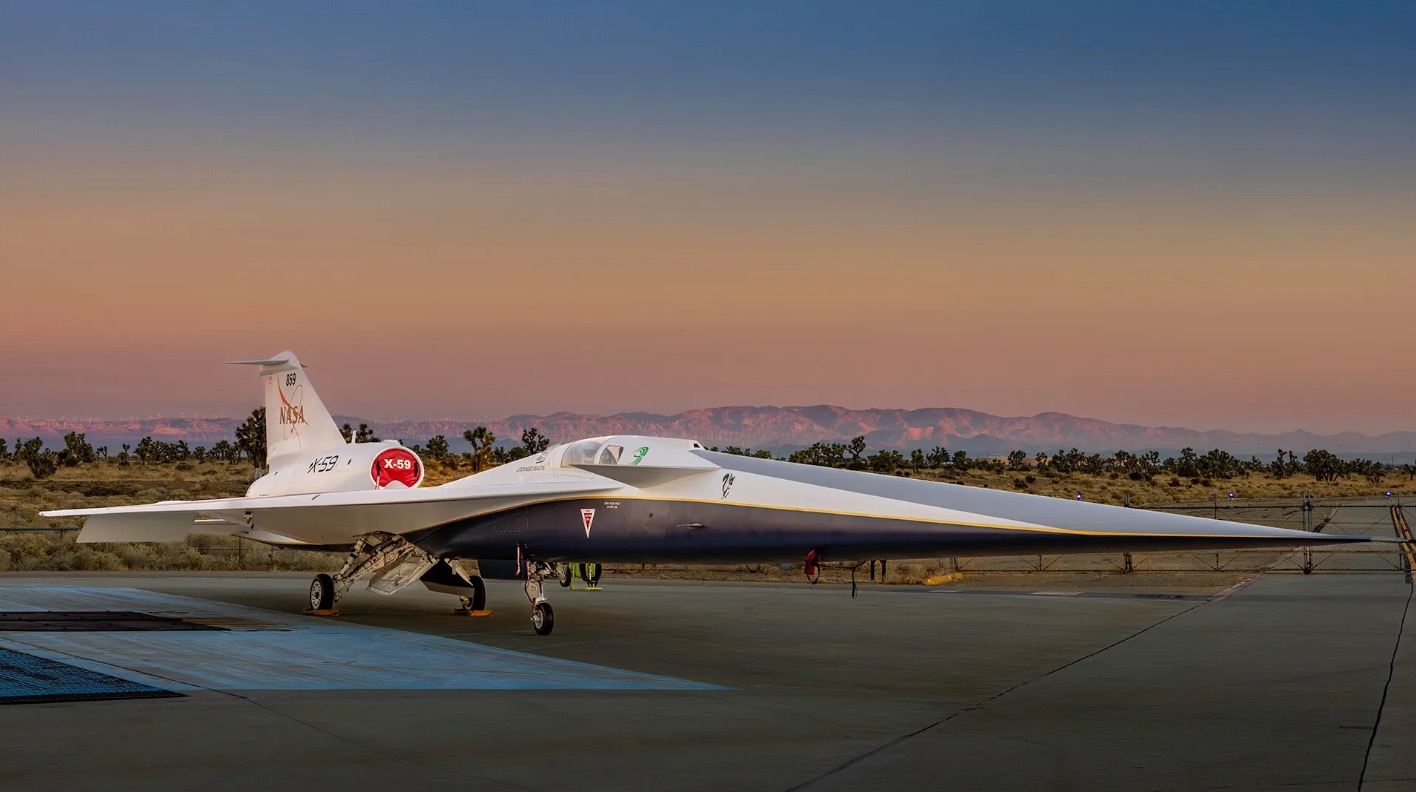
NASA’s experimental X-59 Quiet SuperSonic Technology (QueSST) aircraft has achieved a major milestone with its engine successfully fired up for the first time. Engineers at Lockheed Martin’s Skunk Works facility in Palmdale, California, have been conducting a series of phased engine tests since late October to assess the jet’s engine performance and systems integration. This crucial testing phase brings the aircraft closer to its first flight, although an official date for this event has yet to be set.

Testing Progress and System Integration
The initial engine tests focused on low-speed operations, allowing engineers to thoroughly inspect the aircraft for potential leaks and verify that essential systems—such as hydraulics and electrical components—worked properly in conjunction with the engine. After the completion of these basic checks, the engine was powered up fully for the first time, marking a key milestone in the aircraft’s development. According to Jay Brandon, NASA’s chief engineer for the X-59, the tests acted as a “warmup” to ensure that the engine was performing as expected while supporting the aircraft’s critical systems.

Performance of the Modified F414-GE-100 Engine
The X-59 is powered by a modified F414-GE-100 engine, a version of the engine found in the U.S. Navy’s Boeing F/A-18 Super Hornet. This modification is designed to allow the X-59 to fly at supersonic speeds while significantly reducing the noise produced by the aircraft. Unlike typical supersonic jets that generate disruptive sonic booms, the X-59 is engineered to minimize noise and create a quieter “sonic thump,” which could pave the way for commercial supersonic travel without disturbing communities on the ground.

Looking Ahead: The Quiet Supersonic Future
These successful engine tests represent a crucial step toward achieving NASA’s goal of creating a supersonic jet that reduces the impact of noise on the environment. The X-59 is a key component of NASA’s broader efforts to develop quiet supersonic technologies that could revolutionize air travel. As engineers continue to refine the aircraft’s systems and performance, the first flight of the X-59 will bring NASA one step closer to proving the viability of supersonic flight with minimal noise—a breakthrough that could change the future of commercial aviation.

Solar Orbiter Captures Record-Breaking Images of the Sun’s Surface

Unveiling the Sun’s Secrets

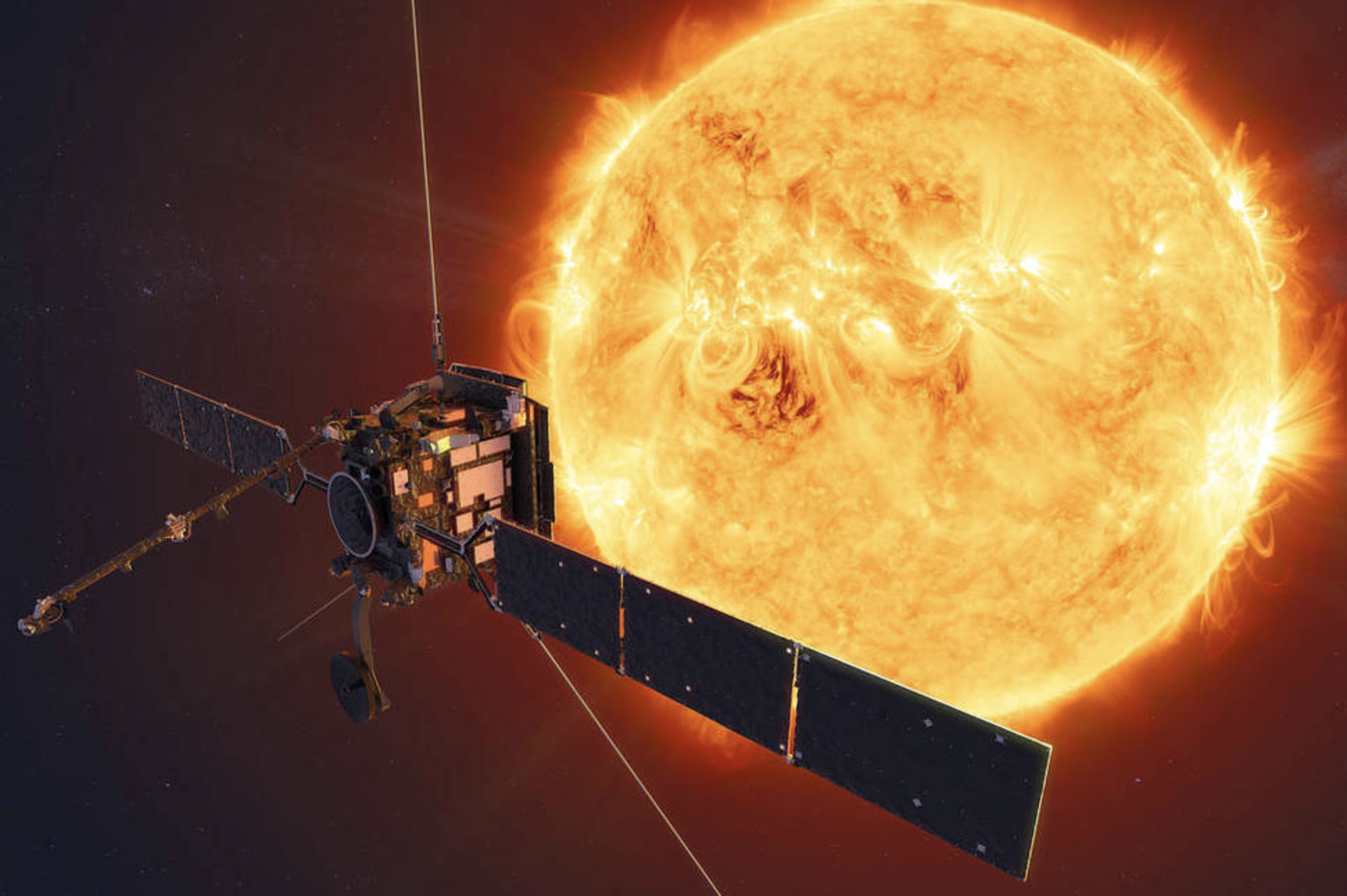
The Solar Orbiter mission has captured the highest-resolution images of the sun’s surface, offering unprecedented insights into the dynamics of our star. These stunning visuals reveal intricate details of sunspots, plasma movements, and the magnetic fields that govern solar activity, providing scientists with valuable data to further understand solar phenomena.

The images, taken on March 22, 2023, and released this week, were captured using the spacecraft’s Extreme Ultraviolet Imager (EUI) and Polarimetric and Helioseismic Imager (PHI). Positioned 46 million miles from the sun, the Solar Orbiter, a joint mission by the European Space Agency (ESA) and NASA, captured these extraordinary views, marking a significant leap in heliophysics research.

Cutting-Edge Observations

The Solar Orbiter’s PHI instrument produced the sharpest full-surface views of the sun’s photosphere, where temperatures range between 8,132°F and 10,832°F (4,500°C and 6,000°C). These images reveal sunspots, dark regions caused by the sun’s strong magnetic fields, which disrupt convection and make the spots cooler and darker than their surroundings.

The PHI also created detailed magnetic maps, or magnetograms, showing magnetic field concentrations in sunspot areas. A velocity map, or tachogram, highlighted the speed and direction of plasma flows across the surface, with blue regions indicating movement toward the spacecraft and red regions moving away.

Meanwhile, the EUI focused on the sun’s corona, its outermost atmosphere, where temperatures soar to 1.8 million degrees Fahrenheit (1 million degrees Celsius). The corona’s glowing plasma structures, protruding from sunspot regions, were vividly captured, helping scientists probe why this layer is significantly hotter than the surface below.

Each image released by the Solar Orbiter is a mosaic of 25 individual shots, meticulously pieced together due to the spacecraft’s need to rotate while capturing the sun’s entire face.

Complementing Parker Solar Probe

While NASA’s Parker Solar Probe will soon make its closest approach to the sun, coming within 3.86 million miles on December 24, its mission lacks imaging capabilities due to its proximity to extreme heat. Solar Orbiter’s imaging instruments, however, are filling this gap, offering complementary data for scientists studying the sun’s magnetic field, solar winds, and other phenomena.

“The closer we look, the more we see,” said Mark Miesch, a NOAA scientist. “These high-resolution images bring us closer to understanding the sun’s intricate interplay of magnetic fields and plasma flows.”

Solar Activity Peaks

Solar Orbiter’s observations come at an opportune time, as the sun has reached its solar maximum — the peak of activity in its 11-year cycle. During this phase, sunspots proliferate, magnetic poles flip, and solar activity increases, generating phenomena such as flares and coronal mass ejections (CMEs). These events produce space weather that can affect Earth’s power grids, satellites, and communication systems.

The sun’s heightened activity also creates spectacular auroras, with charged particles from CMEs interacting with Earth’s atmosphere to produce the northern and southern lights.

Solar Orbiter’s mission aligns with this dynamic period, allowing scientists to correlate its high-resolution imagery with real-time solar activity.

Paving the Way for Solar Science

With its groundbreaking instruments, Solar Orbiter is helping answer fundamental questions about the sun, such as the origin of solar winds and the reason behind the corona’s extreme temperatures. Together with the Parker Solar Probe, these missions are reshaping our understanding of the sun’s impact on the solar system and Earth.