
Yazılar

White House Reviews SpaceX Contracts Amid Trump-Musk Feud

The White House has directed the Defense Department and NASA to review billions of dollars worth of contracts held by SpaceX following a public conflict between President Donald Trump and Elon Musk, sources told Reuters. This review aims to prepare the administration for potential retaliatory actions against Musk’s companies.

Pentagon officials are also weighing whether to reduce SpaceX’s involvement in a new U.S. missile defense system. Currently, SpaceX holds roughly $22 billion in federal contracts, but it is unclear if any cancellations are imminent.

The review stems from Trump’s recent threat to terminate business and subsidies for Musk ventures during their spat. When asked about Musk’s contracts, a White House spokesperson cited a commitment to a rigorous review process for all bids and contracts. NASA confirmed it will continue working with industry partners to meet presidential space objectives.

Sources describe the contract scrutiny as a political move intended to give the administration flexibility should Trump decide to act. Musk, who formerly served as a senior advisor to Trump and led the Department of Government Efficiency (DOGE), has been at odds with the president after publicly calling for his impeachment and linking him to a convicted sex offender.

Experts warn that politicizing such contracts risks undermining national security and public interest. Scott Amey, from the Project on Government Oversight, noted the irony of Musk’s contracts undergoing political scrutiny similar to what his DOGE team imposed on others. He emphasized that contract decisions should prioritize public and security interests over personal disputes.

SpaceX plays a vital role in U.S. aerospace and defense, launching satellites and cargo, and managing NASA’s Dragon spacecraft—the sole U.S. vehicle currently capable of ferrying astronauts to the International Space Station. The company also builds a classified network of spy satellites for the National Reconnaissance Office, strengthening its ties with U.S. defense and intelligence agencies.

Despite recent tensions, SpaceX remains a critical partner to the government, highlighting the complex balance between politics and strategic partnerships in national security.

NASA Satellite Identifies Tree Leaf Variations as Potential Early Indicator of Volcanic Eruptions

NASA scientists are exploring a novel method to predict volcanic eruptions by observing how trees respond to underground volcanic activity from space. In collaboration with the Smithsonian Institution, researchers have found that tree leaves tend to grow lusher and greener when volcanic carbon dioxide seeps through the soil, signaling magma movement beneath the surface. This natural reaction offers a promising early warning sign, potentially visible via satellites like Landsat 8 and recent missions such as AVUELO, providing an additional tool to monitor high-risk volcanoes worldwide.

According to research from NASA’s Earth Science Division at Ames Research Center, the greening of vegetation is triggered when trees absorb volcanic carbon dioxide released as magma pushes upward. Unlike sulfur dioxide, which appears later in volcanic activity and is easier to detect, carbon dioxide emissions are more challenging to observe directly from orbit. However, the indirect effect on vegetation health serves as a valuable clue to detect early stages of volcanic unrest.

Volcanologist Florian Schwandner highlights that these subtle changes in vegetation can complement existing early warning systems, particularly in remote or dangerous volcanic regions. Since on-site gas measurements can be risky and expensive, scientists like Robert Bogue and Nicole Guinn have begun investigating how tree leaf characteristics might serve as natural indicators of underground volcanic processes. Guinn’s studies around Mount Etna in Sicily demonstrated a strong link between leaf color shifts and subterranean volcanic gas emissions, with satellites like Sentinel-2 and Terra able to capture these vegetative changes effectively.

To validate this approach further, NASA and Smithsonian teams, led by climate scientist Josh Fisher, conducted fieldwork in early 2025 near active volcanoes in Panama and Costa Rica. They collected tree samples and measured gas levels to better understand the connection between vegetation response and volcanic activity. This interdisciplinary research not only aims to improve volcanic eruption forecasting but also promises insights into how long-term exposure to atmospheric carbon dioxide affects trees—information crucial for anticipating future climate dynamics.

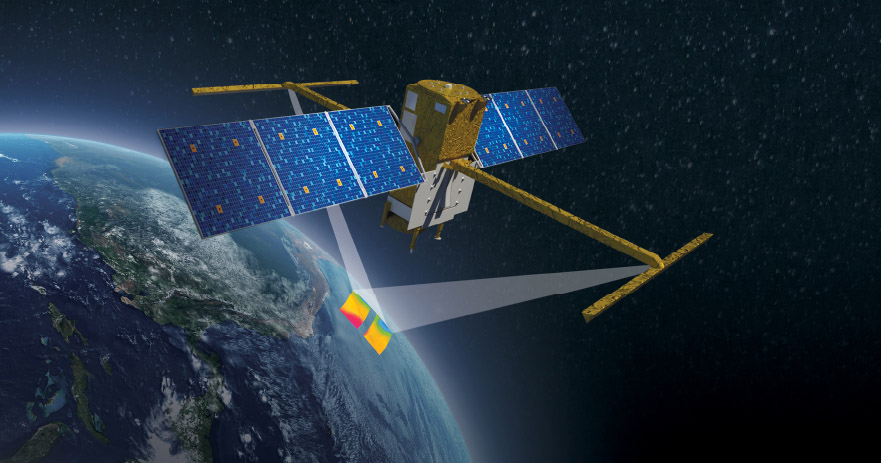
NASA’s SWOT Satellite Uncovers Outsized Role of Tiny Ocean Currents in Shaping Marine Ecosystems

NASA’s SWOT Satellite Sheds Light on Hidden Ocean Currents That Influence Global Climate and Marine Life

The smallest of ocean waves and currents, long overlooked by traditional observation methods, are now emerging as key players in shaping the Earth’s climate and marine ecosystems. Thanks to high-resolution imaging from NASA’s SWOT (Surface Water and Ocean Topography) satellite—developed in partnership with the French space agency CNES—scientists are getting an unprecedented view of submesoscale ocean activity. These features, spanning just a mile or so, are instrumental in transferring carbon, heat, and nutrients throughout ocean layers, highlighting the hidden complexity and power of the world’s marine systems.

In recent studies led by NASA’s Jet Propulsion Laboratory (JPL), SWOT has demonstrated its ability to map vertical ocean currents in detail. Previously, such currents fell into a frustrating observational blind spot: too small for satellites to detect, yet too vast for direct ship-based instruments to monitor. With SWOT, researchers can now see how these vertical circulations move water—and the energy and materials within it—from deep ocean layers to the surface, impacting everything from temperature regulation to nutrient cycles. For instance, the satellite tracked a swirling submesoscale eddy in the Kuroshio Current and detected vertical movements of up to 14 meters per day.

These vertical exchanges play a crucial role in ecosystem health and climate processes. “Vertical currents can bring heat from deep layers to the surface, warming the atmosphere,” said oceanographer Matthew Archer. In another case, SWOT identified an internal solitary wave in the Andaman Sea that carried twice the energy of a typical internal tide. Using sea surface height data, the satellite helps researchers infer not only the slope of waves but also the fluid pressure, which ultimately reveals the strength and influence of oceanic motion. “Force is the fundamental quantity driving fluid motion,” added coauthor Jinbo Wang from Texas A&M University.

Beyond observation, the SWOT mission is reshaping the way scientists model the ocean. Lee Fu, a senior researcher at JPL, emphasized that ocean simulation tools must now adapt to account for these newly visible small-scale processes. NASA has already begun integrating SWOT data into its ECCO ocean model to improve accuracy in climate forecasting. As SWOT continues to provide continuous, detailed measurements of ocean topography, it promises to deepen our understanding of how fine-scale ocean mechanics influence broader environmental changes and climate dynamics.