
Yazılar

NASA Partners with Joby Aviation to Analyze Wind Impacts and Enhance Aircraft Tracking

In March, NASA engineers launched a new data-gathering campaign aimed at improving the safety and performance of emerging air taxi technology. Using a network of advanced ground sensors, the team monitored an experimental Joby Aviation aircraft as it flew over terrain near NASA’s Armstrong Flight Research Center in Edwards, California. The campaign focused on analyzing how air taxis behave in varied weather conditions, particularly in urban environments. The collected data will help refine collision avoidance systems, landing protocols, and overall air taxi operations in real-world scenarios.

The collaboration centers around the Joby Aviation demonstrator, an electric vertical takeoff and landing (eVTOL) aircraft equipped with six rotors that enable both vertical lift and efficient forward flight. Traditionally, NASA has studied how environmental wind patterns influenced aircraft near the ground, especially in areas with uneven terrain. However, in this test, the wind in question is being generated by the aircraft itself—specifically, the turbulent circular airflow created by its propellers during takeoff and landing.

This turbulent airflow, especially during low-altitude operations, can affect not just the aircraft’s stability but also nearby vehicles and people on the ground. To analyze these effects in detail, NASA has enhanced its sensor systems by integrating a newly developed lidar unit capable of detecting fine-scale wind disturbances. According to Grady Koch, the project lead from NASA’s Langley Research Center, the pairing of Joby’s aircraft design with NASA’s lidar technology offers an unprecedented look at how wind and turbulence may influence the safety and efficiency of next-generation flight.

To further support this initiative, NASA has deployed a second sensor array featuring radar, cameras, and acoustic sensors. This setup is designed to collect detailed tracking and environmental data during repeated routine flights over the coming months. By combining airflow analysis with high-resolution tracking, NASA aims to build a comprehensive picture of how eVTOL aircraft interact with their environment—ultimately paving the way for safe and scalable urban air mobility solutions.
NASA Explores Crystal Growth in Space to Unlock Future Technological Advances

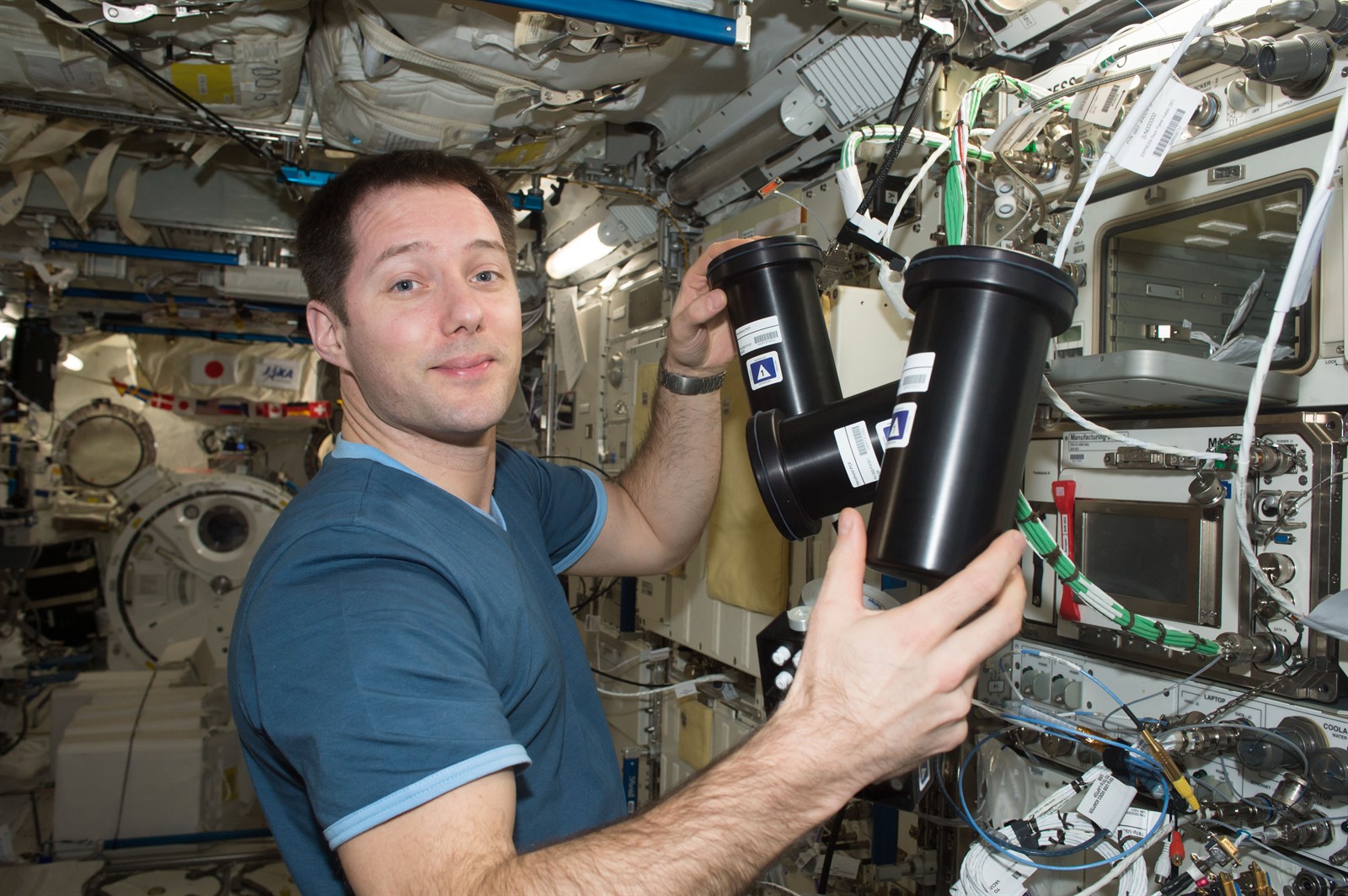
NASA scientists have long been fascinated by the process of crystallisation and its potential to improve technologies here on Earth. Most recently, researchers have turned their attention to how crystals form in microgravity aboard the International Space Station (ISS). A team led by Alexandra Ros from Arizona State University launched a series of protein crystallisation experiments using specially designed microfluidic devices. These experiments aim to evaluate whether the low-gravity environment of space enables the formation of higher-quality protein crystals compared to those grown under Earth’s gravity. If successful, this could revolutionize how we approach drug development, materials science, and more.

Crystallisation is the process through which liquid or molten materials cool and solidify into highly ordered structures known as crystals. These formations aren’t limited to gemstones or snowflakes—they are an essential part of modern life. From natural minerals to complex synthetic compounds, crystals can form from a variety of substances and serve diverse purposes across industries. Understanding how to control and optimize crystallisation can lead to better materials and more precise scientific tools.

Everyday items owe their functionality to crystals. Whether it’s the ceramic in your coffee mug, the silicon in your smartphone, or the memory chips that store your data, crystallisation plays a central role in shaping their components. Semiconductor crystals are critical for detecting radiation such as gamma and infrared rays, and optical crystals power laser technologies used in everything from barcode scanners to medical instruments. Even the durable turbine blades in jet engines rely on metal crystals designed for high strength and heat resistance.

The implications of space-based crystal research are profound. If space-grown crystals can achieve superior structure and purity, scientists could gain new insights into diseases, develop more effective medications, and engineer advanced materials with exceptional precision. As NASA and its research partners continue to explore these possibilities, microgravity experiments may become a cornerstone in developing next-generation technologies—both in orbit and back on Earth.

Farthest Spiral Galaxy Unveiled by James Webb Telescope, Offering New Insights Into Galactic Evolution

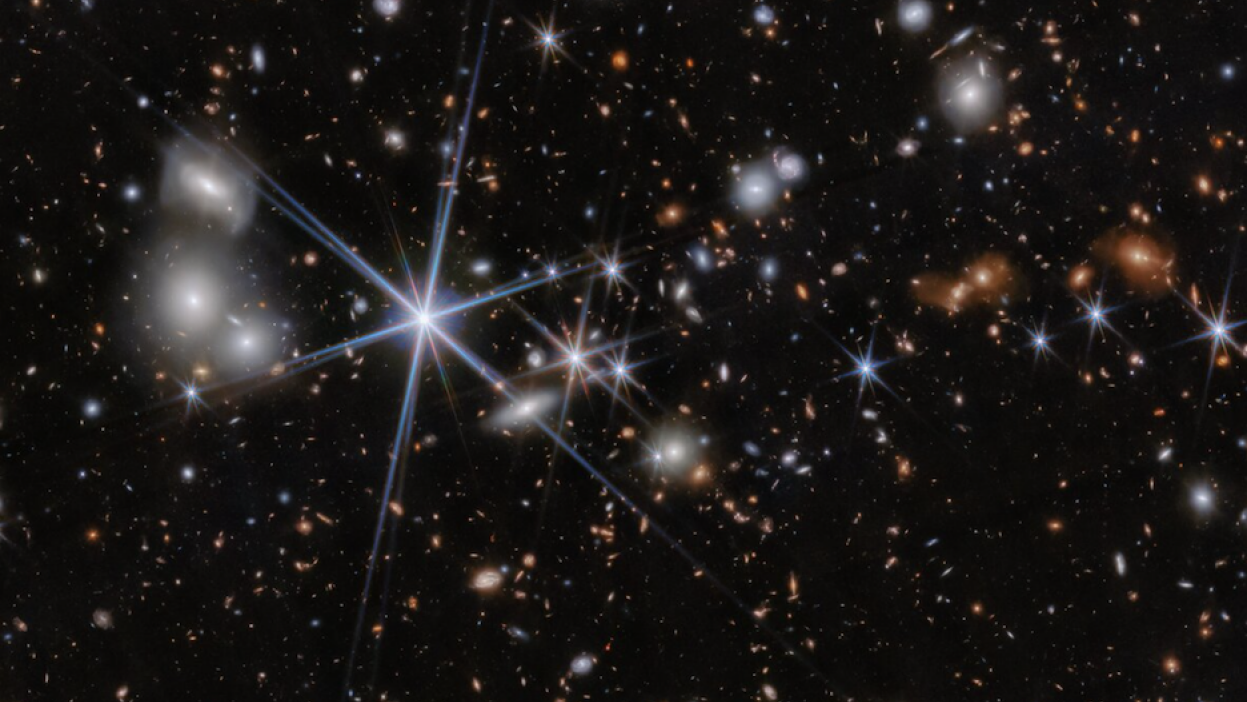
In a groundbreaking discovery, NASA’s James Webb Space Telescope (JWST) has revealed a galaxy that closely mirrors our own Milky Way—yet it formed much earlier in the universe’s history. This newly identified galaxy, named Zhúlóng, features hallmark traits of a mature spiral galaxy: a dense central bulge of ancient stars, a bright disk of ongoing star formation, and two clearly defined spiral arms. Its remarkable resemblance to the Milky Way—despite existing in the early universe—challenges long-standing cosmological models that suggest such massive galaxies evolve through a gradual process of smaller galaxy mergers over billions of years.

Zhúlóng’s impressive scale further intensifies the mystery. Estimated to contain about 100 billion solar masses—making it slightly more massive than the Milky Way—the galaxy’s star-forming disk spans roughly 60,000 light-years. What sets this discovery apart is not just its size, but its timing: Zhúlóng existed more than a billion years earlier than Ceers-2112, another early spiral galaxy, and at a time when the universe was only a quarter of its current age. This raises crucial questions about how such complex structures could have emerged so soon after the Big Bang.

The findings, published in Astronomy & Astrophysics, underscore the transformative power of JWST in exploring the deep past of our cosmos. The telescope’s sensitive instruments have captured the swirling spiral arms of Zhúlóng with astonishing clarity, allowing researchers to trace its structure and composition across billions of light-years. These observations contradict the prevailing belief that well-ordered, Milky Way-like galaxies are the end products of chaotic evolutionary histories stretching over eons. Instead, Zhúlóng appears as a fully formed spiral galaxy just a billion years after the universe’s birth.

This discovery not only shakes the foundation of current galaxy formation theories but also reinforces the notion that our understanding of cosmic history is still evolving. Scientists are now calling for follow-up observations using both JWST and the Atacama Large Millimetre/submillimetre Array (ALMA) in Chile. By examining galaxies like Zhúlóng more closely, astronomers hope to uncover how such early, massive spirals came to exist—and in doing so, may rewrite key chapters of how the universe, and ultimately galaxies like our own, came to be.