NASA’s Europa Clipper Snaps Striking Infrared View of Mars During Deep-Space Test
NASA’s Europa Clipper Captures Striking Infrared Views of Mars During Critical Flyby Test
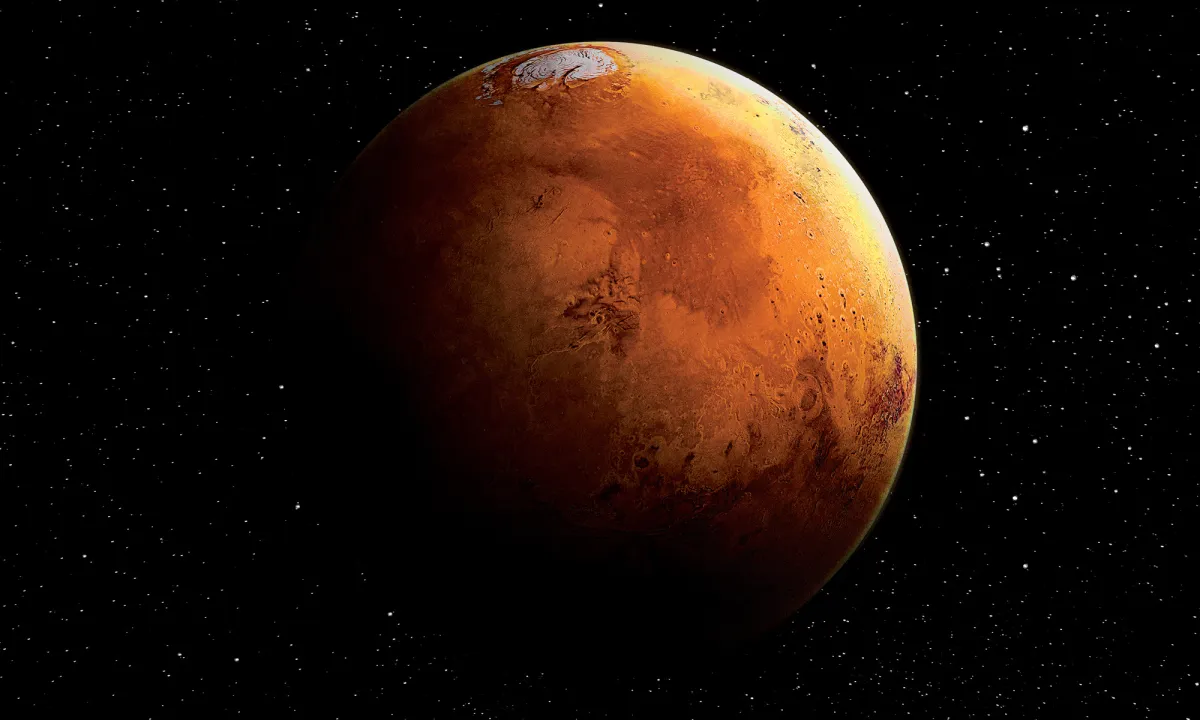
NASA’s Europa Clipper spacecraft recently captured an impressive infrared image of Mars as it performed a gravity-assist flyby during its voyage to Jupiter’s icy moon Europa. This close encounter took place on March 1, 2025, when the spacecraft flew just 550 miles (885 kilometers) above the Martian surface. The maneuver was designed to adjust the spacecraft’s speed and trajectory for the next leg of its interplanetary journey. During the flyby, the mission team tested the spacecraft’s E-THEMIS instrument—a sophisticated thermal imager meant to study Europa’s surface for potential signs of life.
The Mars flyby was not only a navigational milestone but also served as a key calibration opportunity for E-THEMIS. According to NASA, the instrument captured over 1,000 infrared greyscale images during an 18-minute data-gathering window. These images began reaching Earth on May 5. Researchers are now comparing the new thermal snapshots with legacy thermal maps from NASA’s Mars Odyssey Orbiter, which has been monitoring the Red Planet since 2001. This comparison helps validate the performance and accuracy of E-THEMIS, ensuring it will deliver reliable data once the spacecraft reaches Europa.
One of the primary functions of E-THEMIS is to detect subtle variations in surface temperature, which can indicate recent geologic activity. At Europa, such thermal mapping will be used to identify “hotspots” where the icy shell may be thinner or more dynamic. These regions could provide crucial clues about the moon’s subsurface ocean—an environment that scientists believe has the potential to support life. The instrument’s ability to pinpoint areas of recent or ongoing activity could direct future landing missions to the most promising locations for astrobiological exploration.
This Mars flyby also marked the first time Europa Clipper’s radar instrument was tested in space. While initial results are promising, further analysis is underway. Looking ahead, the spacecraft is scheduled for another gravity-assist maneuver with Earth in 2026 before finally reaching the Jovian system. The Europa Clipper is expected to arrive at Jupiter in April 2030, where it will begin its main mission—studying the potential habitability of Europa and searching for signs of life beneath its icy crust.