Yazılar

China’s Satellite Megaprojects Challenge Elon Musk’s Starlink

China is aggressively pursuing satellite megaprojects to rival SpaceX’s Starlink, which has already established a formidable presence in low Earth orbit (LEO) with nearly 7,000 satellites. Starlink provides high-speed internet to millions in remote and underserved regions, with plans to expand its constellation to 42,000 satellites. However, China is aiming to launch a similar-scale network with around 38,000 satellites through its Qianfan, Guo Wang, and Honghu-3 projects.

While companies like Eutelsat OneWeb and Amazon’s Project Kuiper are also entering the satellite internet arena, China’s interest in these megaconstellations goes beyond just competition. Experts believe China’s motivations are partly driven by concerns over the potential influence of Starlink’s uncensored internet service, especially in regions under its geopolitical influence.

Steve Feldstein, a senior fellow at the Carnegie Endowment for International Peace, suggests that Starlink could undermine China’s strict internet censorship policies by providing uncensored access to websites and apps. As a result, China views this satellite-based connectivity as a potential threat to its control over information within its borders and in allied countries. To counter this, China is investing in its own satellite network that could offer a censored alternative to Starlink.

Blaine Curcio, founder of Orbital Gateway Consulting, adds that China’s satellite service could appeal to countries interested in a more controlled internet experience. While China may not prioritize Western markets like the U.S. or Europe, it sees opportunities in regions where Starlink has limited coverage, including Russia, Afghanistan, Syria, and parts of Africa.

In Africa, where Huawei already plays a dominant role in 4G infrastructure, China’s satellite service could further strengthen its influence. The Chinese satellite constellation might be seen as an extension of its technological and geopolitical presence, especially in regions where internet access is limited or censored.

National security is another crucial factor behind China’s satellite ambitions. Starlink’s role in providing satellite-based communication for military purposes, particularly in conflict zones like Ukraine, has demonstrated the strategic value of satellite internet. The ability to maintain internet connectivity during war, especially for military operations such as drone warfare, makes satellite constellations a key component of national security. China recognizes this, making its satellite internet projects a strategic necessity.

In conclusion, while China’s satellite services may not directly compete with Starlink in Western markets, they represent a significant geopolitical and security challenge. As China expands its satellite capabilities, it will likely target regions where Starlink has limited coverage, furthering its influence and maintaining control over digital infrastructures.
 

Trump Suggests Keeping TikTok in the US for the Time Being

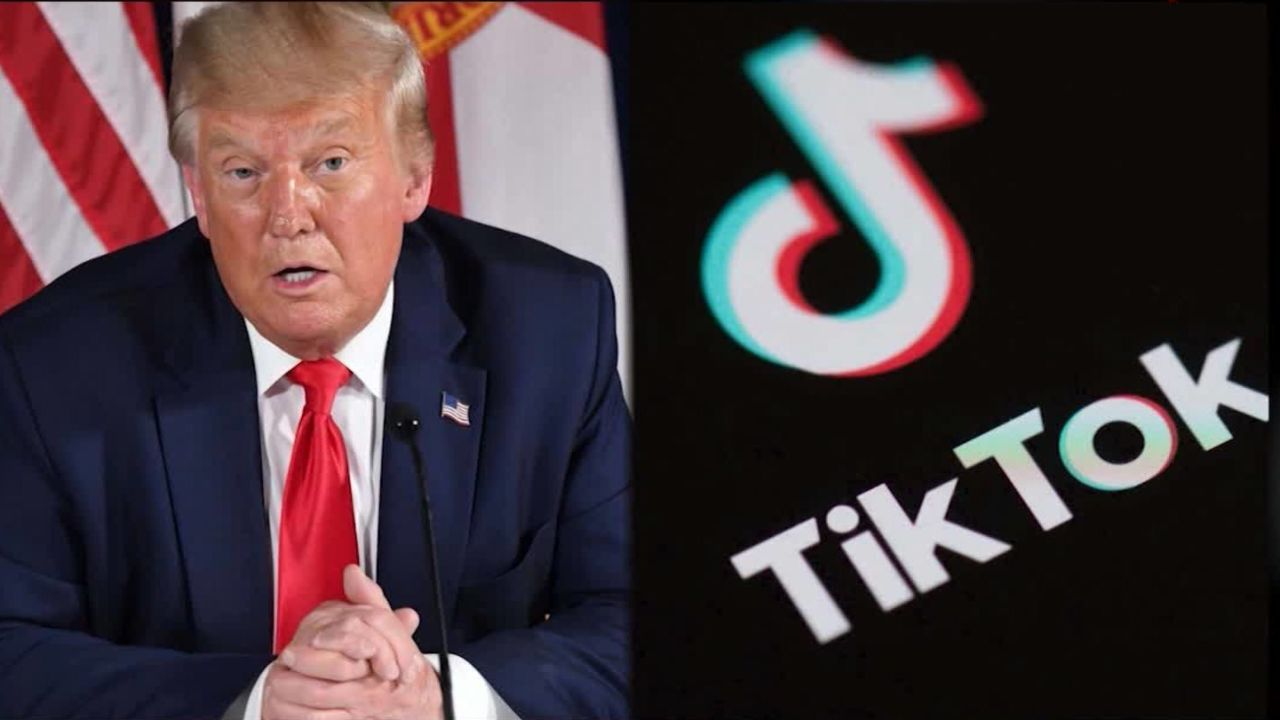
President-elect Donald Trump has expressed a preference for allowing TikTok to continue operating in the United States, citing the platform’s significant role in his presidential campaign. Speaking to a conservative crowd in Phoenix, Arizona, Trump remarked on the app’s success during his campaign, noting the billions of views he received on TikTok. These comments are the strongest indication yet that he opposes a potential U.S. exit for the popular social media platform.

Earlier in April, the U.S. Senate passed a law demanding TikTok’s Chinese parent company, ByteDance, divest the app, citing national security concerns. TikTok has fought this move in court, and the U.S. Supreme Court has agreed to hear the case. If ByteDance loses and no divestment occurs, the app may face a ban in the U.S. by January 19, just one day before Trump’s inauguration.

Trump, however, hinted that the situation might need to be reconsidered. He referred to the overwhelming response to his content on TikTok, saying, “Maybe we gotta keep this sucker around for a little while.” He also met with TikTok’s CEO on Monday and expressed a “warm spot” for the app due to its impact on his campaign’s visibility.

Despite Trump’s remarks, the U.S. Justice Department maintains that TikTok, under Chinese ownership, poses a national security threat. This position is widely supported by U.S. lawmakers. TikTok, however, defends its operations, asserting that user data is stored in the U.S. on servers run by Oracle Corp and that decisions about content moderation are made within the country.


Senators Request Biden to Grant ByteDance 90-Day Extension on TikTok Sale Deadline

Democratic Senator Ed Markey and Republican Senator Rand Paul have called on President Joe Biden to extend by 90 days a looming January 19 deadline that requires China-based ByteDance to sell the U.S. assets of its popular short-video app TikTok or face a nationwide ban.

Their request comes as the Supreme Court prepares to hear ByteDance and TikTok’s legal challenge against the law mandating the sale. Arguments in the case are scheduled for January 10. In a joint letter to Biden, the senators argued that the law’s uncertain future and its implications for free expression warrant the 90-day reprieve.

Background on the Controversy

The contentious legislation was passed by Congress in April and signed into law by Biden. It stems from national security concerns raised by the Justice Department, which has argued that TikTok’s access to vast amounts of user data—including locations and private messages—makes it a significant threat. The department also raised concerns about ByteDance’s potential to manipulate content visible to American users.

TikTok, however, has denied these allegations, maintaining that it does not pose an imminent threat to U.S. security. The company and its parent, ByteDance, argue that the law violates the First Amendment’s protections of free speech.

Political Reactions

The debate over TikTok has divided lawmakers. Senate Republican Leader Mitch McConnell, in a brief filed with the Supreme Court, urged the court to reject any delay in enforcing the law, likening TikTok to a “hardened criminal.” Similarly, other senators, such as Republican Josh Hawley and Democrat Richard Blumenthal, insist that ByteDance must comply with the legislation.

On the other hand, Markey and Paul’s appeal highlights concerns about free expression and the impact of a potential TikTok ban on its 170 million American users.

Trump’s Reversal on TikTok

In a surprising turn, Republican President-elect Donald Trump, who previously sought to ban TikTok during his first term in 2020, has shifted his stance. During this year’s presidential race, Trump expressed a newfound fondness for TikTok, stating that he has “a warm spot” for the app and would “take a look” at the matter if elected. Trump will assume office on January 20, just one day after the current TikTok sale deadline.

Next Steps

With the Supreme Court set to deliberate on the matter and the Biden administration under pressure to extend the deadline, the future of TikTok in the U.S. hangs in the balance. Neither the White House nor TikTok has commented on the senators’ request.