Yazılar

Dutch Climate Tech Firm Dexter Energy Raises €23 Million to Boost AI-Driven Renewable Energy Services

Dexter Energy, a climate technology company based in Amsterdam, announced on Wednesday that it has secured €23 million (approximately $27.1 million) in a recent funding round. The investment will support the expansion of its AI-powered services focused on renewable energy and battery trading.

The funding round, led by financial services firm Alantra, also included participation from notable investors such as France’s Mirova, ETF Partners, Newion, and Klima. These investors share Dexter Energy’s vision of AI as a critical infrastructure component for electricity grids increasingly reliant on renewable energy and storage solutions.

Founded in 2017, Dexter Energy uses artificial intelligence and data-driven models to optimize trading in power markets. Its advanced price forecasting tools integrate over a dozen external data sources, including weather forecasts and market information. According to the company, its AI-backed trading solutions can boost wholesale market revenues by up to 30% for renewable energy producers.

The injection of new capital will enable Dexter Energy to expand its services further within the Netherlands and across broader European markets, supporting the continent’s transition to cleaner energy sources amid volatile renewable markets.
Malaysia Plans 50% Increase in Gas-Fired Power Capacity to Support Booming Data Centre Demand

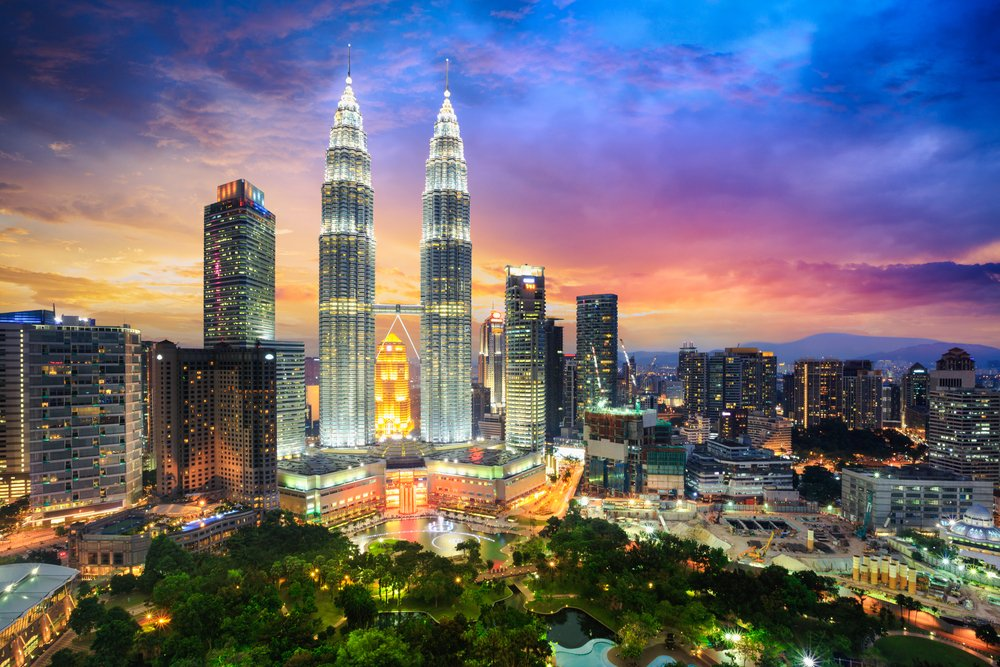
Malaysia aims to expand its gas-fired power capacity by 6 to 8 gigawatts by 2030 to meet soaring electricity demand driven largely by the rapid growth of data centres, an industry official said. This expansion would represent a 40-54% increase from the current 15 GW of gas capacity, as the country seeks to reduce reliance on coal.

According to Megat Jalaluddin, CEO of state utility Tenaga Nasional Berhad, the government plans to build new gas plants and extend the lifespan of existing ones, positioning gas as the key transitional fuel after coal. Total electricity consumption in Malaysia is projected to rise by 30% by 2030.

Malaysia is expected to see the fastest growth in data centre power demand in Southeast Asia, with data centres’ share of electricity consumption in the region forecasted to triple to 21% by 2027 from 7% in 2022, based on a May report by Bain & Co, Google, and Temasek.

Petronas, Malaysia’s LNG exporter, may start importing liquefied natural gas within four to five years due to rising gas demand. The country also targets adding up to 10 GW of renewable energy capacity by 2030, more than doubling its current 9 GW, as data centres push for greener energy sources.

Deputy Prime Minister Fadillah Yusof highlighted that data centres will require 19.5 GW of power generation by 2035, making up 52% of Peninsular Malaysia’s electricity use, up sharply from about 2% today.

Malaysia’s southern state of Johor has become a leading data centre hub in Southeast Asia, favored for its proximity to Singapore, affordable land and power, and faster regulatory approvals. Tech giants like Microsoft, Nvidia, Google, and ByteDance have committed billions in investments since early 2024, fueling an infrastructure boom.

TotalEnergies Partners with French AI Startup Mistral to Boost Energy Efficiency

TotalEnergies, the French oil and gas major, announced a new partnership with French AI startup Mistral to develop digital tools aimed at enhancing the performance of its energy business and industrial assets, improving energy efficiency, and reducing environmental impact.

The collaboration has already commenced with joint meetings at the companies’ existing facilities, though no new physical laboratory will be created. Together, they plan to develop an AI-powered assistant to support TotalEnergies in project development, operational decision-making to lower emissions, and improving customer support solutions focused on energy savings.

TotalEnergies CEO Patrick Pouyanne highlighted AI’s transformative potential for energy systems and underscored the partnership as part of the company’s broader ambition to foster a European technological ecosystem.

Mistral recently launched Europe’s first AI reasoning model, designed to use logical thinking to generate responses, positioning itself among the leading AI innovators alongside U.S. and Chinese competitors.

Since 2022, TotalEnergies has actively engaged with various AI startups to enhance profitability and operational efficiency in its electricity business. Past initiatives include algorithm-driven predictive maintenance of wind turbines, optimization of electricity trading via advanced weather modeling, and improved digital planning for renewable energy farms.

Additionally, TotalEnergies experimented with Microsoft’s AI assistant Copilot by providing employees six months’ access to identify the most effective applications within the company, as revealed by Pouyanne at the AI Action Summit in Paris earlier this year.