Yazılar

Chevron Advances Plans to Develop U.S. Data Centers with Power Generation

Chevron is moving forward with plans to develop data centers in the U.S., entering the permitting and engineering phases for multiple sites, according to a company executive. These centers will also feature the generation of electricity, primarily powered by natural gas, to meet the growing demand from data centers across the country. The energy consumption of these facilities, which are large warehouses for servers, is expected to triple in the next three years as the need for artificial intelligence and computing power intensifies.

The Big Tech industry has already begun securing power purchase agreements to meet their massive electricity demands, with some companies buying power directly from nuclear plants or signing deals with utilities to add power generation to the grid. This surge in data center demand is shaking up the U.S. power industry, with record peak demand and a rise in natural gas consumption.

Chevron, alongside ExxonMobil, announced plans last year to start power generation specifically for data centers, marking a departure from their usual focus on supplying energy for their own operations. Daniel Droog, Chevron’s Vice President of Power Solutions, stated at the CERAWeek conference in Houston that there is “high customer interest” in this new venture.

With data centers growing larger—some now requiring 50 times more power than traditional facilities—Chevron is targeting the development of power plants and data center sites with capacities around 1 gigawatt (GW), expected to be operational by 2027 or 2028. Droog emphasized that speed, reliability, and scale are central to their strategy.

The company has not revealed specific customers or the exact locations of these future data centers but indicated that southern, western, and midwestern regions are likely targets. These centers will be primarily powered by natural gas, with some sites potentially incorporating carbon capture or renewable energy sources.

Natural gas, which was previously avoided by Big Tech due to climate concerns, has now become a favored option due to its relatively low cost and availability in the U.S., the world’s largest gas producer. The company is also set to receive seven GE Vernova gas turbines by 2026, to aid in the power generation process.
Terabase Energy Secures $130 Million to Expand Solar Technology Deployment

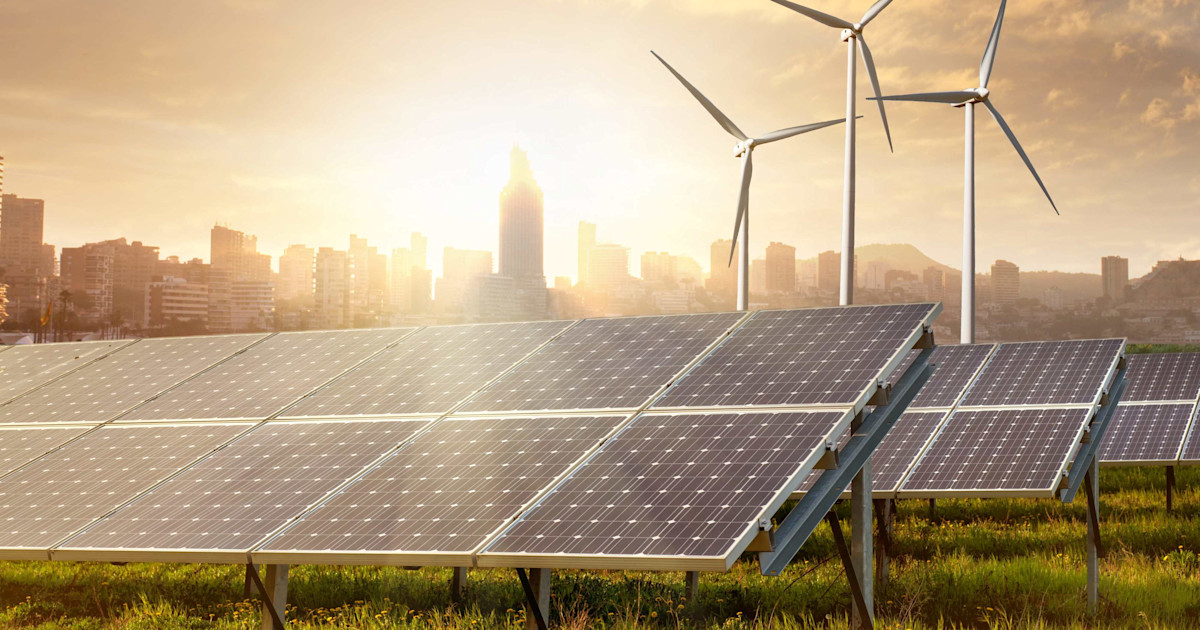
Terabase Energy, a company specializing in solar technology, announced on Thursday that it has raised $130 million in funding, led by SoftBank, to scale its operations and expand the deployment of its solar technology for large projects. This funding round is the largest in the company’s history, bringing its total funding to $200 million. While the company did not disclose its valuation during this round, the investment highlights strong investor confidence in its future.

Despite solar and energy storage accounting for 84% of new electricity generation capacity added to the U.S. power grid in 2024, the sector is facing challenges due to new U.S. energy policies that continue to support fossil fuels. Additionally, venture funding in the U.S. has been relatively quiet in early 2025, with a few AI-focused companies capturing most of the spotlight.

Terabase Energy’s platform collaborates with solar power plant developers, engineers, and construction firms, streamlining processes through workflow digitalization and automation. The company plans to use part of its new funding to enhance its robotics-assisted assembly line, Terafab, designed to alleviate “bottlenecks in construction speed and workforce limitations.”

In addition, Terabase operates PlantPredict, a solar modeling software, and Construct, a construction management platform. Kentaro Matsui, managing partner at SoftBank Global Advisers, highlighted that the surge in energy demand, particularly from AI data centers, underscores the need for scalable and sustainable solutions.

SoftBank, which is known for financing early-stage technology companies, also supported Terabase through its Vision Fund 2. Other existing investors in the company include Breakthrough Energy Ventures, Fifth Wall, SJF Ventures, and EDP Ventures.

US Wind and Solar Still Have Room to Grow for Data Centers, Microsoft VP Says

At the CERAWeek energy conference in Houston on Wednesday, Bobby Hollis, Vice President of Energy at Microsoft, shared his insights on the significant potential for growth in U.S. wind and solar energy development, especially in powering the growing demand for data centers. According to Hollis, the Midwest wind corridor and the sunny southwest remain key areas with substantial untapped opportunities for renewable energy production.

The rapid expansion of data centers driven by Big Tech companies, fueled by AI and cloud technologies, has dramatically increased power consumption, raising concerns about the sustainability of relying on renewable energy sources. As these energy-intensive centers continue to proliferate, there are mounting questions about whether they will rely more on carbon-free renewable energy or switch to gas-fired power.

“We still think there is a very long road ahead that keeps renewables an important part of the mix in the places where that makes sense,” Hollis emphasized. Despite challenges, Microsoft remains committed to expanding its use of renewable energy to power its data centers. The company has pledged to become carbon negative by 2030 and is investing a staggering $80 billion this year alone in data center expansion. This massive investment will require vast amounts of electricity, which Microsoft plans to source sustainably, despite the intermittency of solar and wind power.

Since solar and wind are intermittent energy sources, only producing power when conditions are favorable, data centers, which require constant electricity, face significant challenges. To address this, natural gas, a reliable 24/7 power source, has become an increasingly attractive option, despite its associated carbon emissions. Hollis noted, “Let’s add more gas when it’s necessary. Before we ever get to that place, let’s make sure that we’ve added the renewables.”

The Midwest, with its consistent and strong winds, and the sunny southeastern U.S. are identified as regions with great potential for expanding renewable energy infrastructure to meet the needs of data centers. Microsoft’s global renewable power procurement already exceeds 30 gigawatts, underscoring its commitment to driving the transition to cleaner energy sources.