Yazılar

A Decade After the Paris Agreement, the World Is Still Off Track on Climate Goals

Ten years after the Paris Agreement united world leaders around a shared goal of curbing global warming, the planet remains on a dangerous path — warming faster than efforts to cut carbon emissions can keep up.

When the accord was signed in 2015, nations pledged to limit temperature rise to 1.5°C above pre-industrial levels. Since then, the world has made progress — projections of future warming have dropped by about 1°C — yet the pace of climate action still trails far behind the intensifying damage from rising heat.

The planet’s temperature has climbed 0.46°C in the past decade, one of the steepest increases on record, according to Copernicus climate data. Each year since 2015 has been hotter than the year of the agreement. From deadly heat waves in India, Europe, and North America to wildfires in Hawaii and floods in Pakistan and China, the signs of accelerating climate disruption are everywhere.

Since 2015, the world has lost more than 7 trillion tons of ice from glaciers and polar sheets, while sea levels have risen 40 millimeters (1.6 inches) — enough to fill 30 Lake Eries. Even the Amazon rainforest, once a key carbon sink, has begun emitting more greenhouse gases than it absorbs due to deforestation.

Still, there are reasons for cautious optimism. Renewable energy now dominates new electricity capacity, accounting for 74% of growth in global power generation last year, and electric vehicle sales have surged from 500,000 in 2015 to 17 million in 2024.

However, greenhouse gas emissions continue to rise, with methane levels up 5.2% and carbon dioxide up 5.8% since 2015, driven largely by developing economies. According to the Global Carbon Project, China’s emissions have grown 15.5% and India’s 26.7%, while those of the U.S. and EU have declined by about 7%.

As delegates gather this week in Belem, Brazil, for COP30, scientists and diplomats agree that while the Paris Agreement laid the right foundation, the world has failed to stay on course.

“The Paris Agreement has underperformed,” said Joanna Depledge of the University of Cambridge. “You can’t say it’s failed — but you can’t say it’s succeeded either.”
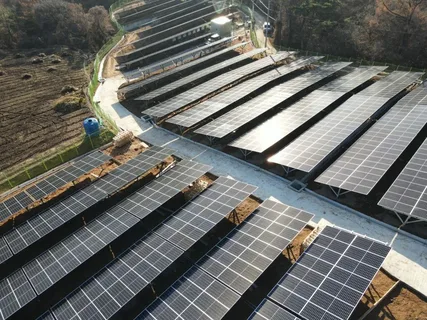
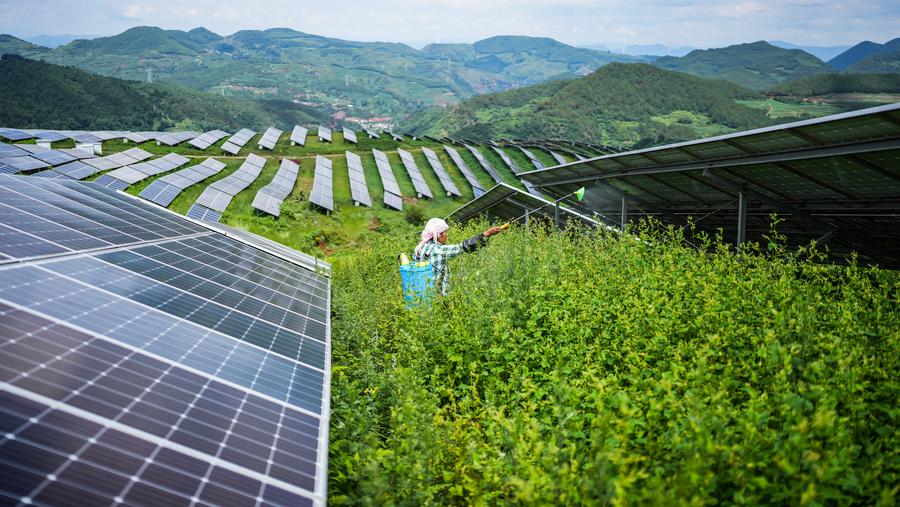
South Korea’s Qcells Cuts Pay and Hours for Georgia Workers Amid U.S. Customs Delays

South Korean solar manufacturer Qcells is cutting pay and working hours for about 1,000 employees at its Georgia plants, citing a shortage of imported materials detained by U.S. customs officials. The company will also lay off 300 temporary workers, it said on Friday.

The U.S. Customs and Border Protection (CBP) agency has been holding shipments of solar panel components over concerns that they may contain materials made with forced labor in China. The detentions are part of stepped-up enforcement of the Uyghur Forced Labor Prevention Act, which restricts goods linked to China’s Xinjiang region.

Qcells — a subsidiary of Hanwha Solutions — says none of its materials come from China and that it maintains robust supply chain audits and third-party documentation proving compliance. “Our latest supply chain is sourced completely outside of China,” said company spokesperson Marta Stoepker, adding that some detained shipments have already been released.

With production still slowed at its Dalton and Cartersville facilities, Qcells said the temporary cuts were necessary “to improve operational efficiency until production capacity returns to normal.” Employees will keep their benefits during the reduced schedule.

Despite the disruption, Qcells reaffirmed its commitment to expanding U.S. manufacturing. The company is completing a $2.3 billion solar plant in Cartersville, designed to produce solar ingots, wafers, and cells from polysilicon refined in Washington state — a move aimed at reducing reliance on imports.

“Our commitment to building the entire solar supply chain in the United States remains,” Stoepker said. “We will soon be back on track with the full force of our Georgia team delivering American-made energy.”

COP30: China’s Green Energy Power Play — How a Laos Wind Farm Reveals Its Global Strategy

In the remote hills of Dak Cheung, southeastern Laos, a vast new wind power project is quietly reshaping both the region’s energy landscape and the global balance of power.

The Monsoon Wind Power Project, the largest in Southeast Asia, features 133 towering turbines stretching across an area twice the size of the Isle of Wight. It promises to deliver electricity to around one million households in neighboring Vietnam, marking a remarkable feat of engineering in one of Asia’s poorest regions.

Yet, while the site is led by a Thai consortium, its backbone is unmistakably Chinese — built by a state-owned Chinese company, using Chinese technology, and completed at record speed and low cost.

“It makes the project viable,” said Narut Boakajorn, the site’s general manager. “Otherwise, financing would not have been possible.”

This wind farm is a microcosm of China’s global dominance in green energy. The country now produces over 60% of the world’s mass-manufactured green technologies, including 80% of solar panels and 75% of electric vehicles, according to the International Energy Agency. Analysts estimate Chinese clean energy exports in 2024 alone could cut global carbon emissions by 1%.

But Beijing’s motivations go beyond climate stewardship. As China simultaneously builds coal plants and renewable infrastructure, its rapid green expansion looks more like a strategic bet on the future of global energy markets — and influence.

Developing nations like Laos, often enticed by low-cost technology and financing, have become the front line of this new form of soft power. While Laos’ wind project avoided the debt traps seen elsewhere, the country has already ceded control of most of its power grid to a Chinese firm amid financial struggles.

The symbolism is striking: in the same mountains once bombed by the U.S. during the Vietnam War, China is now building turbines — a new kind of influence rising from the ashes of an old one.