Yazılar

Japan’s JIC Reaffirms Chip Sector Consolidation Plans Despite JSR Losses

Japan Investment Corporation (JIC), the state-backed investment fund, remains committed to its long-term goal of driving consolidation in Japan’s semiconductor materials sector through its portfolio company JSR, despite the firm’s recent financial struggles.

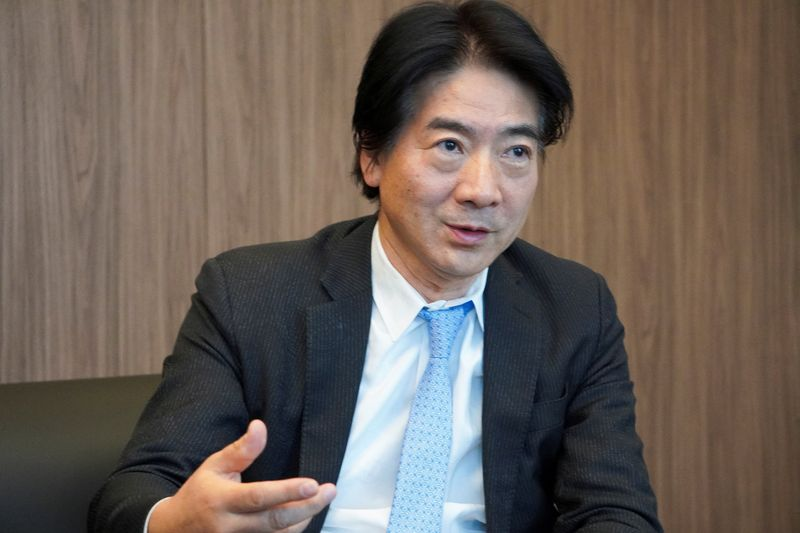
JSR, a leading photoresist manufacturer, ended the fiscal year in March with a 209 billion yen ($1.45 billion) operating loss, primarily due to its underperforming life sciences division. Nevertheless, JIC Capital CEO Shogo Ikeuchi emphasized in a recent interview that the strategic intent behind JIC’s $6 billion buyout of JSR last year remains unchanged.

“Our goal was to take JSR private and… through a series of industry reorganizations, such as mergers with similar companies or rivals… to significantly grow the semiconductor business and enhance international competitiveness,” Ikeuchi said. “That goal hasn’t really changed at all even now.”

JSR has since restructured its leadership and is undergoing a strategic overhaul. While its new CEO recently stated that the company isn’t ready to pursue acquisitions yet, JSR has agreed to sell part of its life sciences unit to Tokuyama Corp in an 82 billion yen deal, a move aimed at focusing on its core chipmaking business.

JIC’s involvement in JSR has faced some criticism in Japan’s traditionally conservative corporate environment, with skeptics questioning the necessity and potential of such state-led intervention. Ikeuchi acknowledged these concerns, stating, “Japan is a country where restructuring is structurally difficult.”

Despite these hurdles, JIC maintains its goal of eventually re-listing JSR, likely within five to seven years, though an earlier IPO is not ruled out.

Industry players are already expressing interest in potential partnerships or acquisitions. Resonac, another major player in chip materials, said in February it would be interested in JSR when JIC eventually exits. Ikeuchi confirmed Resonac as one of the options, though noted its current debt burden as a limiting factor.

JIC, created in 2018 under the oversight of Japan’s trade ministry, aims to strengthen Japan’s industrial competitiveness — with semiconductor self-reliance a national priority amid global supply chain tensions.

Wolfspeed’s Shares Plunge to 27-Year Low Amid Uncertainty Over Federal Funding

Shares of Wolfspeed, a prominent chipmaker, dropped by 50% on Friday, hitting their lowest point since 1998. This significant decline stems from uncertainty surrounding the company’s eligibility for federal funding under the U.S. CHIPS Act. Wolfspeed is awaiting approximately $750 million in subsidies promised by the 2022 bipartisan CHIPS Act, which allocated $52.7 billion in federal funds to boost U.S. semiconductor manufacturing.

However, Wolfspeed’s future funding remains in limbo as the company is left vulnerable to changes in the administration’s stance on the law. President Donald Trump has recently voiced opposition to the CHIPS Act, calling for its repeal in favor of using its funds for debt reduction. This has increased concern over the company’s ability to secure the much-needed funds.

Analysts warn that without the CHIPS Act grant, Wolfspeed may face devastating consequences, including the need for major restructuring. The company had hoped the funding would help it accelerate the production of silicon carbide chips, essential for electric vehicles and renewable energy.

As of Friday, Wolfspeed’s shares were trading at $2.72, marking a 59% decline in value for the year. The company has also made changes in leadership, appointing Robert Feurle as CEO, effective May 1. Additionally, Wolfspeed has secured $865 million in tax credits to strengthen its financial position.

Banks Sell $5.5 Billion of Musk’s X Debt to Investors

Banks led by Morgan Stanley have successfully sold $5.5 billion of the $13 billion debt incurred to finance Elon Musk’s $44 billion acquisition of Twitter, now rebranded as X. This sale is part of an effort to offload a significant portion of the debt, which includes a combination of secured and unsecured loans.

The deal, which was marketed to a select group of investors, included banks such as Bank of America, Barclays, Mitsubishi UFJ, BNP Paribas, Mizuho, and Societe Generale. The debt was initially offered at a price range of 90-95 cents on the dollar, but it was ultimately priced at 97 cents, resulting in a potential profit for the banks involved. Investors in this loan will receive a yield of 11%.

This marks the second attempt by these banks to sell down the debt since Musk’s 2022 acquisition. A prior attempt in late 2022 to sell the unsecured loan failed, as the bids were significantly lower, at 60 cents to the dollar, potentially causing a large loss for the banks. This time, however, investors seem to be more confident in X’s prospects, partly due to Musk’s ties to the newly elected Trump administration and his involvement in the AI startup xAI, which may drive further interest in the platform.

Despite the improved pricing, some investors have been hesitant to buy into the debt, given X’s challenges with advertisers and uncertain revenue growth after Musk’s changes to the platform. Additionally, X still has no official credit rating, which raises concerns among potential buyers. Nevertheless, the sale signals growing investor confidence, despite the risk that the platform’s revenue might not justify the price of the debt.