
Yazılar

Palantir Shares Surge Nearly 9% After Raising Revenue Forecast on Strong AI Demand

Palantir Technologies (PLTR.O) shares jumped nearly 9% in early trading Tuesday after the company raised its annual revenue forecast for the second time this year. The data analytics and defense software firm is benefiting from strong demand for its AI-driven services across governments and enterprises.

Palantir’s stock has doubled this year and climbed more than 600% over the past three years, making it the top performer on the S&P 500 through the last close. Jacob Falkencrone, Saxo’s global head of investment strategy, said Palantir is evolving from a government vendor into an essential partner for enterprises in the AI revolution.

Wedbush analysts project Palantir could reach a $1 trillion market capitalization within the next few years, up from $379.14 billion as of the latest close. Co-founded by Peter Thiel in 2003 and publicly listed in 2020, Palantir has secured multiple U.S. government contracts this year, including a $30 million deal with Immigration and Customs Enforcement.

The Trump administration’s renewed focus on national security has fueled growth, with the U.S. Army indicating it may spend up to $10 billion on Palantir’s services over the next decade. Sales to the U.S. government surged 53% in Q2 to $426 million, accounting for over 42% of Palantir’s roughly $1 billion total revenue for the quarter.

Valuation Concerns:
Despite its rapid growth, some analysts warn Palantir’s valuation is extremely high, trading at more than 200 times 12-month forward earnings—far above AI peer Nvidia’s multiple of 34.81. Morningstar analysts noted the company’s robust competitive advantages but cautioned that the valuation is increasingly difficult to justify.

Palantir also expects higher expenses in Q3 due to seasonal hiring amid competition for AI talent from major tech firms. Nevertheless, at least eleven brokerages raised their price targets on the stock following the earnings release.

Adobe Shares Drop 7% as Investors Question Timeline for AI Revenue Gains

Adobe’s shares fell 7% in early trading on Friday amid investor concerns that the integration of AI into its software products may take longer than expected to generate significant financial returns. This skepticism overshadowed the company’s raised full-year revenue forecast.

Senior equity analyst Angelo Zino from CFRA Research noted growing worries about competitive pressures and a longer timeline to meaningful AI monetization. Adobe, known for creative software like Photoshop and Premiere Pro, announced in April plans to incorporate AI models from OpenAI and Google into its generative AI tool, Firefly.

Firefly enables users to create and edit images and videos for commercial use using simple text prompts, without copyright complications. However, RBC analysts expressed caution, suggesting that although demand remains positive, it will take more time for Adobe’s AI initiatives to prove their value and alleviate competitive concerns.

Adobe now projects 2025 revenue between $23.50 billion and $23.60 billion, up from prior guidance of $23.30 billion to $23.55 billion. Despite this, at least five brokerages lowered their price targets after Adobe’s second-quarter results.

Year-to-date, Adobe’s stock has declined around 13%, and its 12-month forward price-to-earnings ratio is 18.88, notably lower than competitor Autodesk’s 29.16.

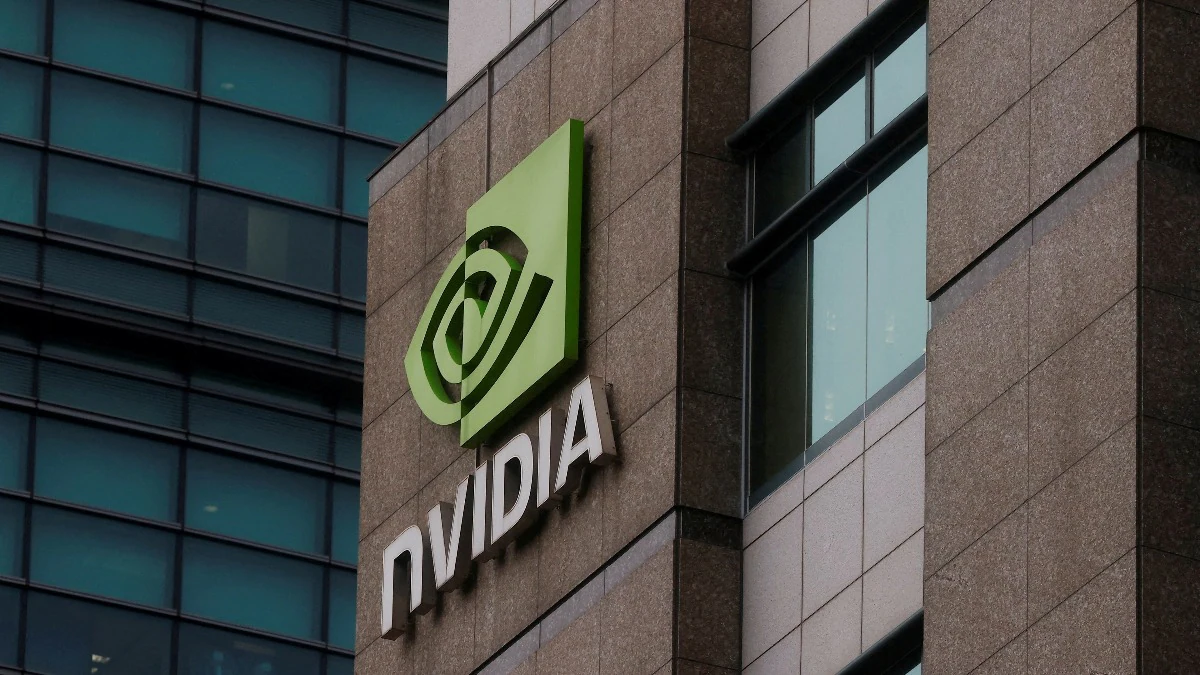
Nvidia to Exclude China from Financial Forecasts Amid U.S. Export Restrictions

Nvidia will stop factoring in revenue and profit from the Chinese market in its financial forecasts, CEO Jensen Huang told CNN on Thursday, citing ongoing U.S. trade restrictions on chip sales to the region. The decision comes as the U.S. maintains stringent export controls that limit Nvidia’s ability to sell its advanced chips to Chinese customers.

When asked if the ongoing trade discussions between the U.S. and China could lead to a lifting of export controls, Huang said he was not counting on any changes:

“If it happens, then it will be a great bonus. I’ve told all of our investors and shareholders that, going forward, our forecasts will not include the China market.”

Huang reiterated his criticism of U.S. chip export curbs, arguing that they are not achieving their intended policy objectives. “The goals of the export controls are not being achieved,” he said. “The goals have to be well-articulated and tested over time.”

According to D.A. Davidson analyst Gil Luria, Nvidia may face downside risks for 2026 if it remains unable to resume sales to China. Nvidia’s China business remains significant: in the first quarter, China accounted for 12.5% of the company’s total revenue, generating $4.6 billion largely from customers stockpiling the H20 chip before the restrictions took full effect.

The company estimates the export curbs cost it $2.5 billion in lost sales in Q1, with an $8 billion revenue hit projected for Q2. Nvidia is still exploring limited options for the Chinese market but acknowledged:

“Until we settle on a new product design and receive approval from the U.S. government, we are effectively foreclosed from China’s $50 billion data center market.”

Michael Ashley Schulman, CIO at Running Point Capital, said Nvidia’s move to exclude China from its forecasts simplifies its financial outlook:

“By zero-basing China, Nvidia removes a volatile variable that neither Wall Street nor the Commerce Department can reliably handicap.”