Yazılar

Azerbaijan Airlines Plane Crashes in Kazakhstan, Killing 38

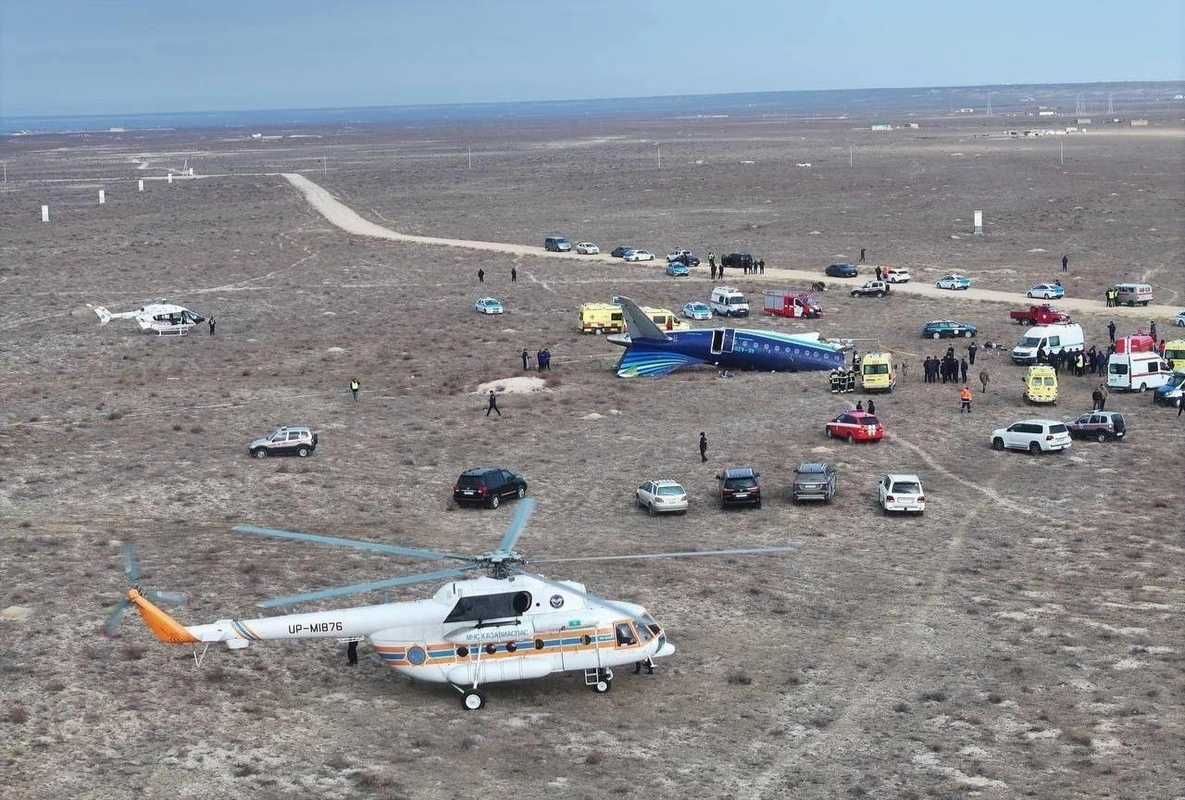
An Azerbaijan Airlines Embraer 190 passenger jet crashed near Aktau, Kazakhstan, on Wednesday, claiming 38 lives and leaving 29 survivors hospitalized. The crash occurred after the plane diverted from its scheduled route between Azerbaijan and Grozny, Russia, crossing the Caspian Sea before descending rapidly and bursting into flames near the shoreline.

The flight, J2-8243, was reportedly forced to reroute due to an emergency situation that may have been caused by a bird strike, according to Russia’s aviation watchdog. However, aviation experts, including Richard Aboulafia of AeroDynamic Advisory, questioned this explanation, noting that bird strikes typically result in landings at the nearest airfield rather than significant deviations from the flight path.

Video footage of the crash, verified by Reuters, showed the aircraft crashing into the seashore and erupting in flames. Emergency responders extinguished the fire and transported survivors, including two children, to a nearby hospital. Efforts to recover the bodies of the deceased are ongoing.

Kazakhstan’s transport prosecutor, Timur Suleimenov, confirmed the recovery of the plane’s black box, which will aid in determining the cause of the crash. Preliminary flight tracking data indicated the plane had veered off its course along the west coast of the Caspian Sea before disappearing and later reappearing near Aktau, where it circled before crashing.

Officials have not clarified why the plane diverted across the sea. However, the crash follows reports of Ukrainian drone strikes in southern Russia’s Chechnya region earlier this month. These strikes led to temporary closures of several Russian airports, including Makhachkala, the nearest airport on the flight’s original route.

Azerbaijan President Ilham Aliyev expressed his condolences, describing the tragedy as a “tremendous sorrow for the Azerbaijani people.” He stated that while poor weather might have influenced the flight’s deviation, the crash’s cause remains under investigation. Azerbaijan Airlines suspended flights from Baku to Chechnya until the probe is complete.

Kazakhstan’s government has formed a commission to investigate the incident and provide support to the victims’ families. Both Kazakhstan and Azerbaijan pledged cooperation in the investigation. Russian President Vladimir Putin, along with Chechen leader Ramzan Kadyrov, extended condolences. Kadyrov noted that some injured passengers remain in critical condition.

Brazilian aircraft manufacturer Embraer, the maker of the crashed jet, also expressed its sympathies and pledged support for the investigation.

 

Russia Launches Mass Cyberattack on Ukraine’s State Registries, Disrupting Services

Russia has launched a major cyberattack on Ukraine’s state registries, causing significant disruptions to vital services, Ukrainian Deputy Prime Minister Olha Stefanishyna announced late on Thursday. The registries, which hold critical data on Ukrainian citizens, including birth, death, marriage records, and property ownership, were temporarily suspended as a result of the attack.

Impact and Response

Stefanishyna described the cyberattack as the largest external attack on Ukraine’s infrastructure in recent times. She confirmed that the cyberstrike targeted the Ministry of Justice’s unified and state registries, leading to their temporary suspension.

The Deputy Prime Minister stated that the attack was clearly aimed at disrupting Ukraine’s crucial infrastructure. She added that it would take approximately two weeks to fully restore operations, although some services would begin resuming on Friday. Initial assessments indicated that other state services remained unaffected by the attack.

Future Protection Measures

Once restoration efforts are complete, Stefanishyna noted that a thorough investigation of the cyberattack would be conducted. The goal of this analysis will be to enhance Ukraine’s defenses against similar attacks in the future.

Ongoing Cyber Conflict

This attack comes amid a long-standing cyber conflict between Russia and Ukraine, with both countries’ institutions facing significant cyber threats. Notable incidents include a mass attack on Ukrainian mobile provider Kyivstar in December 2023, as well as a series of cyberattacks on Russian ministries in June 2023.


Ukraine Leverages Massive Drone Data Trove to Advance AI for Battlefield Applications

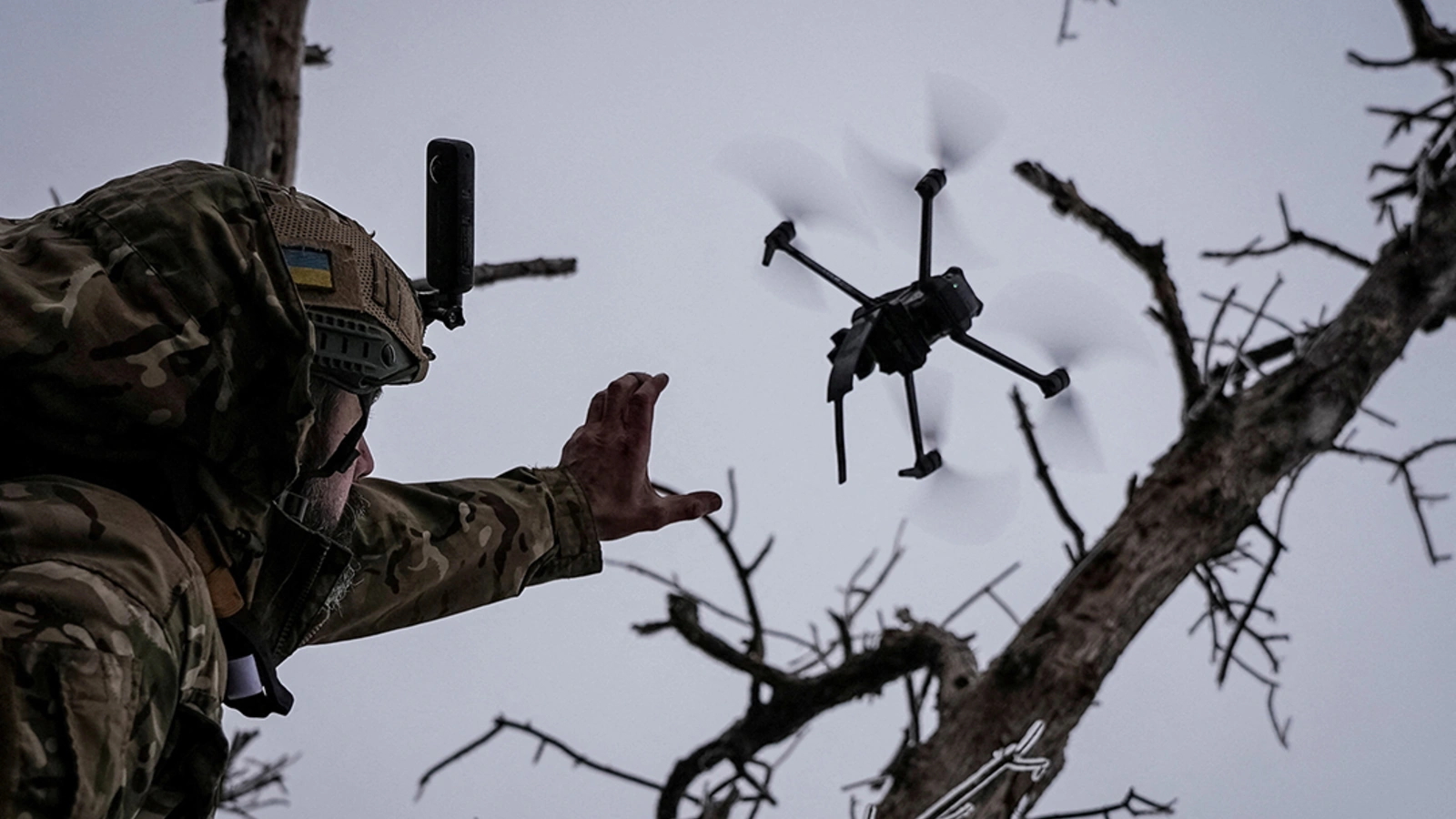
In its ongoing conflict with Russia, Ukraine has amassed an unprecedented resource: a trove of over 2 million hours of drone footage that is now being utilized to train artificial intelligence (AI) systems for battlefield decision-making. This immense dataset offers potential advancements in combat tactics, target identification, and weapon system analysis, highlighting the increasing role of AI in modern warfare.

Oleksandr Dmitriev, the founder of OCHI, a Ukrainian non-profit organization, explained that his system centralizes and analyzes video feeds from more than 15,000 frontline drone crews. Originally developed in 2022 to provide military commanders with real-time battlefield overviews, OCHI has since evolved into a repository of valuable combat data. According to Dmitriev, “This is food for the AI: If you want to teach an AI, you give it 2 million hours (of video), it will become something supernatural.”

The footage enables AI models to learn how to identify targets, evaluate combat strategies, and optimize weapon trajectories. Dmitriev likened this process to transforming human battlefield experience into mathematical models. On average, the OCHI system collects five to six terabytes of new drone footage daily, further enriching the dataset.

Experts agree on the significance of this data pool. Samuel Bendett, a senior fellow at the U.S.-based Center for a New American Security, emphasized the importance of training AI systems to distinguish between various battlefield elements such as roads, natural obstacles, and ambush sites. Meanwhile, Kateryna Bondar from the Wadhwani AI Center stressed that the dataset’s size and image quality are crucial for enabling AI models to recognize targets based on shapes and colors accurately.

In addition to OCHI, Ukraine’s Ministry of Defense has developed another AI-driven system called Avengers. While specific details about Avengers remain classified, the ministry previously revealed that it uses AI tools to identify up to 12,000 Russian military assets weekly.

AI is also being integrated into other military technologies in Ukraine. Thousands of drones are already operating autonomously, executing missions without human pilots. Ukrainian developers are exploring drone swarms—interlinked systems of drones capable of coordinated operations under a unified command. AI is further assisting in demining efforts to clear war-torn territories.

Russia, too, has been leveraging AI on the battlefield. Notably, its Lancet strike drones use AI for target recognition, demonstrating lethal effectiveness against Ukrainian armored vehicles.

With foreign allies showing interest in Ukraine’s AI capabilities, Dmitriev’s OCHI system exemplifies how technological innovation is reshaping the dynamics of modern warfare.