Yazılar

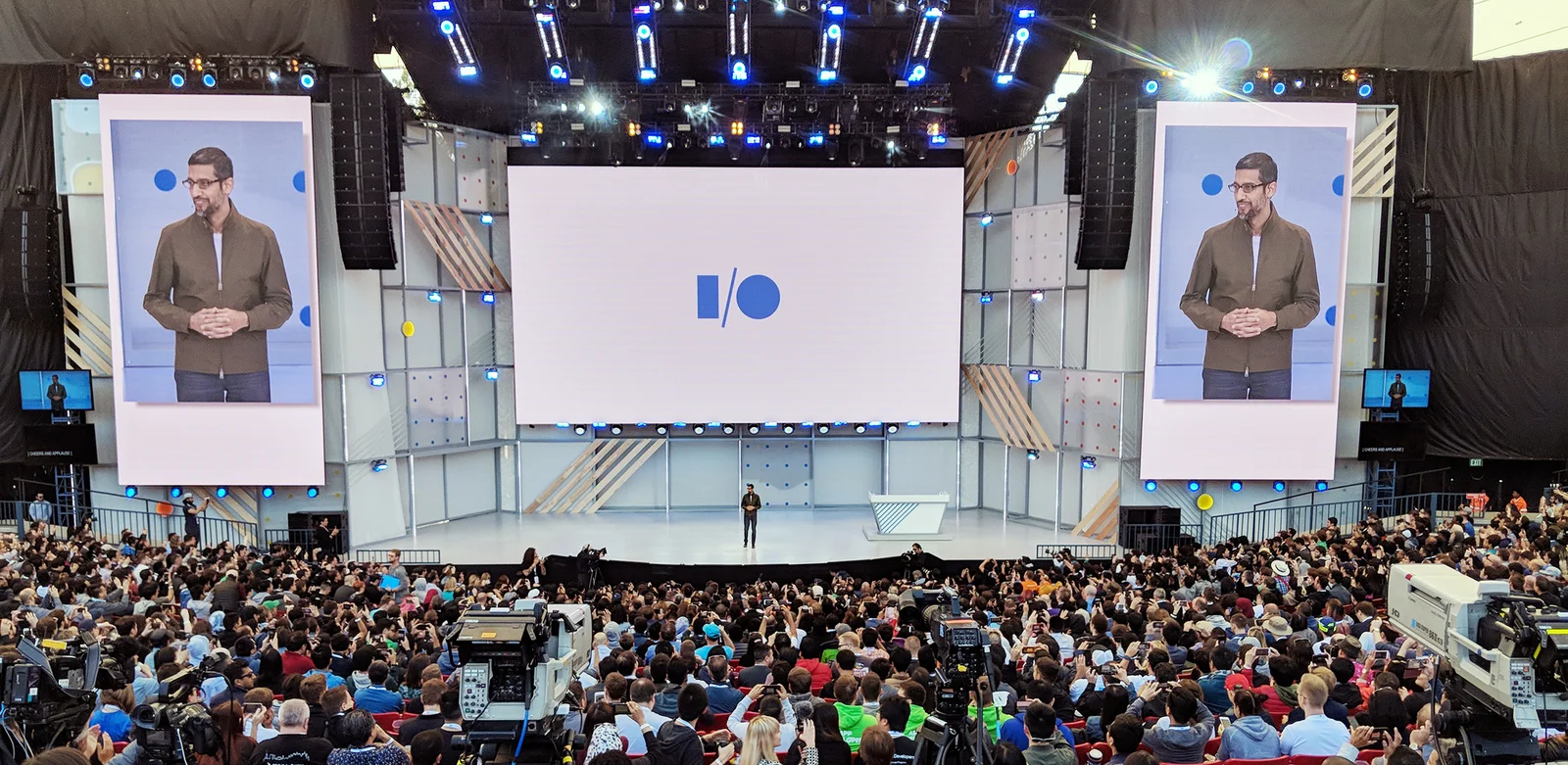
Google Unveils Bold AI Upgrades, Premium Plans, and Smart Glasses at I/O 2024

At its annual Google I/O conference in Mountain View, California, Alphabet unveiled sweeping updates to its artificial intelligence strategy, including new AI tools, a $249.99/month Ultra subscription plan, and a renewed push into smart glasses.

The announcements come amid intensifying competition from rivals like OpenAI, Anthropic, and Meta, and signal Google’s intent to maintain dominance in search, while rapidly expanding AI services for both consumers and professionals.


AI Mode in Google Search

Google introduced “AI Mode” for U.S. users, transforming traditional search by replacing web links with AI-generated responses for complex queries. Rolled out as an experiment in March, it is now available more widely and aims to deliver deeper, contextual answers.

Gemini App and AI Agents

CEO Sundar Pichai announced that the Gemini AI assistant has reached 400 million monthly active users. The company showcased Gemini’s ability to:

  • Perform real-world tasks like adding events to calendars via smartphone camera scans,

  • Fetch email info and contextual data in conversation,

  • Act as a “universal AI agent” requiring minimal prompting.


AI Ultra Plan – $249.99/Month

Google launched its AI Ultra Plan, targeting power users with:

  • Early access to experimental tools like:

    • Project Mariner – browser automation via keystrokes/mouse clicks,

    • Deep Think – enhanced reasoning with the top-tier Gemini model,

  • 30 TB of cloud storage,

  • An ad-free YouTube subscription.

This premium plan rivals OpenAI’s and Anthropic’s ~$200/month enterprise offerings, and reflects the escalating costs of AI development. It joins Google’s growing portfolio of subscription services, which now count 150 million+ paid users.


Return to Smart Glasses & XR Headset

Google returned to the smart glasses race with new frames running Android XR, demonstrated with live real-time language translation and context-aware Gemini responses during a walk around the I/O venue.

In addition, the company announced:

  • A new XR headset co-developed with Samsung, launching later in 2024,

  • Partnerships with Warby Parker and Gentle Monster to build stylish smart glasses with AI integration.


Search Pressure & Market Outlook

Despite these advances, Alphabet is under pressure. It lost $150 billion in market value earlier this month after testimony revealed that AI had reduced searches in Apple’s Safari browser — a key source of Google’s traffic.

Analysts now warn that Google’s search market share could drop from 90% to under 50% in the next five years due to consumer shifts toward AI chatbots over traditional search.

However, Google sees opportunity in this transition. Executive Robby Stein suggested that more complex AI interactions could lead to new forms of targeted advertising, Google’s main revenue source.


New AI Model – Veo 3

Google also introduced Veo 3, a powerful AI model capable of generating high-quality video and audio, allowing creators to produce realistic, cinematic content through natural prompts.


Investment in AI

Alphabet is going all-in: it’s forecasting $75 billion in capital expenditures for 2025, up from $52.5 billion in 2024, with AI development as the central focus.
Apple Developing Custom Chips for Smart Glasses, AI Servers, and Next-Gen Macs

Apple is advancing its hardware ambitions with the development of specialized chips designed to power future products, including its first smart glasses, AI servers, and next-generation MacBooks, Bloomberg News reported on Thursday, citing sources familiar with the matter.

The tech giant’s reported progress on a low-power chip for smart glasses signals its intent to directly compete with Meta’s popular Ray-Ban smart glasses, a category that’s becoming increasingly central in the race toward consumer wearables integrated with AI.

The glasses-specific chip is said to be based on Apple Watch silicon, emphasizing power efficiency and compact form factors. It has been tailored to support multiple camerasa key feature for augmented reality (AR) and immersive use cases — and could enter mass production as early as late 2026 or 2027, with TSMC (Taiwan Semiconductor Manufacturing Company) slated as the manufacturing partner.

Beyond Smart Glasses:
Apple is also reportedly working on AI-optimized server chips to support the Apple Intelligence platformthe company’s suite of on-device AI features introduced for iPhones. These capabilities include notification summaries, email rewriting, and integration with OpenAI’s ChatGPT.

The server chips would provide the infrastructure needed to process more complex AI workloads, marking a notable shift for Apple as it begins to build its own AI compute backbone, rather than relying entirely on third-party providers.

MacBook Chip Roadmap Expands:
In addition, Apple is said to be developing new Mac chips, expected to be named the M6 and M7, extending its in-house silicon strategy. Apple’s custom chips have already proven transformative in differentiating its Mac lineup, offering significant performance gains over Intel-based predecessors.

Earlier this year, Apple also unveiled its first custom modem chip for iPhones, reinforcing its long-term commitment to vertical integration — from semiconductors to software.

While Apple has not publicly commented on the report, its steady push into AR, AI, and custom hardware signals the company is not merely following trends — but aiming to shape them.

Ray-Ban Meta Glasses to Arrive Soon; New Live Translation Feature Expanded Globally

Meta Platforms has announced that the highly anticipated Ray-Ban Meta Glasses will soon be available in India, expanding their availability to include several new regions. Initially launched in the US in September 2023, the smart glasses have gradually made their way to other parts of the world. With their official arrival in India, Meta is bringing new styles and enhanced features, including the much-awaited live translation feature and the ability to send and receive direct messages and make video calls on Instagram.

The Ray-Ban Meta Glasses will be priced similarly to other markets, with the base model starting at $299 (roughly Rs. 25,000) in the US. Developed in collaboration with EssilorLuxottica, these smart glasses are equipped with a 12-megapixel ultra-wide camera, open-ear speakers, and integrated microphones, providing users with the ability to take photos, listen to music, and communicate hands-free. Although Meta has not yet disclosed specific details regarding the price and availability for India, the glasses will soon be available for purchase in India, Mexico, and the UAE.

In addition to their expanded availability, Meta has introduced new styles for the Ray-Ban Meta Glasses. Customers can now choose from a range of designs, including the Skyler Shiny Chalk Grey with Transitions Sapphire lenses, Skyler Shiny Black with G15 Green lenses, or Skyler Shiny Black with Clear lenses, offering more options to match different tastes and preferences. These new styles aim to enhance the glasses’ appeal, combining fashion and cutting-edge technology seamlessly.

A major update to the Ray-Ban Meta Glasses is the rollout of live translation, which was initially available only in the US and Canada in early access. The live translation feature is now expanding globally, allowing users to translate speech in real-time between English and Spanish, French, or Italian. With a simple voice command, “Hey Meta, start live translation,” users can hear translated audio through the glasses’ open-ear speakers and see a transcription of the conversation. Moreover, language packs can now be downloaded, making the feature accessible even without a Wi-Fi connection, further increasing its versatility.