Yazılar

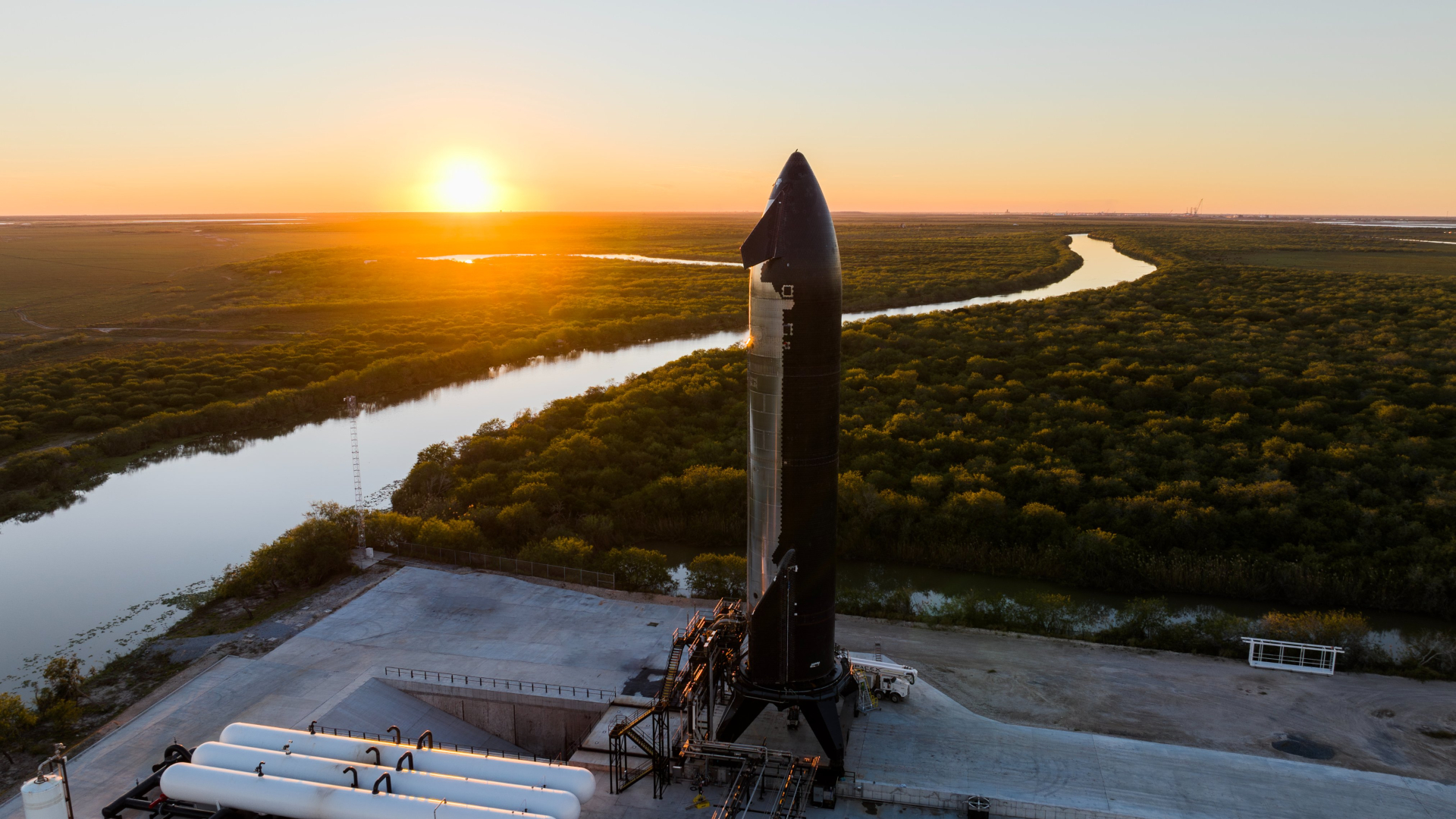
SpaceX Secures FAA Launch License for Starship Flight 7, Paving the Way for 2025 Test

The Federal Aviation Administration (FAA) has officially granted SpaceX the launch license required for the Starship Flight 7 test, marking a crucial milestone for the development of the world’s most powerful rocket. Announced on December 17, this approval permits SpaceX to advance preparations at its Starbase facility in Boca Chica, Texas. The license follows an exhaustive series of engine tests on both the Starship spacecraft and its Super Heavy booster to validate their readiness for launch. Although SpaceX has not specified an exact date, industry insiders speculate that the test could take place in early to mid-January 2025.

Rigorous Preparations in Progress

Flight 7 will follow a trajectory similar to earlier tests, involving the launch of the fully stacked Starship and Super Heavy rocket, an attempted booster catch at the launch tower, and a controlled ocean landing of the Starship in the Indian Ocean near Australia. According to the FAA, stringent safety protocols are being enforced, with SpaceX working closely with regulatory bodies to ensure full compliance with operational standards. These measures underscore the agency’s commitment to balancing innovation with public and environmental safety.

Testing Critical Systems

The primary objectives of Flight 7 include demonstrating booster recovery and validating Starship’s capability to perform safe ocean landings. A prior test in November showcased a successful Starship splashdown in the Indian Ocean but encountered issues with the booster recovery system due to sensor malfunctions. Flight 7 seeks to refine and retest these systems, incorporating adjustments derived from previous data to enhance reliability and performance.

Significance for the Starship Program

As SpaceX prepares for this next milestone, the Flight 7 test represents a pivotal step in the Starship program’s long-term goals. These include supporting lunar missions for NASA’s Artemis program and enabling human exploration of Mars. The FAA’s licensing decision, combined with SpaceX’s engineering refinements, brings the company closer to achieving these ambitious objectives, making the Starship project a cornerstone of future space exploration.
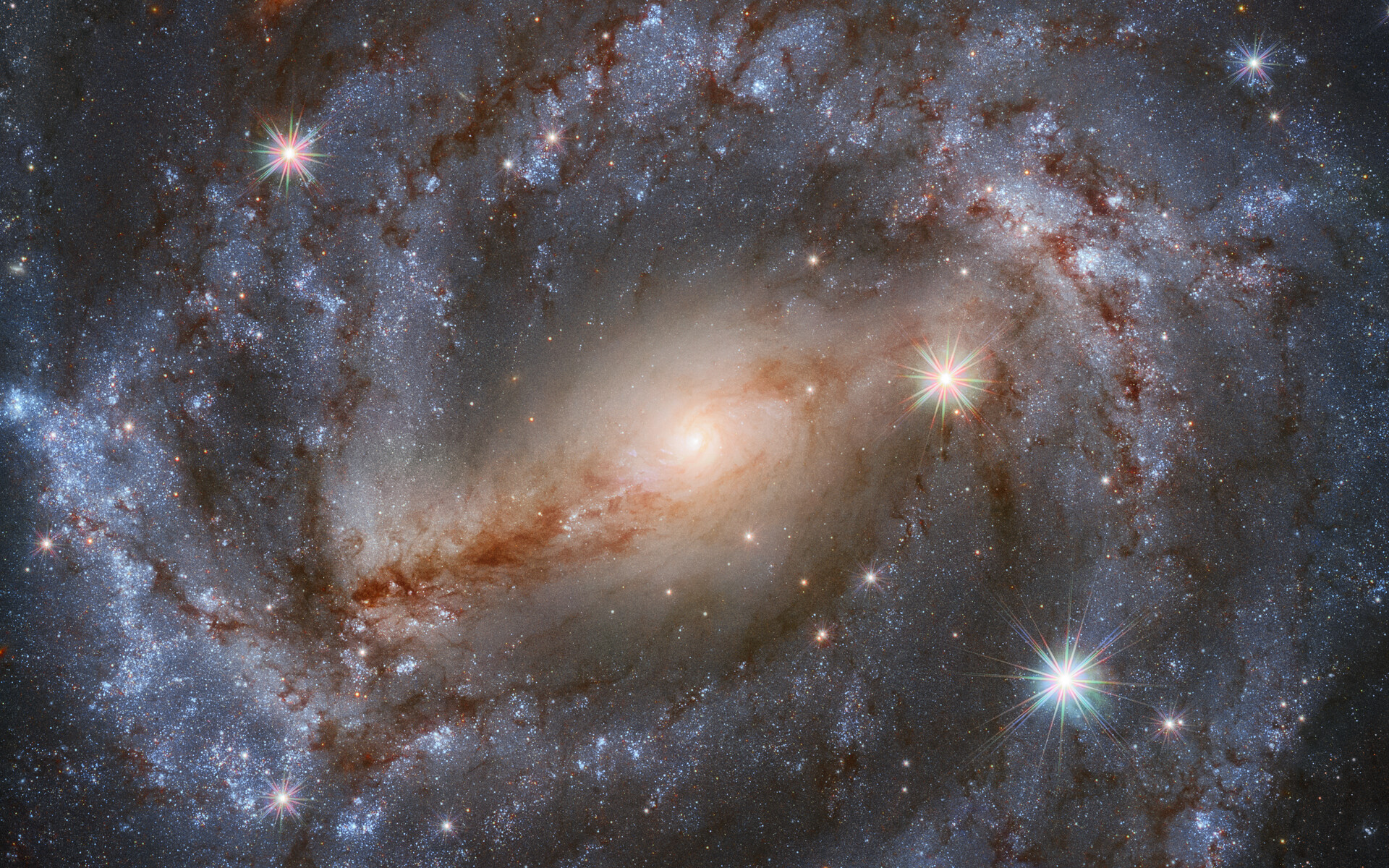
Hubble Unveils NGC 5643’s Stunning Spiral Arms and Hidden Black Hole

The spiral galaxy NGC 5643, located roughly 40 million light-years away in the constellation Lupus, has been vividly captured by the NASA/ESA Hubble Space Telescope. This “grand design spiral” galaxy boasts a symmetrical structure defined by its striking, well-organized spiral arms. These arms are adorned with vibrant, young blue stars interspersed with reddish-brown dust clouds. Within the galactic disc, regions of intense star formation are evident, showcasing pinkish hues that signify the presence of ionized hydrogen gas illuminated by young, massive stars.

While the galaxy’s beauty is readily apparent in visible light, its true nature is revealed in other wavelengths. According to a NASA blog post, ultraviolet and X-ray imaging have uncovered an active galactic nucleus at the heart of NGC 5643, powered by a supermassive black hole. Gas swirling toward the black hole heats up to extreme temperatures within the accretion disk, emitting radiation across the electromagnetic spectrum. This dynamic process, particularly prominent in X-rays, highlights the galaxy’s energetic core.

Surprisingly, the brightest X-ray source in NGC 5643 is not the supermassive black hole itself but a separate, smaller black hole identified as NGC 5643 X-1. Observations from ESA’s XMM-Newton Observatory suggest that this object, with an estimated mass of 30 Suns, is part of a binary system. It pulls gas from its companion star, forming an accretion disk that emits intense X-rays, outshining even the galactic nucleus in this wavelength.

These findings emphasize the complexity and diversity of activity within NGC 5643. From its elegantly structured spiral arms and regions of vibrant star formation to its hidden black holes emitting powerful radiation, this galaxy exemplifies the richness of the universe. Observations like these continue to deepen our understanding of galactic evolution and the interplay between massive celestial objects.

Bezos’ Blue Origin Secures FAA License for First New Glenn Rocket Launch

The Federal Aviation Administration (FAA) announced on Friday that it has granted a commercial space launch license to Blue Origin, Jeff Bezos’ aerospace company, for its New Glenn rocket. This marks a significant milestone for Blue Origin as it enters a highly competitive sector, joining SpaceX and United Launch Alliance (ULA) in vying for national security space missions.

The New Glenn rocket, named after astronaut John Glenn, received a five-year license allowing orbital launches from Cape Canaveral Space Force Station in Florida. The rocket’s reusable first stage is designed to land on a barge in the Atlantic Ocean, showcasing a focus on sustainability similar to SpaceX’s Falcon 9.

The inaugural New Glenn mission will serve as a certification test for the U.S. Space Force, a prerequisite for launching national security satellites. Initially, the debut mission was slated to carry a pair of NASA spacecraft to Mars, but delays in New Glenn’s development led NASA to shift the payload to another rocket. Instead, the first mission will carry technology for Blue Origin’s Blue Ring program, which focuses on maneuverable spacecraft for the Department of Defense.

Blue Origin joins an industry dominated by SpaceX, which has successfully used its partially reusable Falcon 9 for numerous missions and is developing its fully reusable Starship rocket. SpaceX achieved a major milestone in October when Starship’s first-stage booster returned to its Texas launch pad during a flight test.

Blue Origin has faced challenges in bringing New Glenn to market. To accelerate progress, the company hired Amazon veteran Dave Limp in late 2022 to oversee the rocket’s development. The Pentagon’s selection of Blue Origin as one of the contenders for a $5.6 billion national security space program signals a vote of confidence in the company’s potential.

With this FAA approval, Blue Origin takes a critical step toward establishing itself as a competitor in the commercial and government launch markets.