Yazılar

NASA’s Parker Solar Probe Makes Closest-Ever Approach to the Sun

NASA’s Parker Solar Probe is embarking on a historic mission, attempting the closest-ever approach to the Sun. The spacecraft is plunging into the Sun’s outer atmosphere, known as the corona, enduring extreme temperatures and radiation in a bid to unlock the mysteries of our star.

This daring fly-by will leave the probe out of communication for several days. Scientists will anxiously await a signal, expected at 05:00 GMT on 28 December, to confirm whether the probe has survived the intense conditions. The goal is to deepen our understanding of the Sun’s behavior and how it affects the solar system.

Dr. Nicola Fox, NASA’s head of science, emphasized the importance of firsthand exploration: “For centuries, people have studied the Sun, but you don’t experience the atmosphere of a place until you actually go visit it. And so we can’t really experience the atmosphere of our star unless we fly through it.”

Launched in 2018, the Parker Solar Probe has already completed 21 orbits around the Sun, gradually getting closer with each pass. The Christmas Eve mission is a groundbreaking moment, bringing the probe within 3.8 million miles (6.2 million km) of the Sun’s surface. Though this distance may seem vast, Fox puts it into perspective: “We are 93 million miles away from the Sun, so if I put the Sun and the Earth one metre apart, Parker Solar Probe is just four centimetres from the Sun.”

During its approach, the spacecraft will endure temperatures of 1,400°C (2,552°F) and radiation strong enough to damage its electronics. To protect it, the probe is shielded by a 11.5cm-thick (4.5 inches) carbon-composite heat shield. The spacecraft’s strategy is to fly in and out quickly, racing at an astonishing speed of 430,000 mph (700,000 km/h) — faster than any man-made object in history.

The Parker Solar Probe’s primary mission is to investigate the Sun’s corona, which remains an enigma for scientists. Dr. Jenifer Millard, an astronomer, explains, “The surface of the Sun is about 6,000°C, but the corona reaches millions of degrees — and it’s farther from the Sun. How is the outer atmosphere getting hotter?”

The probe’s journey will also help scientists study solar wind, the constant flow of charged particles from the corona. This space weather can lead to phenomena like auroras, but it can also disrupt power grids, communication systems, and electronics on Earth. “Understanding the Sun and its activity is so important to our everyday lives on Earth,” says Dr. Millard.

As the spacecraft is out of contact with Earth, NASA scientists are anxiously awaiting the return of a signal. Fox admitted to feeling nervous about the probe’s audacious attempt but remains confident in its design. “We really have designed it to withstand all of these brutal conditions. It’s a tough, tough little spacecraft,” she says.

If successful, the Parker Solar Probe will continue its groundbreaking mission, providing valuable insights into the Sun’s behavior and its impact on space weather for years to come.
 

Space Exploration Milestones of 2024: Lunar Ventures, Mars Breakthroughs, and Beyond

The year 2024 saw incredible progress in space exploration, with significant missions targeting the moon, Mars, Mercury, and beyond. A variety of government agencies, private companies, and research teams achieved remarkable milestones, deepening humanity’s understanding of the solar system and advancing the frontiers of space exploration.

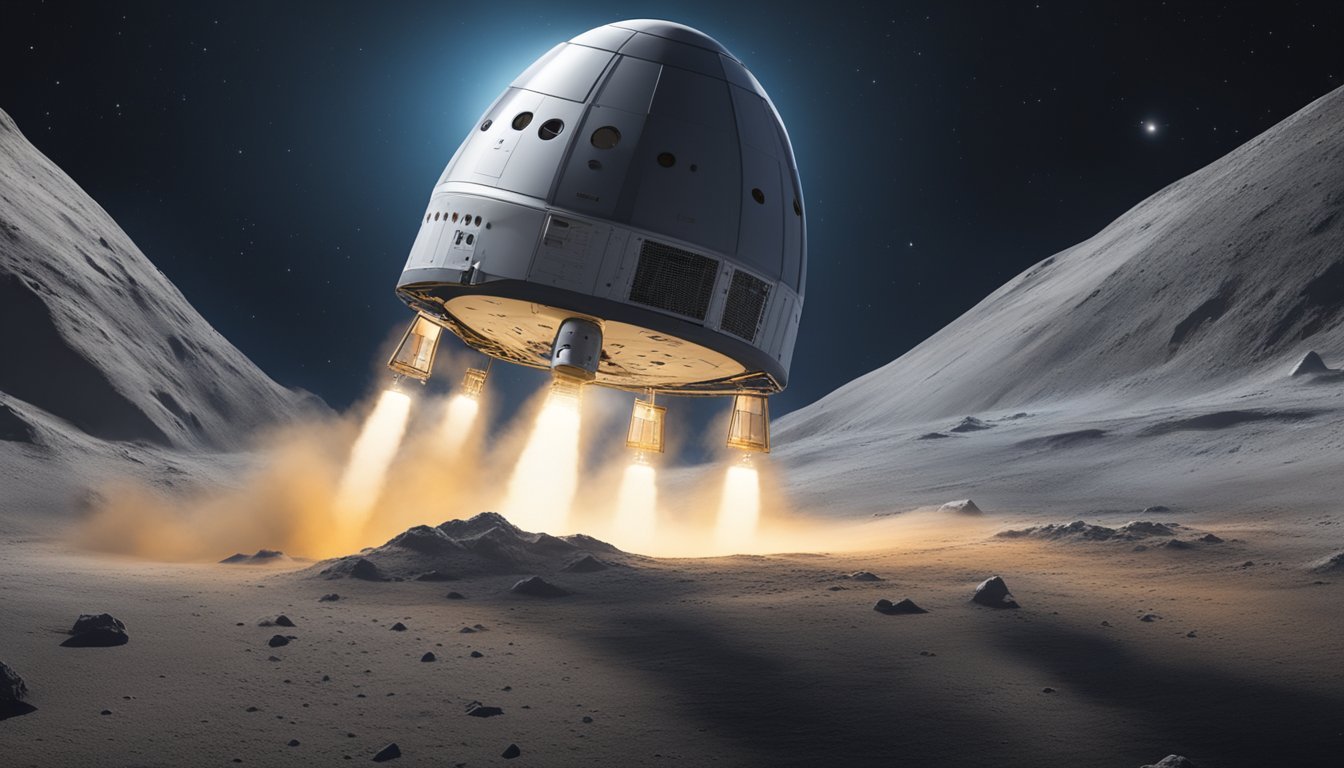
Among the most notable developments were several lunar missions that expanded our knowledge of Earth’s closest neighbor. Japan’s SLIM (Smart Lander for Investigating the Moon), which landed on the rim of a lunar crater in January, surpassed expectations by operating for three months rather than the planned two weeks. This extended mission provided invaluable data about the moon’s surface and topography. In February, the Odysseus spacecraft from Intuitive Machines, based in Houston, also made a noteworthy lunar achievement. Despite landing off-balance near the lunar south pole, the spacecraft completed its six-day mission successfully, providing important insights into the region.

China’s Chang’e 6 mission, launched by the China National Space Administration (CNSA), made headlines in June when it returned with soil samples from the moon’s far side. This was the first successful collection of samples from this previously unexplored region. Initial analysis of the samples suggested that the far side of the moon may have experienced volcanic activity as recently as 2.8 billion years ago, offering exciting new clues about the moon’s geological history.

Beyond lunar exploration, there were also significant strides made in the study of Mars and other celestial bodies. The year 2024 highlighted the increasing pace of discoveries, including new findings on Mars that could reshape our understanding of the planet’s potential to support life. As technology continues to advance, space agencies and private enterprises are rapidly pushing the boundaries of exploration, promising even more exciting developments in the years to come.

ISRO’s PSLV-C59 Set to Launch ESA’s Proba-3 Mission for Solar Corona Exploration

ISRO’s PSLV-C59 Gears Up for ESA’s Proba-3 Solar Corona Mission
The Indian Space Research Organisation (ISRO) is set to launch the PSLV-C59 rocket on December 4, 2024, at 4:08 PM IST, carrying the European Space Agency’s (ESA) Proba-3 mission. This commercial launch, managed by NewSpace India Limited (NSIL), will take place from the First Launch Pad at the Satish Dhawan Space Centre, Sriharikota. Notably, this will mark the 61st mission of ISRO’s workhorse Polar Satellite Launch Vehicle (PSLV) and the 21st instance of its XL configuration being deployed.

Proba-3: A Unique Formation-Flying Demonstration
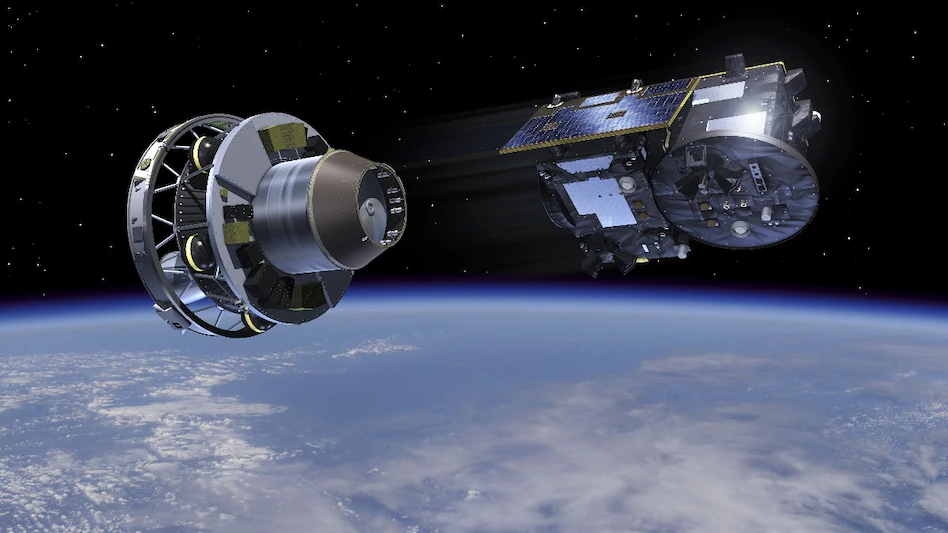
The Proba-3 mission represents an In-Orbit Demonstration (IOD) initiative by ESA, focused on precision formation flying. The spacecraft comprises two components: the Coronagraph Spacecraft (CSC) and the Occulter Spacecraft (OSC), which will function in a coordinated manner. Launched as a single unit, the satellites will separate in orbit and maintain an exact distance of 150 meters to replicate an artificial solar eclipse. This innovative arrangement will enable unprecedented observations of the Sun’s corona by blocking its direct light with the occulter.

Exploring the Mysteries of the Sun’s Corona
The mission’s primary goal is to study the Sun’s corona, the outermost layer of its atmosphere, which plays a crucial role in influencing solar dynamics and space weather. The corona is difficult to observe from Earth due to the Sun’s intense brightness, but Proba-3’s advanced instruments will overcome this challenge. Using the occulter to shield direct sunlight, the spacecraft will allow scientists to conduct continuous corona observations for up to six hours, capturing detailed data on solar eruptions, magnetic field interactions, and plasma behavior.

Global Collaboration in Space Science
The Proba-3 mission underscores the growing importance of international collaboration in advancing space science. By partnering with ESA, ISRO continues to demonstrate its capability to support complex missions requiring precision and innovation. The data collected by Proba-3 is expected to benefit not just solar physics research but also global efforts to improve predictions of space weather, which can impact satellite operations, communication systems, and power grids on Earth. This launch marks another milestone in India’s expanding role in the global space industry.