Yazılar

Funding for India’s Space Industry Drops 55% in 2024 Amid Global Investment Decline

India’s space sector saw a significant decline in funding in 2024, dropping by 55% to $59.1 million from $130.2 million the previous year, according to market intelligence platform Tracxn. This decrease marks the first funding dip in the sector in at least five years and reflects a broader global trend, with space industry investments worldwide falling by 20%.

Despite the decline, India’s space industry has made substantial strides, with global recognition for achievements such as the Chandrayaan-3 lunar landing and the Aditya-L1 solar probe launch. The Indian government is actively supporting the sector, with a 10 billion rupee ($119 million) fund introduced in October 2024 to assist space startups, along with a vision to expand India’s share of the global commercial space market by 2033.

While 2024 funding levels have fallen, industry experts are optimistic about the future. Vishesh Rajaram, managing partner at Speciale Invest, which supports Indian space tech startups, noted that the next 12 months are crucial for the sector’s growth. Pawan Chandana, founder of Skyroot Aerospace, also emphasized that investment activity is likely to rise again as key companies approach important milestones in 2025.

The Indian Space Research Organisation (ISRO) has projected a 20%-30% budget increase to further support deep space exploration and the development of heavy-lift rockets.

 

Blue Origin’s New Glenn Rocket Scheduled for Maiden Launch in January

Blue Origin is preparing for the first-ever launch of its heavy-lift New Glenn rocket, marking a major milestone for the company in the competitive space exploration sector. The Federal Aviation Administration (FAA) has confirmed that the launch window will open on Monday, January 6, from Cape Canaveral Space Force Station in Florida. The rocket’s lift-off is expected to occur between 1 a.m. and 4:45 a.m. EST, with additional opportunities available every day through January 12. This launch represents the beginning of Blue Origin’s ambition to establish a strong foothold in the space industry, directly competing with established players like SpaceX.

The inaugural mission will not carry a commercial payload. Instead, it will feature the Blue Ring Pathfinder, a simulator designed to test the New Glenn rocket’s payload systems. This mission is focused on verifying key technologies and capabilities, such as the rocket’s ability to deliver payloads to orbit, as well as the innovative technology that allows the rocket’s first stage to land on a sea platform after launch. Reusable technology is one of Blue Origin’s core goals, with the New Glenn rocket booster designed for up to 25 flights, a feature that positions it as a direct competitor to SpaceX’s Falcon and Starship rockets, which also focus on reusability.

One of the standout features of the New Glenn rocket is its 23-foot payload fairing, which is larger than that of many of its competitors. This capability allows the rocket to accommodate a wider range of payloads, giving it flexibility in handling various mission profiles. The first test flight will serve as a critical opportunity to evaluate crucial systems such as communications, tracking, and telemetry, all of which are vital for the success of future missions. These assessments are important steps toward refining the rocket’s design and preparing for commercial launches.

The New Glenn rocket’s development is part of Blue Origin’s long-term strategy to revolutionize spaceflight and make space more accessible. By focusing on reusability and flexibility, the company aims to bring down the costs of space missions and expand its commercial and scientific payload delivery capabilities. As the rocket enters its first phase of testing, Blue Origin is setting the stage for more ambitious projects, with the goal of further establishing itself as a leading player in the space industry.

ISRO Starts Assembling Human-Rated Launch Vehicle Mark-3 for Gaganyaan Mission

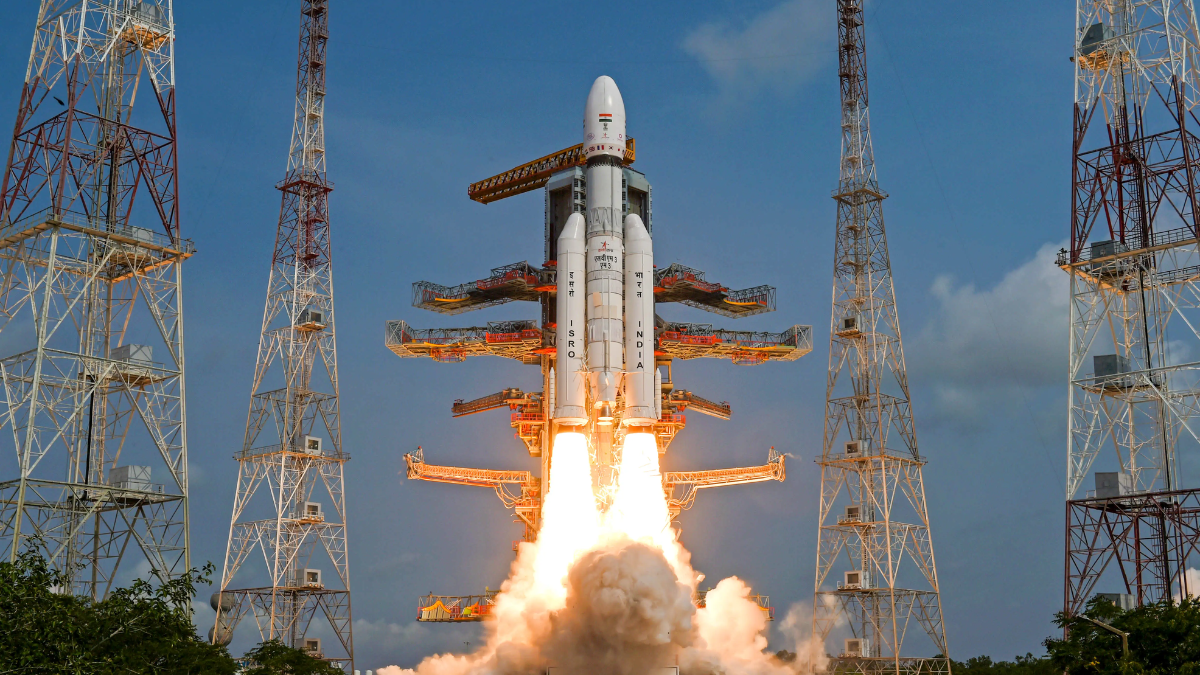
Indian Space Research Organisation (ISRO) reached a key milestone in its human spaceflight ambitions with the beginning of assembly for the Human-Rated Launch Vehicle Mark-3 (HLVM3). The assembly process started at the Satish Dhawan Space Centre (SDSC) with the stacking of the nozzle-end segment of the S200 solid rocket motor. This marks the official launch of the Gaganyaan-G1 campaign, ISRO’s first uncrewed mission as part of the Gaganyaan human spaceflight programme. Notably, this development coincides with the tenth anniversary of the LVM3-X/CARE mission, which was carried out on the same date in 2014.

The HLVM3 is an upgraded version of the LVM3 rocket, designed specifically to support human spaceflight. Standing at 53 meters tall and weighing in at 640 tonnes, the rocket is capable of carrying up to 10 tonnes to low Earth orbit. This new design features significant modifications to accommodate human spaceflight, including a crew escape system (CES) that will allow for the safe ejection of the Crew Module in case of an anomaly during ascent. These enhancements are crucial for ensuring the safety of astronauts and the success of future crewed missions.

Currently, the assembly process is underway, with the S200 motors being stacked and the L110 liquid stage and C32 cryogenic stage ready for integration at the launch complex. Meanwhile, the integration of the Crew Module is being handled at the Vikram Sarabhai Space Centre (VSSC), and preparations for the Service Module are taking place at the U.R. Rao Satellite Centre (URSC). This coordination across multiple ISRO centers highlights the collaborative effort required to successfully launch the Gaganyaan mission.

The Gaganyaan mission marks a significant leap for India’s space exploration capabilities, moving the nation closer to its goal of sending humans into space. With the successful assembly of the HLVM3 and the continued progress in the preparation of the Crew and Service Modules, ISRO is setting the stage for a historic human spaceflight. This project not only strengthens India’s presence in the global space community but also fosters technological advancements that will benefit various sectors on Earth.