Yazılar

NASA’s Juno Spacecraft Reveals Breathtaking Images of Jupiter’s Storms and Moon Amalthea

NASA’s Juno spacecraft has once again provided stunning insights into the mysteries of Jupiter, offering up close and detailed images of the planet’s swirling storms and its intriguing moons. On October 23, 2024, Juno completed its 66th flyby of Jupiter, this time focusing on the planet’s polar regions. Among the highlights of this close encounter was a remarkable view of Jupiter’s fifth-largest moon, Amalthea. The spacecraft’s JunoCam captured these raw images, which were later enhanced by citizen scientists, revealing vibrant details of Jupiter’s complex atmosphere and its accompanying moon in unprecedented clarity.

One of the most striking images from Juno’s recent pass showcases a region on Jupiter known as the Folded Filamentary Region (FFR), located near the planet’s subpolar areas. These regions are characterized by their intricate cloud formations, including white, billowing clouds and delicate, thread-like filaments that swirl through Jupiter’s atmosphere. Citizen scientist Jackie Branc was responsible for processing this particular image, enhancing the colours and contrast to showcase the planet’s dynamic weather systems in breathtaking detail. The result is a vivid and detailed depiction of Jupiter’s stormy atmosphere, one that has never before been captured with such clarity.

Juno’s mission has not only provided fascinating images of Jupiter’s storms but has also opened up a collaborative space for both amateur and professional scientists. The spacecraft’s raw data, made publicly available, allows enthusiasts and researchers to adjust features like contrast and colour balance, providing new perspectives on the planet’s powerful weather patterns. These images have revealed everything from Jupiter’s characteristic atmospheric bands to its turbulent clouds and swirling vortices, offering a window into the planet’s ever-changing climate.

This ongoing collaboration between NASA and the global scientific community continues to yield exciting discoveries about Jupiter, a gas giant with a weather system that remains one of the most complex and active in our solar system. With every flyby, Juno brings back new details that enhance our understanding of the planet and its moons, helping to piece together the puzzle of how Jupiter’s atmosphere functions. These stunning images not only enrich our scientific knowledge but also fuel our fascination with the mysteries of space.

NASA’s Roman Space Telescope Upgraded with New Coronagraph to Detect Exoplanets

In October 2024, NASA’s Jet Propulsion Laboratory achieved a significant milestone by successfully integrating the Roman Coronagraph Instrument onto the Nancy Grace Roman Space Telescope, which is scheduled for launch in May 2027. This cutting-edge coronagraph is designed to detect exoplanets that are incredibly faint—up to 100 million times dimmer than their parent stars—by blocking out the overwhelming light from the stars. This breakthrough technology paves the way for future missions aimed at finding Earth-like planets in distant solar systems, making this integration a critical step in advancing exoplanet research.

The Roman Coronagraph, about the size of a baby grand piano, is a complex system composed of masks, prisms, and mirrors working together to block starlight. According to Rob Zellem, Deputy Project Scientist for the Roman Telescope, the instrument’s primary goal is to demonstrate the technologies needed for upcoming space missions such as the proposed Habitable Worlds Observatory, which aims to search for planets capable of supporting life. This crucial piece of technology was installed at NASA’s Goddard Space Flight Center, where it was integrated with the Telescope’s main frame, known as the “skeleton” of the observatory. The final integration will see it paired with the Wide Field Instrument, the Roman’s primary science tool, completing the telescope’s core functionality.

Historically, most exoplanet discoveries have been made using the transit method, where astronomers detect the slight dimming of a star’s light as a planet passes in front of it. However, this method is limited by the rare alignments of planetary orbits. The coronagraph-equipped Roman Space Telescope will go beyond this constraint by using direct imaging, allowing scientists to observe exoplanets without waiting for a transit event. This technique, known as coronagraphy, has been tested on the ground with some success, such as with the HR 8799 star system. But the Roman Coronagraph’s advanced capabilities promise to provide unprecedented sensitivity, offering a new way to study distant worlds in space.

With this new coronagraph, the Roman Space Telescope will significantly enhance our ability to directly image exoplanets, marking a major step forward in the search for habitable planets outside our solar system. By blocking out the blinding light of stars, it opens the door to studying planets that were previously too faint to observe, potentially identifying new candidates for life-supporting worlds. As the telescope nears its 2027 launch, the coronagraph will play a pivotal role in shaping the future of space-based exoplanet exploration.

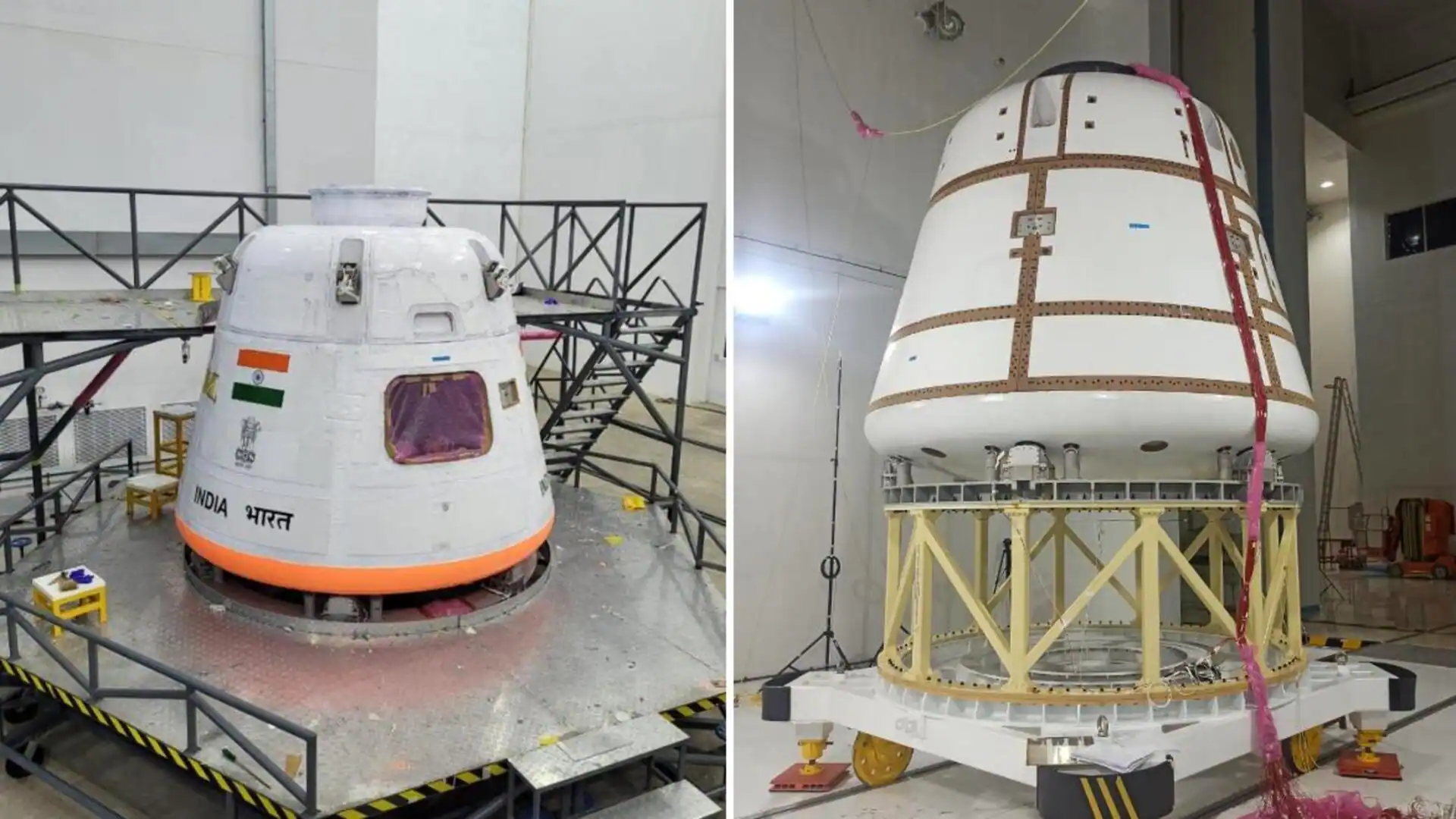
India’s Gaganyaan Mission Delayed to 2026 as ISRO Prioritizes Safety, Training, and Testing

India Delays Gaganyaan Mission to 2026, Emphasizing Safety and Comprehensive Testing

India’s ambitious Gaganyaan mission, which aims to send its first astronauts into space, has been postponed to 2026. This delay comes as the Indian Space Research Organisation (ISRO) prioritizes comprehensive testing, safety protocols, and astronaut training. Originally scheduled for 2025, the new timeline reflects ISRO’s cautious approach in light of recent setbacks in the aerospace industry. The announcement was made by S. Somanath, Chairman of ISRO, who assured that India’s first crewed mission would follow a series of uncrewed test flights to ensure everything is in place for a safe and successful launch.

ISRO has committed to conducting a series of rigorous tests to guarantee the safety of the astronauts. The first of these uncrewed trials is scheduled to take place in December 2023, with further tests planned throughout the following years. These flights will verify key systems, including the spacecraft’s life support, emergency escape mechanisms, and recovery systems, all of which are critical for the success of the Gaganyaan mission. ISRO is determined to avoid any potential mishaps similar to the challenges faced by other space programs, such as the Boeing Starliner, which faced technical difficulties during its own test flights.

Somanath emphasized that the safety-first approach is integral to ISRO’s strategy. To mitigate risks and ensure reliability, the Gaganyaan mission will be preceded by four uncrewed test flights. These flights will test essential technologies, including the spacecraft’s parachute system and its ability to safely return to Earth after re-entry. One of the key elements of these tests will be the use of Vyomitra, a humanoid robot that will simulate astronaut conditions and test the spacecraft’s ability to re-enter Earth’s atmosphere, deploy its parachutes, and execute a controlled splashdown in the Bay of Bengal.

The delay in the Gaganyaan mission is seen as a step toward strengthening India’s space capabilities, ensuring that it can join the ranks of the United States, Russia, and China in sending humans to space independently. With careful planning and thorough testing, ISRO is taking a methodical approach to space exploration, aiming for a safe and successful crewed mission in 2026. As the program progresses, the agency is also focusing on astronaut training, which will be vital for the mission’s success, as India prepares to send its astronauts on a historic journey into low Earth orbit.