Yazılar

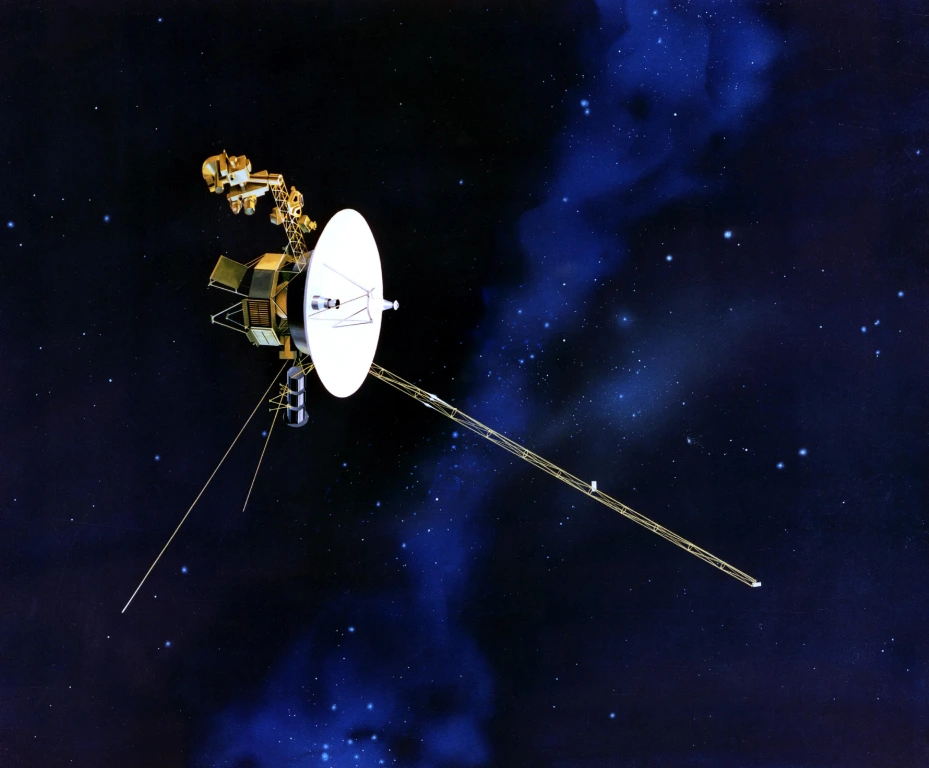
Aging Voyager 1 Spacecraft Revives Ancient Transmitter to Reestablish Contact with NASA

NASA’s Voyager 1 spacecraft, which has been traveling through interstellar space for nearly five decades, has successfully reestablished communication after a brief but critical blackout. Launched in September 1977, Voyager 1 is currently about 15 billion miles (24 billion kilometers) from Earth, making it the farthest spacecraft from our planet.

Recently, the spacecraft experienced a technical issue that prompted its autonomous fault protection system to engage, cutting off communication for several days. To mitigate power consumption and prolong its operational life, the Voyager team has been selectively turning off components over the years. In a remarkable turn of events, engineers activated a radio transmitter that Voyager 1 hadn’t used since 1981 to maintain contact with mission control.

Communication Breakdown and Recovery

On October 16, NASA sent a command to turn on Voyager 1’s heaters, which are crucial for warming components that have suffered radiation damage over time. However, something triggered the fault protection system, leading the spacecraft to automatically shut down non-essential systems to conserve power. The following days saw no response from Voyager, leading to heightened concerns among the team.

Using the Deep Space Network, a system of antennas that facilitates communication with distant spacecraft, engineers were able to eventually detect a faint signal from Voyager 1 on October 18. However, by October 19, communication halted entirely, leading to fears that the X-band transmitter, typically used for sending data, had shut down again, potentially switching to the weaker S-band transmitter instead.

A Dim Signal and Future Steps

NASA’s team confirmed that the S-band signal was detectable, although it poses significant challenges for long-term communication. According to Bruce Waggoner, Voyager mission assurance manager, the S-band is “too weak to use long term.” While this weaker signal allows for basic commands to be sent, it does not support telemetry or scientific data transmission.

Engineers are now working meticulously to analyze the fault protection system’s triggers before attempting to switch back to the more powerful X-band transmitter. This careful approach is necessary to avoid further complications that could jeopardize Voyager 1’s mission. Waggoner noted that reestablishing the X-band’s functionality could provide critical data that may explain the recent communication failures.

In the meantime, the team successfully confirmed the functionality of the S-band transmitter on October 24, ensuring that Voyager remains oriented towards Earth, but this is not a sustainable solution for ongoing communication.

Innovative Solutions Amidst Challenges

Despite these challenges, the Voyager team has demonstrated remarkable ingenuity. Earlier in the year, they employed several innovative techniques to maintain contact with the aging spacecraft, such as activating old thrusters to keep the antenna aligned with Earth and resolving a computer glitch that had interrupted scientific data transmission for months.

Voyager 1’s ability to continue operating in the harsh conditions of interstellar space highlights both the resilience of the technology and the dedication of the team working to ensure the mission’s success as it continues its unprecedented journey through the cosmos.
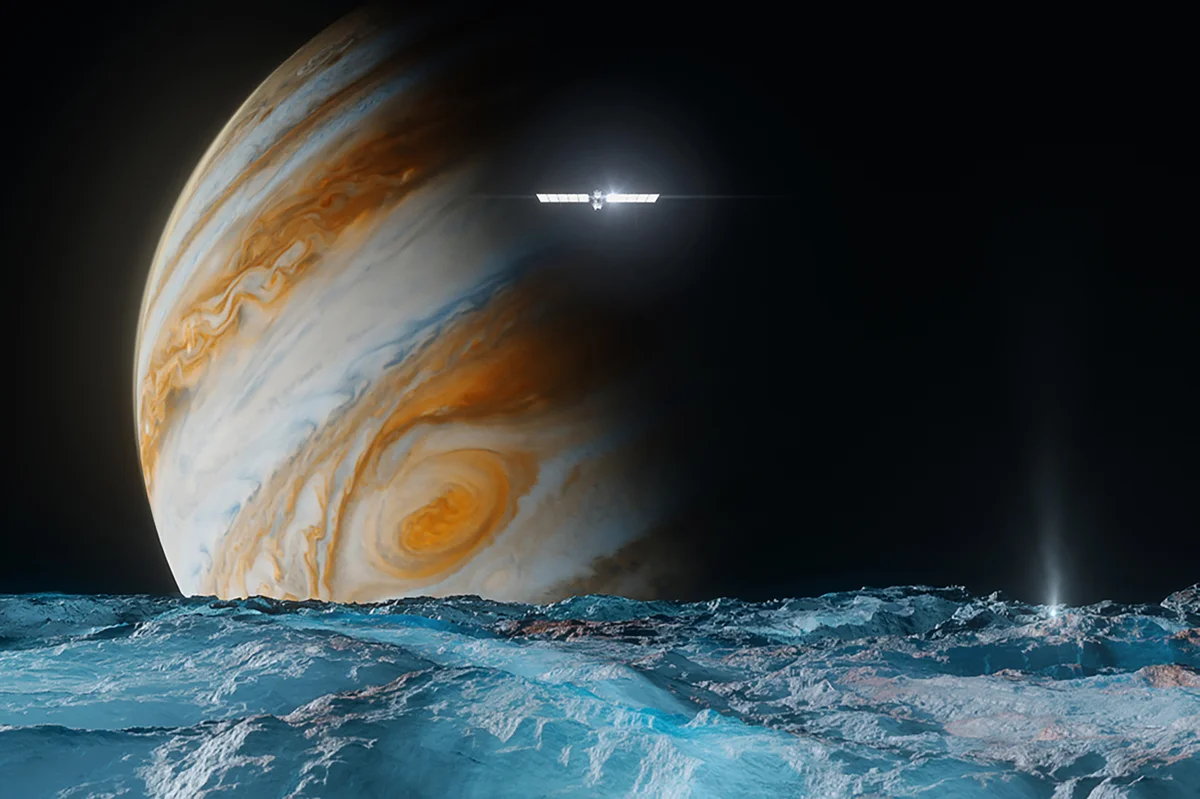

 

NASA’s Europa Clipper Mission Launched to Investigate Potential for Life on Europa’s Icy Surface

NASA’s Europa Clipper Mission: A Journey to Uncover the Secrets of Europa

NASA has launched its Europa Clipper mission, a groundbreaking initiative designed to explore Europa, one of Jupiter’s most fascinating moons. Scientists are particularly intrigued by Europa due to the potential existence of a subsurface ocean beneath its thick icy crust, which may harbor conditions conducive to life. The Europa Clipper spacecraft is set to conduct 49 flybys of the moon, employing cutting-edge instruments to analyze both the surface and the ocean beneath, thereby enhancing our understanding of this enigmatic satellite.

In-Depth Surface Analysis and Organic Compound Search

One of the primary objectives of the Europa Clipper mission is to study Europa’s icy surface and determine whether it contains organic materials that may have originated from the subsurface ocean. Key instruments, such as the Mapping Imaging Spectrometer for Europa (MISE), will facilitate the identification of various surface materials. Additionally, the Europa Thermal Emission Imaging System (E-THEMIS) will help scientists pinpoint thermal hotspots, which could indicate geological activity beneath the icy shell. By searching for signs of organic compounds and gases that may escape from the moon, researchers hope to gather critical evidence about Europa’s habitability.

Investigating Europa’s Internal Structure

Beyond surface analysis, the Europa Clipper mission aims to delve into the moon’s internal structure. The Europa Clipper Magnetometer (ECM) and the Plasma Instrument for Magnetic Sounding (PIMS) will measure the induced magnetic field and electrical currents surrounding Europa. These measurements are essential for understanding the characteristics of the subsurface ocean, including its depth and salinity, as well as the thickness of the ice shell above it. This data will help scientists assess whether the conditions beneath the ice are suitable for supporting life.

Radar Technology to Reveal Hidden Environments

An essential component of the Europa Clipper mission is the Radar for Europa Assessment and Sounding to Near-surface (REASON) instrument. This advanced radar technology will enable researchers to penetrate the icy surface and explore the ocean lying below. By providing insights into the composition and structure of the ice, as well as identifying potentially habitable environments, REASON is poised to play a crucial role in our quest to understand Europa’s potential for life. As the mission unfolds, scientists anticipate that the findings will not only deepen our knowledge of Europa but also shape future explorations of icy worlds throughout our solar system

NASA’s Europa Clipper Mission Launches Today: Watch Live Online for Exclusive Details and Updates

NASA’s Europa Clipper mission is poised to embark on an exciting journey to Jupiter’s enigmatic moon, Europa, with its launch scheduled for October 14, 2024, at 12:06 PM EDT (9:36 PM IST). The spacecraft will lift off aboard a SpaceX Falcon Heavy rocket from Launch Complex 39A at NASA’s Kennedy Space Center in Florida. This mission holds immense promise as it aims to investigate Europa’s potential to support life, with the spacecraft expected to reach its destination by April 2030. By closely studying Europa’s icy surface and subsurface ocean, scientists hope to gain crucial insights into the moon’s habitability and the broader implications for life beyond Earth.

To celebrate the launch, NASA will host a series of festivities on launch day, starting with live coverage from 11:00 AM EDT. This event will be accessible to viewers around the world via multiple platforms, including YouTube, NASA+, and various social media channels such as X, Twitch, and KSC Facebook. For Spanish-speaking audiences, NASAes will provide coverage on YouTube and NASA+. The extensive coverage reflects NASA’s commitment to transparency and public engagement, allowing space enthusiasts to witness the critical moments leading up to the launch.

For those looking to enhance their launch day experience, NASA is offering several opportunities for public participation. Aspiring virtual guests can sign up to receive exclusive mission resources and a commemorative stamp for their virtual passport, making the experience even more memorable. Additionally, NASA encourages fans to host their own launch watch parties, providing resources through their Launch Party Hub. This initiative not only fosters community engagement but also enables individuals to share their excitement about space exploration with friends and family.

The Europa Clipper mission represents a major milestone in planetary science, promising to unravel the mysteries surrounding one of the most intriguing bodies in our solar system. As the spacecraft prepares for its groundbreaking journey, the involvement of the public through virtual participation and watch parties serves as a reminder of the collaborative spirit of space exploration. With each mission, NASA continues to inspire curiosity and wonder about the universe, inviting everyone to be part of this incredible adventure.