Yazılar

Trump Victory Could Boost Elon Musk’s Vision of Mars Missions

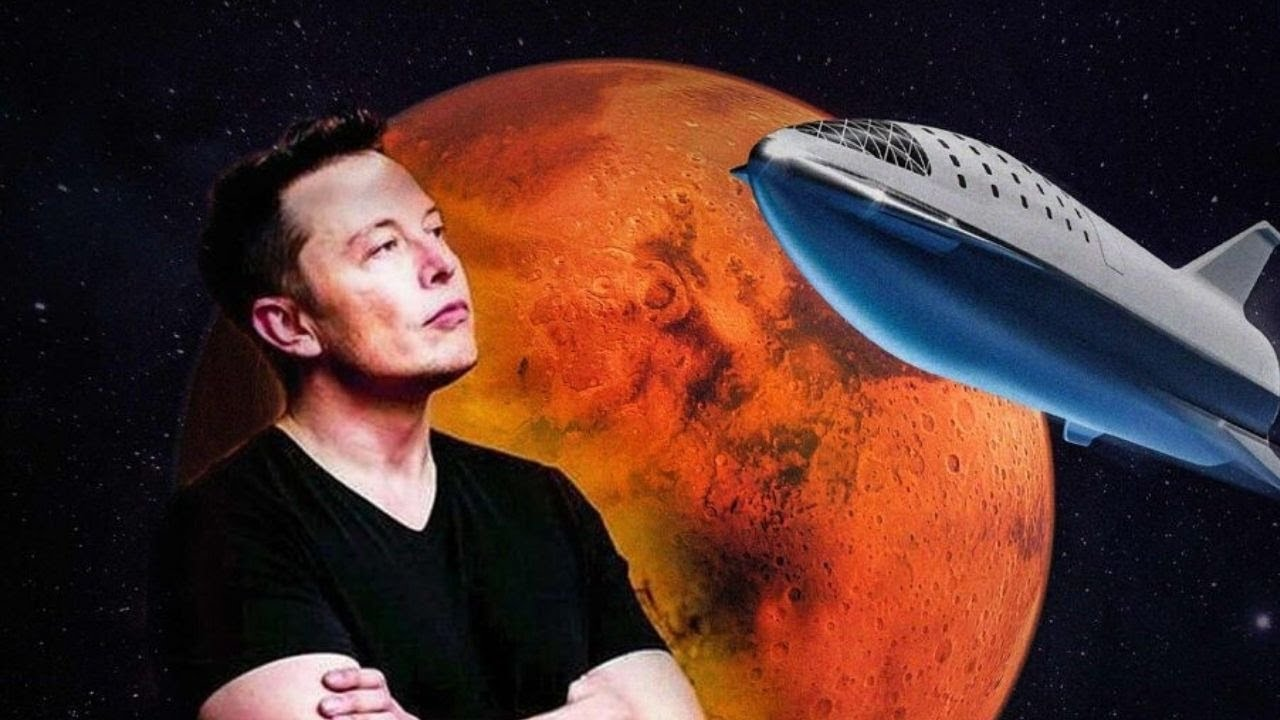
Elon Musk’s ambition to transport humans to Mars may gain momentum under President-elect Donald Trump, according to sources familiar with Trump’s space policy plans. NASA’s Artemis program, which involves Musk’s SpaceX Starship rocket, currently aims to place humans on the moon as a step toward Mars missions. Under the new administration, however, the program is expected to prioritize Mars more directly, with potential uncrewed missions as soon as this decade.

This shift aligns with Musk’s long-term goal of making Mars humanity’s next frontier. Known for wearing an “Occupy Mars” shirt at a Trump rally in October, Musk has strongly endorsed the incoming president, contributing $119 million to Trump’s campaign and heightening the visibility of space policy during the transition.

Sources indicate that the Trump administration’s approach to NASA will focus more intensively on Mars, seeing the moon as a mere “launching pad” for a Mars mission. Doug Loverro, a space industry consultant who led NASA’s human exploration unit during Trump’s previous term, notes that a Mars-centered agenda could make the Red Planet an explicit objective. Yet, an intensified Mars focus also poses increased financial and technical challenges, especially in comparison to lunar missions.

Trump’s influence on space policy isn’t new: he launched NASA’s Artemis program in 2019, which the Biden administration maintained. However, Trump’s advisers now plan to push for changes in Artemis to correct what they perceive as stagnation since their last administration. This could entail shifting from costly government contracts to fixed-price agreements with private companies, which would transfer greater responsibility—and risk—to firms like SpaceX.

Under Musk’s influence, the Trump administration may also look to reduce regulatory constraints, particularly at the Federal Aviation Administration (FAA). Musk has long voiced frustration over the FAA’s commercial space regulations, which he argues have delayed SpaceX’s Starship program. Deregulation could thus expedite private rocket launches, aiding Musk’s vision for Mars.

Such policy shifts may impact NASA’s $24 billion Space Launch System (SLS) rocket, a government-owned project led by Boeing and Northrop Grumman since 2011. If Artemis pivots toward Mars, the SLS program could face scrutiny, as critics argue it has drained NASA’s budget while struggling with delays. Nonetheless, canceling the program would be difficult due to the potential job losses and greater reliance on SpaceX for space missions.

Musk, who also heads Tesla and Neuralink, is known for setting ambitious timelines. He recently claimed that SpaceX could land Starship on Mars by 2026, with a crewed mission following by 2030. Trump has publicly discussed these Mars aspirations with Musk, although experts are cautious about the feasibility. Scott Pace, Trump’s top space policy official during his previous term, believes that while a one-way Starship mission to Mars might be achievable, a fully crewed mission remains unlikely within such a short timeline.

Plans for Musk’s Mars vision could change as the Trump transition team finalizes its policy agenda. For now, it appears that both Musk and Trump are aligned in their drive to push the boundaries of space exploration, targeting Mars as a significant goal for the near future.

 

World’s First Wooden Satellite, Developed in Japan, Heads to Space

The world’s first wooden satellite, crafted by researchers in Japan, was launched into space on Tuesday, marking a pioneering step in exploring the use of timber for lunar and Martian missions.

LignoSat, developed by Kyoto University in collaboration with homebuilder Sumitomo Forestry, is on a SpaceX mission to the International Space Station (ISS), from where it will be released into orbit approximately 400 kilometers (250 miles) above Earth. Named after the Latin term for “wood,” LignoSat is designed to assess the potential of renewable materials for long-term human habitation in space.

Takao Doi, an astronaut and human space activities researcher at Kyoto University, emphasized the significance of using timber: “With timber, a material we can produce by ourselves, we will be able to build houses, live, and work in space forever.” His team envisions a 50-year initiative focused on planting trees and constructing timber habitats on the Moon and Mars, prompting the development of this NASA-certified wooden satellite to validate the viability of wood as a space-grade material.

Koji Murata, a forest science professor at Kyoto University, noted, “Early 1900s airplanes were made of wood. A wooden satellite should be feasible, too.” He added that wood might actually perform better in space conditions, as it is less prone to rot or combustion without the presence of water or oxygen.

The environmental benefits of a wooden satellite are also significant, as it would produce less pollution upon decommissioning. Current metal satellites must re-enter the atmosphere to prevent space debris; during this process, they generate aluminum oxide particles. In contrast, wooden satellites would simply burn up, resulting in a cleaner re-entry, according to Doi, who suggested that “metal satellites might be banned in the future.”

Industrial Applications
The research team determined that honoki, a magnolia species native to Japan and traditionally used for sword sheaths, is the most suitable material for space applications after a 10-month study on the ISS. LignoSat is constructed using traditional Japanese craft techniques, without the use of screws or glue.

Once deployed, LignoSat will orbit the Earth for six months, with onboard electronics monitoring how wood withstands the extreme conditions of space, where temperatures can vary from -100 to 100 degrees Celsius (-148 to 212 degrees Fahrenheit) every 45 minutes as it transitions between light and darkness.

Additionally, LignoSat will evaluate wood’s effectiveness in shielding semiconductors from space radiation, which could have practical implications for constructing data centers, according to Kenji Kariya, a manager at Sumitomo Forestry’s Tsukuba Research Institute. He remarked, “It may seem outdated, but wood is actually cutting-edge technology as civilization heads to the Moon and Mars. Expansion into space could invigorate the timber industry.”


Neptunian Ridge Discovery: Scientists Unveil New Planetary Zone in the Cosmos

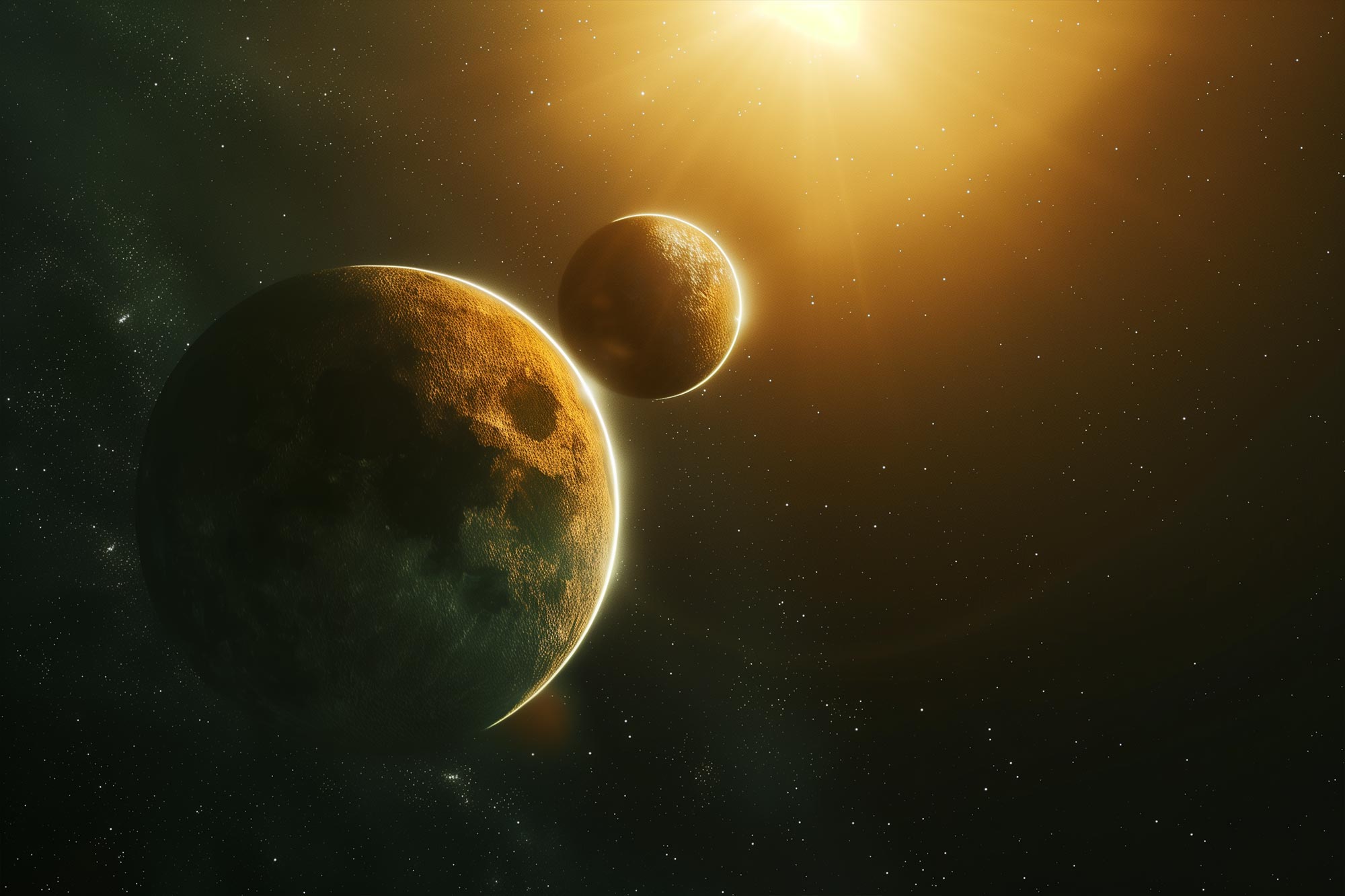
British scientists have made a groundbreaking discovery in the vast expanse of space: a densely packed ridge of planets previously unknown to the scientific community. A team from the University of Warwick stumbled upon this remarkable feature while investigating Neptune-like planets located far beyond our solar system. Their observations revealed a distinct pattern—a crowded band of planets lying between two starkly contrasting regions: a “desert,” where few planets can survive, and a “savannah,” where planets exist in abundance. This discovery provides new insights into how planets are distributed in space, akin to the revelation of an uncharted mountain range that reshapes our understanding of Earth’s landscape.

Life in the Cosmic Desert
Imagine a hostile environment where intense stellar radiation continuously bombards planets, eroding their atmospheres and leaving behind only barren rocky cores. This desolate region, now known as the Neptunian Desert, is inhospitable to most planetary bodies. Only the toughest planets, resistant to the relentless onslaught of their nearby stars, manage to endure. These rare survivors are comparable to the few resilient species that manage to eke out a living in Earth’s most unforgiving deserts.

A Planetary Savannah
Beyond this harsh desert lies a more forgiving region dubbed the “Neptunian Savannah,” where planets are far more likely to thrive. Here, conditions are relatively stable, and planets are better able to retain their atmospheres, sustaining a more favorable environment. This area teems with diverse planetary types, protected from the extreme radiation that characterizes the desert zone. The contrast between the two regions highlights the varied fates of exoplanets as they struggle to maintain their atmospheres and stability in the face of intense cosmic forces.

The Safe Haven: The Ridge of Survival
What makes this discovery so compelling is the dense ridge of planets that lies between the desert and the savannah. This newly identified zone acts as a safe haven, where planets somehow manage to retain their gaseous envelopes while avoiding complete atmospheric erosion. Scientists believe these planets arrived in this region through various mechanisms, such as migrating from farther out in their star systems or forming in place under unique conditions. This ridge represents a delicate balance, a transitional area where planets achieve a rare equilibrium, providing an invaluable opportunity to understand planetary evolution in extreme environments.