Yazılar

Airbus, Thales, and Leonardo Plan New European Satellite Venture Amid Industry Challenges

INTRODUCTION:
European aerospace giants Airbus, Thales, and Leonardo are reportedly in discussions to establish a joint satellite venture, codenamed “Project Bromo.” This ambitious initiative aims to challenge Elon Musk’s Starlink network and reshape Europe’s satellite sector, which has struggled with losses and competitive pressures from low-cost satellites in low Earth orbit (LEO).

KEY DETAILS

  1. Project Bromo – A European Satellite Champion:
    • The venture, modeled on missile maker MBDA, envisions a standalone entity combining satellite assets rather than a traditional acquisition structure.
    • This collaborative effort seeks to leverage the strengths of the three companies to create a scalable and competitive European satellite enterprise.
    • Leonardo CEO Roberto Cingolani confirmed discussions about adopting the MBDA model but noted governance structures may vary.
  2. Strategic Drivers:
    • Europe’s leading satellite makers, traditionally focused on high-complexity geostationary orbit spacecraft, are adapting to the rapid rise of smaller, cost-efficient satellites in LEO.
    • Cingolani emphasized that satellites could account for 75% of the space economy in the future, highlighting the need for Europe to stay competitive in this evolving market.
  3. Job Cuts Across the Industry:
    • Parallel to the satellite initiative, Airbus plans to cut up to 2,500 jobs in its Defence and Space division, representing 7% of its workforce, by mid-2026.
    • Thales has announced plans to reduce 1,300 space-related positions as part of restructuring efforts.
    • Most Airbus cuts are expected in its €2 billion space systems business, with reductions likely in France, Germany, the UK, and Spain.
  4. Historical Challenges:
    • The European space industry has long discussed restructuring but has faced delays due to competition concerns and governance complexities.
    • Despite previous attempts, including Airbus’ 2001 pledge to restructure the space industry after forming MBDA, substantial progress has been elusive.
  5. Timeline and Implications:
    • Project Bromo is still in early stages and could take years to materialize.
    • If successful, the joint venture would provide Europe with a robust satellite manufacturing entity capable of competing with global players like Starlink.

MARKET AND COMPETITION

  • Global Satellite Trends: The space economy is shifting toward LEO satellites, driven by demand for affordable, scalable solutions for global internet connectivity and communication.
  • Challenges from Starlink: SpaceX’s Starlink dominates the LEO market with its extensive satellite network, presenting a formidable challenge to European firms.
  • European Collaboration: The MBDA-inspired model may allow for better resource pooling and coordinated competition, reducing fragmentation in the European satellite market.

CONCLUSION

Project Bromo represents a significant step toward strengthening Europe’s position in the satellite industry. However, its success depends on overcoming technical and governance hurdles and aligning the diverse interests of Airbus, Thales, and Leonardo. Simultaneously, widespread job cuts underscore the challenges facing the European space sector as it navigates competitive pressures and structural realignments.

SpaceX Plans to Retry ‘Chopsticks’ Rocket Catch in Upcoming Starship Launch

SpaceX is preparing for the highly anticipated launch of its massive Starship rocket from South Texas, scheduled for Tuesday. This critical test mission, which marks the sixth major trial for the Starship program, is set to draw significant attention. One notable aspect of the launch is the expected visit from President-elect Donald Trump, signaling the importance of this event both for SpaceX and its political connections.

The launch comes at a time when SpaceX CEO Elon Musk is deeply involved in the transition planning for Trump’s second term. Musk has been an influential figure in Trump’s circle since the November 5 election, and his support for the Republican administration has been attributed to concerns over regulations, particularly those affecting the development of the Starship rocket. Musk has voiced concerns about excessive regulation and its impact on the advancement of cutting-edge technologies like Starship, which has been central to SpaceX’s vision for space exploration.

Scheduled for a 30-minute launch window beginning at 4 p.m. local time, the mission will see Starship attempt a bold flight, sending the rocket into space and partially orbiting the Earth. This mission is considered a crucial step in SpaceX’s plans to eventually make Starship a fully reusable spacecraft capable of missions to the Moon, Mars, and beyond. The test will assess various elements of the vehicle’s design and performance, providing invaluable data for future launches.

As SpaceX continues to push the boundaries of space exploration, the Starship launch is expected to be a pivotal moment for both the company and the broader aerospace industry. With political backing from the Trump administration and ongoing technical advancements, SpaceX aims to solidify its position as a leader in the quest for interplanetary travel. The outcome of this mission will likely play a key role in shaping the future of space exploration.

SpaceX Successfully Deploys Optus-X Telecom Satellite from Florida

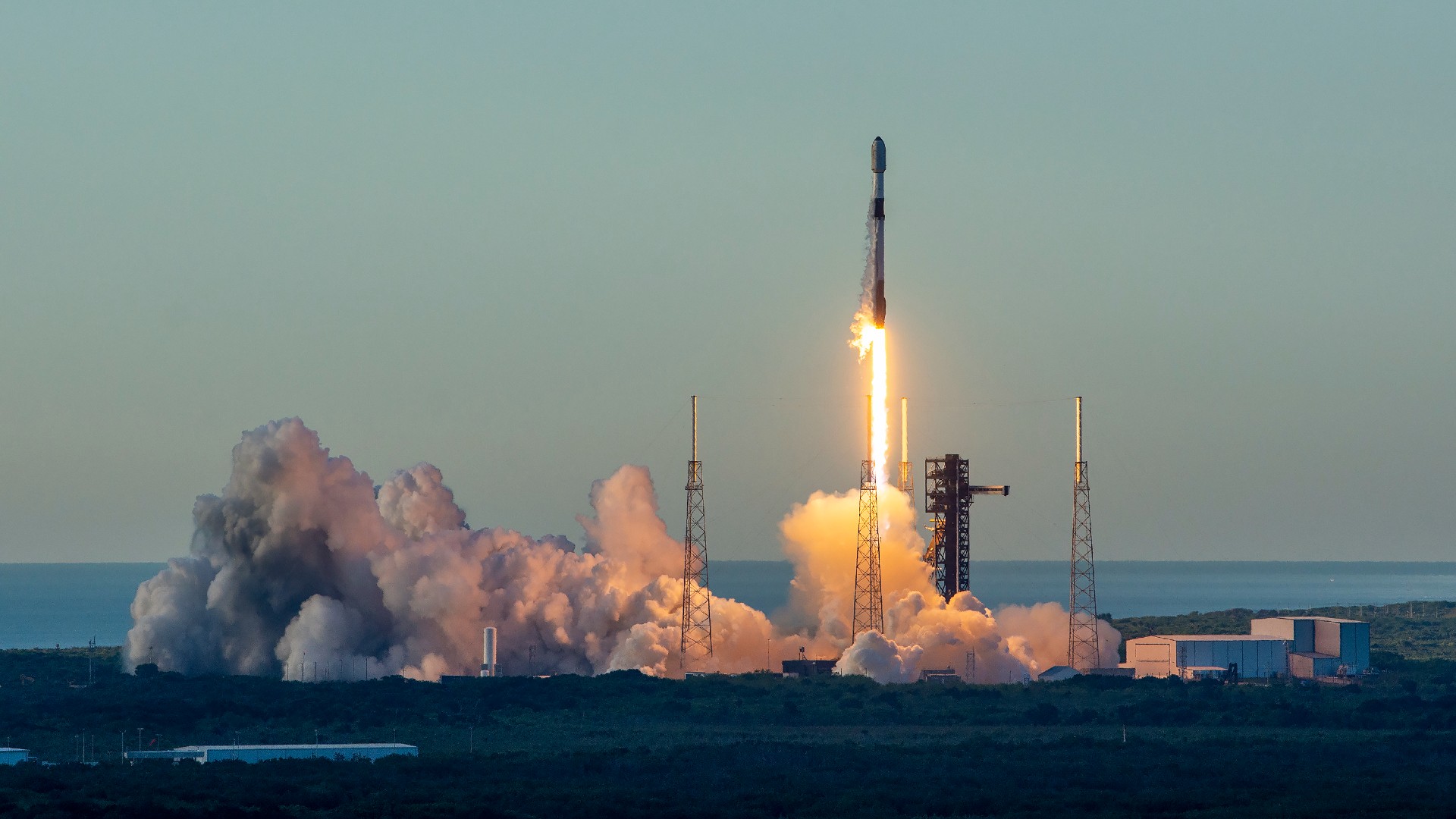
SpaceX Falcon 9 rocket successfully launched the Optus-X telecommunications satellite from NASA’s Kennedy Space Center in Florida. The liftoff, which occurred at 5:28 PM EST, coincided with a stunning sunset, creating a visually spectacular event for onlookers. Commissioned by Australian telecom provider Optus, the satellite aims to enhance communication services once operational in geostationary orbit, a region critical for global telecommunications and broadcasting.

Following the launch, the Falcon 9’s reusable first stage executed a controlled landing on SpaceX’s autonomous droneship, A Shortfall of Gravitas, stationed in the Atlantic Ocean. This achievement marked the 16th successful flight and recovery for this particular booster, underlining SpaceX’s commitment to cost-effective and sustainable spaceflight. Of its 16 missions, nine have been dedicated to deploying Starlink satellites, SpaceX’s own constellation for global internet coverage.

The Optus-X satellite is set to travel to a geostationary orbit approximately 22,236 miles (35,786 kilometers) above the Earth’s equator. The Falcon 9 rocket delivered it to a geosynchronous transfer orbit, an intermediary step from which the satellite will use its onboard propulsion system to reach its final position. Geostationary orbit allows satellites to maintain a fixed position relative to the Earth’s surface, making it ideal for consistent telecommunications coverage.

This launch underscores SpaceX’s role as a leading provider of satellite deployment services for commercial clients around the world. For Optus, the deployment of Optus-X represents a significant step forward in enhancing its network capabilities, enabling improved connectivity for customers in Australia and beyond. With its successful launch and innovative booster recovery, SpaceX continues to push the boundaries of modern rocketry and satellite deployment.