Yazılar

India sidesteps crypto and stablecoins at world’s largest fintech summit

At India’s massive fintech conference in Mumbai, attended by over 100,000 participants and 800 speakers, two global financial buzzwords were conspicuously absent: cryptocurrencies and stablecoins. Despite Bitcoin’s record-breaking surge past $125,000, the three-day event — headlined by the prime ministers of India and the U.K. — avoided any discussion of digital assets amid the government’s cautious regulatory stance.

A speaker document obtained by Reuters explicitly instructed participants to “avoid political, crypto, religious, or personal remarks”, underscoring India’s reluctance to embrace the sector. While economies like Japan, Hong Kong, and Singapore are racing to become crypto hubs, India remains hesitant, opting instead to spotlight its central bank digital currency, the e-rupee, and other fintech innovations.

The Reserve Bank of India showcased pilots for deposit tokenisation and fintech sandboxes, while companies like PayPal and Revolut unveiled new products tailored for the Indian market.

Experts say the policy vacuum is chilling innovation. “Regulators need an iterative approach instead of complete aversion to stablecoins,” said Joseph Sebastian of Blume Ventures, who suggested limited adoption through U.S. dollar stablecoin remittances.

India’s fintech funding fell to $3.5 billion in 2023, its lowest since 2020, as entrepreneurs increasingly incorporate overseas to escape regulatory uncertainty. “It’s becoming real whether we like it or not,” said Vivekdeep Gupta, a digital assets consultant.

TOKEN2049 Singapore: Ziplines, DJs and Trump Set the Tone for a Booming Crypto Scene

The TOKEN2049 Singapore conference this week felt more like a festival than a finance event — complete with ziplines, DJs, yacht parties, and high-profile appearances from Donald Trump Jr. and other crypto leaders who hailed the growing influence of U.S. President Donald Trump on the digital assets industry.

At the two-day gathering that ended Thursday, over 25,000 participants packed the Marina Bay Sands convention centre, picking up branded merchandise, joining side events and listening to speakers such as Trump Jr. and TRON founder Justin Sun. The mood was upbeat, reflecting renewed optimism across the crypto world and Asia’s expanding digital asset market.

According to Chainalysis, total crypto transaction volume in Asia reached $2.36 trillion by June 2025 — a massive leap from $1.4 trillion a year earlier. TOKEN2049’s turnout highlighted Singapore’s ambitions to cement itself as a global crypto hub, even as the city-state’s regulators tighten oversight after a series of exchange collapses.

A CARNIVAL OF CRYPTO CULTURE

The event blurred the line between business and entertainment. Attendees zipped across a line for free backpacks, got airbrushed tattoos, tested cryotherapy chambers, and played pickleball, while DJs blasted music from every floor.
“When I came in this morning and I heard the music, I had chills,” said Hubert Tang, a 60-year-old operations executive from Singapore. “How can this not be the new era?”

More than 120 side events — from exclusive dinners to a fight night featuring crypto executives in a boxing ring — took over the city. On Thursday, nine yacht parties and local club Zouk were booked out for TOKEN2049 guests, accepting payments in Bitcoin, Ethereum, USDC, Tether, and Binance Pay.

TRUMP FAMILY TAKES THE STAGE

At the heart of the conference was the Trump family’s growing alignment with the crypto industry.
“President Trump has single-handedly saved the crypto industry from people who wanted to ruin it,” said Zach Witkoff, CEO of Tether’s U.S.-based stablecoin venture and son of Trump’s Middle East envoy Steve Witkoff, sitting next to Donald Trump Jr. on stage.
Their comments — praising the president’s stablecoin regulatory law and pro-crypto stance — drew loud cheers from attendees.

Trump Jr. argued that stablecoins will soon underpin global finance:

“I think stablecoins are going to be the thing that backfills all of these countries that used to buy U.S. Treasuries,” he said. “That’s going to maintain the dollar’s hegemony and keep the world safe and strong.”

PREDICTIONS AND INDUSTRY MOMENTUM

The conference also featured policy discussions and market forecasts, with former White House crypto adviser Bo Hines saying the stablecoin market could exceed $1 trillion within a few years — a figure he called “very conservative.”

The event underscored how Trump’s shift from crypto sceptic to industry advocate has reshaped U.S. policy and investor sentiment. His administration’s pro-innovation regulatory framework has sparked a flood of venture capital into blockchain and DeFi firms.

THE NEW CRYPTO ERA

Attendees like Ophelia Wong, a 62-year-old from Hong Kong who attended TOKEN2049 for the third time, summed up the prevailing sentiment in one word:

“Booming,” she said. “It’s an irreversible journey.”

As the music faded and the yachts returned to the docks, TOKEN2049 left one clear message: crypto’s next chapter is being written — with Asia, and Trump’s America, at the center of it.

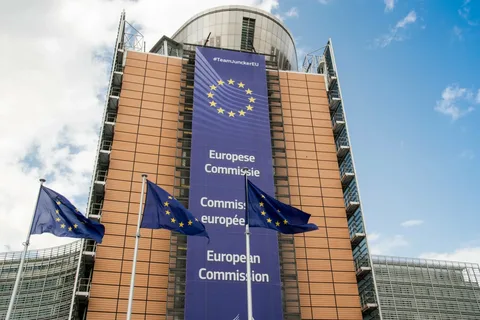
EU Risk Watchdog Urges Swift Action on Stablecoin Safeguards

The European Union’s financial risk watchdog has called for urgent safeguards on stablecoins that are only partially issued within the bloc, echoing growing concerns from the European Central Bank (ECB) about the potential for destabilizing financial runs.

Stablecoins — cryptocurrencies pegged to traditional reserve assets such as fiat currencies or commodities — are designed to maintain price stability. However, the European Systemic Risk Board (ESRB) warned that stablecoins issued both inside and outside the EU present inherent structural risks.

“Third-country multi-issuer schemes — with fungible stablecoins circulating both in the EU and abroad — have built-in vulnerabilities which require an urgent policy response,” the ESRB said in a statement.

RISK OF RUNS AND LIQUIDITY STRAINS

The ECB, led by Christine Lagarde, fears that if confidence in such stablecoins falters, investors could rush to redeem their holdings in the EU, where regulatory protections are strongest.
Such a scenario could lead to liquidity shortages, as EU-based reserves may be insufficient to cover redemptions — potentially forcing the ECB to intervene to stabilize markets.

Lagarde has consistently emphasized that stablecoin issuers operating in the EU and abroad must be held to identical standards, to prevent regulatory loopholes that could import external financial risk into the bloc.

REGULATORY GAPS AND POLICY IMPLICATIONS

Under the EU’s Markets in Crypto-Assets (MiCA) regulation — one of the world’s most comprehensive crypto frameworks — stablecoins are required to be fully backed by liquid reserves.
However, in “multi-issuer” arrangements, where an EU entity and a non-EU entity jointly issue a stablecoin, the stricter EU rules do not apply to the foreign partner. This creates regulatory asymmetry that may allow risk to flow into the EU system.

The ESRB warned that multi-function financial groups issuing stablecoins across jurisdictions may fall under more lenient regimes than traditional financial conglomerates, heightening the risk of divergent prudential standards and undermining the integrity of EU financial supervision.

A CALL FOR COORDINATED OVERSIGHT

The watchdog urged EU institutions to close these gaps quickly through policy coordination and international cooperation to ensure that global stablecoin systems do not exploit differences between regulatory frameworks.

The ESRB’s statement comes as the European Union prepares to implement MiCA fully by 2026, amid growing debate about how to integrate emerging crypto technologies into the region’s financial stability architecture without stifling innovation.