
Yazılar

Dell and Palantir to Join S&P 500; Shares Surge

Dell and Palantir both saw their shares jump about 7% in after-hours trading on Friday following the announcement from S&P Global that they will be added to the S&P 500 index. Palantir will replace American Airlines, while Dell will take the place of Etsy in the benchmark index.

This move marks Dell’s return to the S&P 500, having been a member from 1996 to 2013 before going private and rejoining the public market in 2018. For Palantir, which went public in 2020 after over 15 years as a venture-backed startup, this inclusion highlights its recent profitability and growing revenue. The company reported a net income of $135.6 million for the second quarter, a significant increase from the previous year.

The inclusion of these companies reflects their high market capitalizations—Palantir’s exceeds $67 billion, while Dell’s is over $72 billion—matching the median market cap of S&P 500 companies at approximately $33.5 billion. The addition often leads to a rally in stock prices as index-tracking funds adjust their portfolios to include the new members.

Dell’s stock had already surged 90% in 2023, driven by strong demand for AI servers. Meanwhile, Palantir, known for its data analytics and work with government and military agencies, has seen accelerated revenue growth and posted its first profits in late 2022.

The S&P 500 additions are intended to better represent U.S. stocks with high market caps. The inclusion of these companies follows recent changes, such as the addition of cybersecurity firm CrowdStrike in June. Shares of software maker Workday fell 2% in after-hours trading, despite earlier speculation about its potential inclusion in the index.

Dollar General Shares Drop 20% as Financial Struggles of Core Customers Trigger Downgraded Outlook

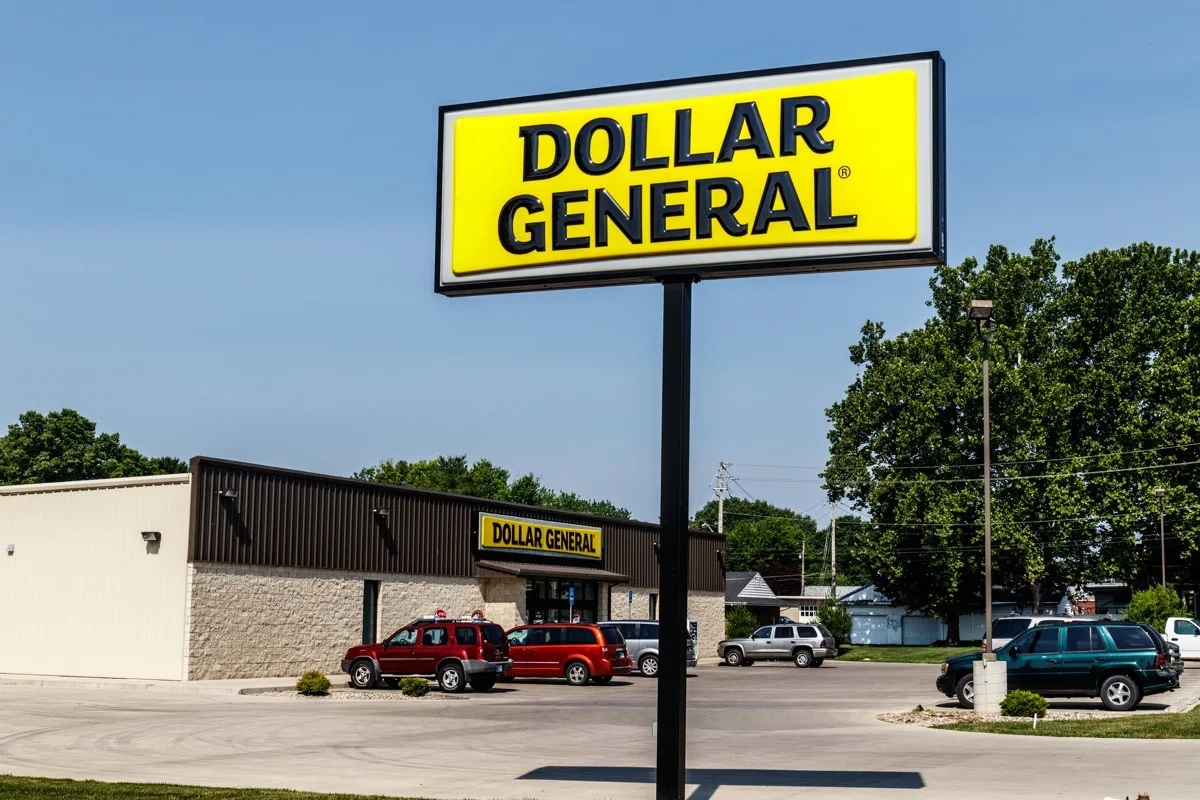
Dollar General’s shares plummeted by 20% on Thursday after the company significantly reduced its sales and profit expectations for the full year, citing growing financial pressures on its core lower-income customer base. The retailer, known for serving rural areas, now anticipates same-store sales growth of only 1.0% to 1.6% for fiscal 2024, down from the previously expected range of 2% to 2.7%. Earnings per share projections were also slashed to a range of $5.50 to $6.20, a sharp decline from the earlier forecast of $6.80 to $7.55.

The earnings report for the latest quarter also fell short of Wall Street’s expectations, with Dollar General reporting earnings per share of $1.70, missing the consensus estimate of $1.79. Revenue came in at $10.21 billion, lower than the anticipated $10.37 billion.

CEO Todd Vasos attributed the disappointing performance to “financially constrained” core customers, while emphasizing the importance of controlling the aspects of the business within the company’s reach. The steep drop in Dollar General’s stock had a ripple effect on its competitor, Dollar Tree, which saw a 6% decline in early trading as investors reacted to the news.

The downturn highlights the continued challenges faced by discount retailers, as inflation and economic uncertainty weigh heavily on lower-income consumers, leading to weaker sales performance across the sector.

Goldman Sachs Warns About Rapid Recovery in Market Confidence Following August Sell-Off

Goldman Sachs’ Christian Mueller-Glissmann has raised concerns about the swift rebound in market confidence after a significant drop in global stocks earlier this month. Speaking on CNBC’s “Squawk Box Europe,” Mueller-Glissmann likened the August market slump to a “warning shot” and expressed worry over the speed at which investor sentiment has recovered.

August saw intense market pressure due to fears of a potential U.S. recession and the unwinding of “carry trades” associated with the Japanese yen, leading to a 3% drop in the S&P 500 on August 5, marking its largest one-day decline since 2022. However, expectations of upcoming interest rate cuts by the Federal Reserve and positive U.S. economic data have since propelled stocks higher. The S&P 500 has risen 8% and the Dow Jones Industrial Average more than 6% since early August.

Mueller-Glissmann noted that market positioning and sentiment were notably bullish prior to the August decline, which he views as an overreaction. He highlighted concerns that the market has quickly returned to previous levels, reflecting similar issues to those before the drop.

Investors are now awaiting a crucial U.S. inflation report, the personal consumption expenditures price index, which will offer insights into the economic outlook. Fed Chair Jerome Powell’s recent comments about policy adjustments have fueled expectations of a rate cut at the Fed’s September meeting, though specific details on the timing or scale of the cut were not provided.

Mueller-Glissmann suggested that while August’s market sell-off created a buying opportunity, the rapid recovery of stocks and risky assets might signal a return to previous problems. He also pointed out that safe assets like bonds, gold, and the Swiss franc have not experienced significant sell-offs.

Looking ahead, Mueller-Glissmann recommended caution for investors, noting that the bond market’s role in cushioning losses may not be as reliable in the near term. He advised considering adjustments to risk exposure or exploring alternative diversifiers to manage market volatility.