Yazılar

U.S. Court Denies TikTok’s Request to Delay Pending Ban

A U.S. appeals court on Friday rejected TikTok’s emergency motion to temporarily halt enforcement of a law requiring its Chinese parent company, ByteDance, to divest the app by January 19, leaving TikTok with limited options to prevent a potential shutdown in the United States.

TikTok and ByteDance had filed the motion earlier in the week with the U.S. Court of Appeals for the District of Columbia, seeking more time to prepare their case for the Supreme Court. The companies argued that the law would effectively ban TikTok, a platform with over 170 million monthly users in the U.S., and significantly harm free speech.

The appeals court denied the request, noting that TikTok and ByteDance failed to cite precedent for a court enjoining a congressional act while awaiting Supreme Court review. “We find no case in which such action has been taken,” the court said in its unanimous order.

Following the ruling, TikTok announced plans to escalate the matter to the Supreme Court. A TikTok spokesperson emphasized the platform’s role as a critical speech platform and expressed confidence in the Court’s history of upholding free speech protections.

The law in question mandates that ByteDance divest its ownership of TikTok by January 19 or face a U.S. ban on the app. It also empowers the government to prohibit other foreign-owned apps deemed a national security risk due to data collection practices.

The U.S. Justice Department has defended the law, asserting that ByteDance’s control of TikTok poses “a continuing threat to national security.” TikTok disputes this claim, highlighting that U.S. user data and content moderation are managed domestically, with data stored on Oracle-operated cloud servers.

If the Supreme Court does not overturn the ruling, the app’s fate will hinge on decisions by President Joe Biden and his successor, President-elect Donald Trump. Biden must determine whether to grant a 90-day extension to the January 19 deadline, while Trump, who takes office the following day, has historically opposed a TikTok ban. However, Trump recently indicated he would not pursue the ban if elected.

On a related front, members of the U.S. House of Representatives committee on China have urged Alphabet (Google’s parent) and Apple to prepare to remove TikTok from their app stores if the law takes effect on January 19.

ByteDance and TikTok Seek Emergency Halt of U.S. Ban Pending Supreme Court Review

China-based ByteDance and its subsidiary TikTok have filed an emergency motion with the U.S. Court of Appeals for the District of Columbia, seeking a temporary halt to a law that mandates ByteDance divest TikTok in the United States by January 19, 2024, or face a ban. The request aims to delay enforcement while the companies pursue a review by the U.S. Supreme Court.

TikTok argued that without intervention, the law would “shut down TikTok—one of the nation’s most popular speech platforms—for its more than 170 million domestic monthly users” just before the presidential inauguration. The platform’s closure would severely impact its value to ByteDance and its investors and harm businesses reliant on TikTok for advertising and sales.

On Friday, a three-judge panel upheld the law requiring ByteDance’s divestiture. The company is now racing against time, urging the appeals court to rule on its emergency request by December 16.

TikTok’s Legal and Political Maneuvering

ByteDance and TikTok emphasized the potential for the Supreme Court to reverse the lower court’s decision, arguing that this likelihood justifies a temporary pause. They also highlighted the incoming administration of President-elect Donald Trump, who has expressed opposition to the ban.

Trump has previously stated he would not allow a TikTok ban, noting the platform’s immense popularity. His incoming national security adviser, Mike Waltz, reinforced this position, emphasizing the importance of protecting user data while maintaining TikTok’s availability to Americans.

The timing of the decision could also allow President Joe Biden to grant a 90-day extension of the divestiture deadline before Trump assumes office on January 20. However, TikTok must demonstrate substantial progress toward divestiture to qualify for such an extension.

Concerns Over Data Security and Service Disruption

The law, part of broader U.S. concerns over foreign-owned apps, grants sweeping powers to ban platforms over data privacy risks. TikTok warned the decision would not only impact its U.S. user base but also disrupt services for millions of users outside the country. Hundreds of U.S. service providers supporting TikTok’s operations, including maintenance and updates, would no longer be able to perform these functions starting January 19.

This case highlights ongoing tensions between the U.S. government and Chinese tech companies over data security and national sovereignty. Similar efforts to ban Tencent’s WeChat in 2020 were blocked by the courts, demonstrating the complexities of enforcing such measures.

The Justice Department, meanwhile, has urged the appeals court to deny TikTok’s request quickly to allow sufficient time for Supreme Court consideration.

Musk, Ramaswamy Aim to Curb Federal Agency Power Using Supreme Court Precedents

Leaning on Landmark Rulings

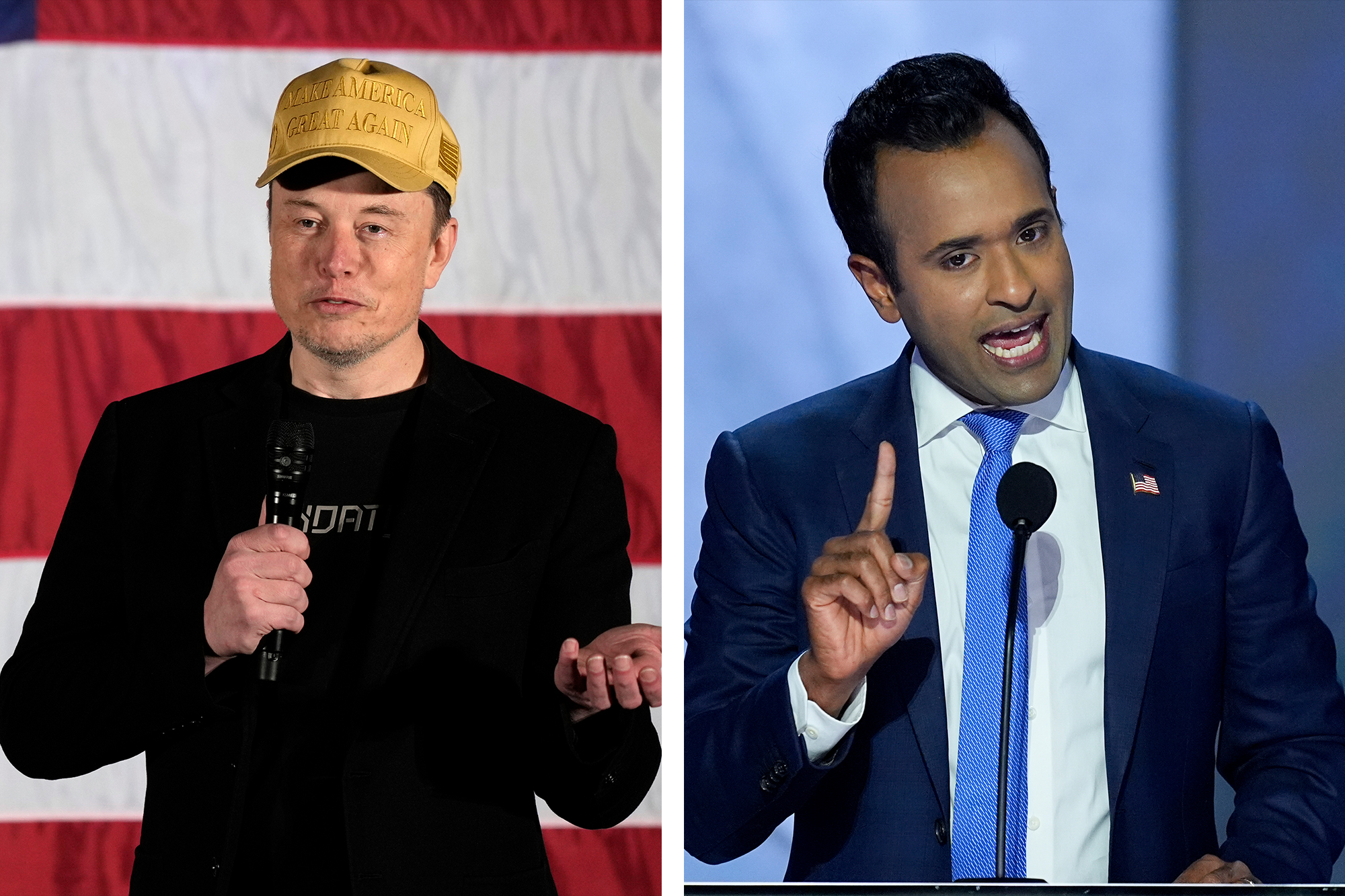
Elon Musk and Vivek Ramaswamy, leaders of the newly formed Department of Government Efficiency (DOGE), announced plans to leverage recent Supreme Court decisions to reduce federal regulatory power. In a Wall Street Journal op-ed on Wednesday, they highlighted their intent to target what they describe as unnecessary, costly, and inefficient regulations.

The effort is rooted in the Supreme Court rulings in West Virginia v. EPA (2022) and Loper Bright v. Raimondo (2023), which curbed federal agencies’ ability to act without explicit Congressional authorization. Musk and Ramaswamy claim many current regulations exceed the legislative powers granted by Congress and argue the rulings provide a blueprint for dismantling overreach.


Partnership with Trump Administration

President-elect Donald Trump tapped Musk, the billionaire CEO of Tesla and SpaceX, and Ramaswamy, a biotech entrepreneur and former presidential candidate, to lead DOGE. They aim to identify regulations that could be suspended via executive action, allowing time for their review and potential repeal.

The duo emphasized their collaboration with Trump’s transition team to recruit a cadre of “small-government crusaders” tasked with reforming federal governance. These efforts will be coordinated with the White House Office of Management and Budget (OMB).


Strategic Focus

DOGE plans to focus on regulations across various sectors, targeting rules they believe stifle innovation and economic growth. Musk and Ramaswamy view the current conservative 6-3 Supreme Court majority as an opportunity to implement structural downsizing of federal agencies.

They argue that the initiative aligns with what they interpret as a public mandate for reducing government overreach. “This electoral moment presents a unique opportunity to modernize governance by eliminating burdensome regulations that hamper progress,” they wrote.


Criticism and Challenges

While the plan has drawn support from deregulation advocates, critics warn it could undermine critical protections related to health, safety, and the environment. Legal experts also anticipate challenges to sweeping regulatory rollbacks, potentially leading to protracted court battles.

Observers highlight that balancing deregulation with public accountability and governance effectiveness will be a key test for DOGE’s approach.


Looking Ahead

As DOGE prepares its list of regulations for President Trump’s review, the agency’s impact will depend heavily on its ability to navigate legal, political, and public scrutiny. With Musk and Ramaswamy at the helm, the initiative underscores a broader push to redefine federal oversight in favor of private-sector-led innovation and efficiency.