Yazılar

South Korea Blocks DeepSeek Amid Security Concerns, Following Global Warnings

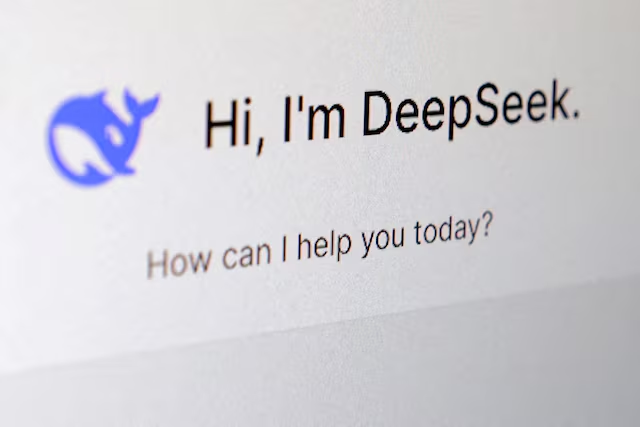
South Korea’s industry ministry has temporarily blocked employee access to the Chinese artificial intelligence startup DeepSeek due to security concerns, marking the latest move by governments to restrict the use of certain AI services. A ministry official confirmed on Wednesday that the ban was implemented in response to growing apprehension surrounding generative AI technologies.

On Tuesday, the South Korean government issued a notice urging caution among ministries and agencies regarding the use of AI services such as DeepSeek and ChatGPT in work-related tasks. The notice followed earlier actions by state-run entities, with Korea Hydro & Nuclear Power confirming it had blocked access to DeepSeek earlier this month.

The country’s defense ministry also took action, blocking access to DeepSeek on military computers, while the foreign ministry restricted its use on devices connected to external networks, according to Yonhap News Agency. However, the foreign ministry did not provide further details regarding the specific security measures taken.

DeepSeek, which was not immediately available for comment, joins a growing list of companies facing scrutiny over potential security risks. Both Australia and Taiwan have recently banned the AI service from government devices, citing similar security concerns. In January, Italy’s data protection authority ordered DeepSeek to block its chatbot after the company failed to address privacy issues raised by regulators.

In addition to government actions, private companies in South Korea are also taking precautions. Kakao Corp, a major South Korean chat app operator, instructed employees to refrain from using DeepSeek due to security fears, particularly following its partnership with OpenAI. Other South Korean tech giants, including SK Hynix and Naver, have also restricted or limited access to generative AI services, citing concerns about data security and privacy.

The scrutiny of DeepSeek follows the company’s claim that its AI models are on par with or superior to products developed in the U.S., while being significantly cheaper to produce. South Korea’s information privacy watchdog has announced plans to inquire with DeepSeek about its user data management practices, adding another layer of regulatory attention on the Chinese startup.


Taiwan Bans Government Use of DeepSeek AI Over Security Concerns

Taiwan’s Ministry of Digital Affairs announced on Friday that government departments are prohibited from using DeepSeek, a Chinese artificial intelligence (AI) service, citing national security risks. The ministry warned that DeepSeek’s operations involve cross-border data transmission, raising concerns about potential information leaks.

Given Beijing’s sovereignty claims over Taiwan and ongoing political and military tensions, Taiwanese authorities remain cautious about Chinese technology. The digital ministry emphasized that it will continue monitoring technological developments and adjust cybersecurity policies as necessary to safeguard national security.

This development follows similar concerns raised internationally. South Korea’s information privacy watchdog has stated plans to question DeepSeek regarding its data handling practices. Meanwhile, regulatory authorities in France, Italy, and Ireland are also examining the company’s use of personal information.

DeepSeek’s rapid rise has sparked global scrutiny. By Monday, its free AI assistant had surpassed OpenAI’s ChatGPT in downloads from Apple’s App Store. The surge in DeepSeek’s popularity coincided with a sharp decline in U.S. tech stocks, leading to a record $593 billion market value loss for Nvidia in a single day.


TSMC Reports Operations Running Smoothly After Taiwan’s 6.4 Magnitude Earthquake

Taiwan Semiconductor Manufacturing Company (TSMC) announced on Tuesday that all its sites are operating normally following a 6.4 magnitude earthquake that struck southern Taiwan. The earthquake, centered in a mountainous rural area, resulted in minor damage and light injuries.

Key Points:

  • Operations Resumed: TSMC confirmed that its facilities, including those critical to the production of advanced chips for companies like Apple and Nvidia, were fully operational after post-earthquake structural inspections showed no significant damage. Workers were evacuated as a precaution at some sites in central and southern Taiwan, but safety systems, including water supply and power, remained unaffected.
  • Injuries and Damage: The earthquake occurred shortly after midnight and left 27 people hospitalized for minor injuries. While some households experienced temporary blackouts, electricity was restored by mid-morning, with no major disruptions to TSMC’s operations.
  • Taiwan’s Seismic Activity: Taiwan, located on the boundary of two tectonic plates, is prone to earthquakes. The country’s most recent significant earthquake was a 7.2 magnitude tremor in April, which caused 13 fatalities.