Yazılar

French Brandy Producers Brace for Impact of EU-China Trade Dispute

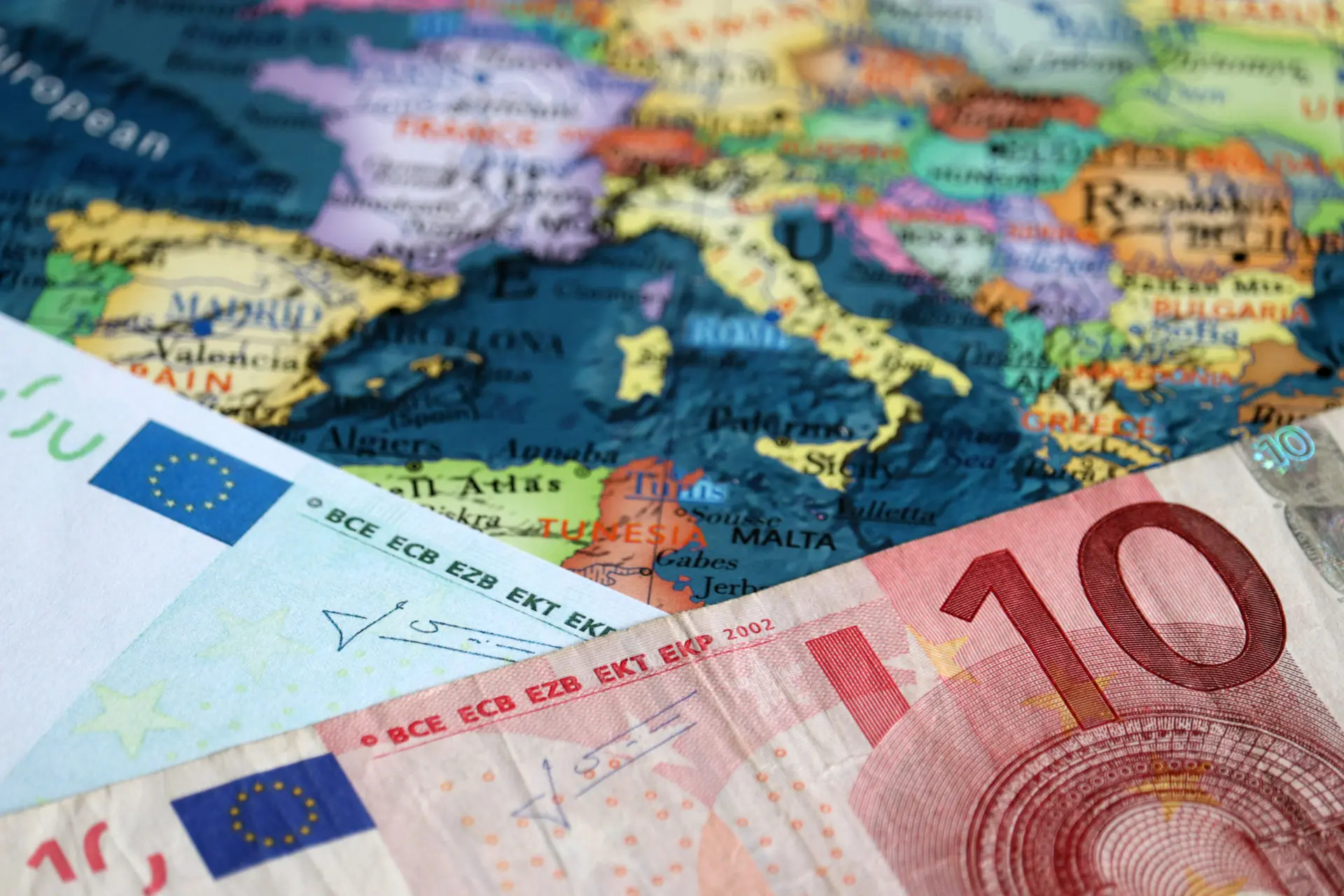
In the Cognac region of western France, known for its world-renowned brandy, producers are grappling with the fallout from a growing trade dispute between the European Union and China. The EU’s impending tariffs on Chinese electric vehicles (EVs) and China’s retaliatory measures on French brandy imports are casting a shadow over the local economy.

Christophe Bouetard, a car dealer in Cognac who sells Chinese-made MG electric vehicles, is among those most affected. His dealership relies heavily on sales of Chinese-made EVs, which will soon face a 45% EU tariff, threatening nearly half his business. Many of his customers are involved in the brandy trade, another sector now targeted by Chinese tariffs.

Bouetard described the situation as a “double hit,” with both the automotive and brandy industries suffering. “We’re caught in a vice, between the Cognac region and the image of our Chinese vehicles, which are now in conflict because of these European tariffs,” Bouetard said.

Cognac Industry Faces Challenges

The Cognac region has already been reeling from a decline in exports. After a decade of growth, foreign sales dropped by over 20% in 2023 due to inflation, poor harvest conditions, and a disease affecting grapevines. The latest blow comes from China’s provisional anti-dumping measures, introduced in response to the EU’s planned tariffs on Chinese EVs, which were heavily supported by France.

In 2022, French brandy shipments to China were valued at €1.7 billion, with €1 billion in revenue flowing directly to Cognac producers. France’s trade ministry has labeled China’s move a violation of free trade, and the European Commission plans to challenge it at the World Trade Organization (WTO). French Trade Minister Sophie Primas emphasized that while France is not seeking a trade war with China, it aims to re-establish fair competition.

Concerns Over the Future of the Industry

Despite the strong rhetoric from Paris, Cognac producers fear their industry may be sacrificed in efforts to protect Europe’s larger car industry from competition with cheaper Chinese-made EVs. A senior Cognac official, speaking anonymously, expressed concerns that the French government may not be able to prevent permanent tariffs on brandy. During discussions with high-ranking officials, no clear solution had been offered.

The tariffs have sent ripples through France’s luxury sector. Shares of companies like LVMH, Remy Cointreau, and Pernod Ricard—responsible for iconic cognac brands such as Hennessy, Remy Martin, and Martell—fell sharply after China’s announcement. Cognac producers fear that if China’s retaliatory measures become permanent, exports to the country, which is Cognac’s second-largest market after the U.S., will plummet.

French agriculture officials, including former Agriculture Minister Marc Fesneau, believe that China’s actions specifically target France. “Cognac is France, so we can see China’s diplomatic game,” Fesneau said.

China’s New Measures and Their Impact

Starting Friday, importers of EU-origin brandy will have to place security deposits between 34.8% and 39% of the import value under China’s temporary measures. Should these duties become permanent, they would severely impact the high-end cognac market, as Chinese consumers primarily purchase the oldest and most expensive bottles.

Emmanuel Painturaud, a cognac producer who co-owns Painturaud Frères Cognac with his brothers, expressed deep concern, calling China’s response particularly damaging for the region. “Wine makers feel like they’re being held hostage, with some vindictive moves by the Chinese government,” he said.

Nearly all of Cognac’s production is exported, and its historic trade links with China span over 250 years. Local winegrowers now fear the worst. “If we add the loss of our second market, the consequences will be catastrophic,” warned Anthony Brun, chairman of the General Union of Cognac Winegrowers (UGVC).

Bouetard’s Automotive Concerns

As Bouetard’s car dealership navigates the same storm, he hopes to mitigate some of the fallout by promoting hybrid vehicles and speculating that Chinese carmakers may begin building factories in Europe to bypass the new tariffs. However, he acknowledges that 2024 will be a difficult year. “If the 45% tariffs become a permanent reality, we’re going to have to find solutions,” he admitted.

For now, the Cognac region waits anxiously, with producers and dealers alike bracing for the potential long-term impacts of this international trade dispute.
Why Trump’s Trade Hero Turned Away From Tariffs

Tariffs remain a hot topic in today’s political discourse, with both Republicans and Democrats showing some level of support for them, even as voters complain about inflation. Former President Donald Trump has vowed to impose sweeping tariffs on imports, furthering his economic nationalism but contradicting his anti-inflation message. On the other hand, while Vice President Kamala Harris criticized Trump’s tariff plan, President Joe Biden has maintained many of the tariffs that Trump introduced during his presidency.

Douglas Irwin, a professor of economics at Dartmouth College and author of “Clashing over Commerce: A History of US Trade Policy,” provides valuable insights into the history of tariffs in the US, including the story of William McKinley, a former president admired by Trump. Surprisingly, McKinley, often associated with protectionism, began turning away from tariffs just before his assassination in 1901.

The Historical Role of Tariffs

Historically, tariffs served as a primary revenue source for the US government, particularly before the Civil War. Without income or sales taxes, the government relied heavily on taxing imports to finance national defense and reduce debt. According to Irwin, tariffs were easy to enforce since most goods arrived at a limited number of ports, making collection efficient.

However, tariffs also became a tool to protect domestic industries from foreign competition, creating tension between consumers seeking low prices and producers demanding protection from foreign goods. This tension persisted throughout US history and shaped trade policies over the decades.

McKinley’s Shift Away from Tariffs

Trump has praised William McKinley for his tariff policies, especially the McKinley Tariff of 1890, which protected domestic industries like steel. However, Irwin explains that McKinley’s views evolved once he became president in 1897. No longer representing just Ohio’s protectionist interests, McKinley began advocating for reciprocity—lowering US tariffs in exchange for other countries doing the same. This shift toward free trade aimed to open foreign markets for American exports, but McKinley’s untimely assassination cut short his efforts.

Interestingly, just one day before he was shot, McKinley gave a speech advocating for the end of “commercial wars,” signaling his desire for friendlier trade relations—a stance far removed from the protectionist label Trump associates with him.

Tariffs in the American Political Conversation

In the late 19th century, tariffs dominated political debates, as the federal government was smaller, and decisions about tariffs affected industries and regional economies. This echoes the current conversation about whether tariffs help or hurt the economy. While Trump argues that tariffs strengthened the US economy in the past, Irwin points out that the 1890s were a volatile period with significant economic instability, suggesting that high tariffs alone don’t guarantee growth.

Picture background

The US Shift Away from Tariffs

As the US introduced income and sales taxes, the reliance on tariffs for revenue diminished. By the 20th century, the US began focusing on expanding exports and opening foreign markets through trade agreements like the General Agreement on Tariffs and Trade (GATT) and NAFTA. Tariffs became less central to economic policy as global trade expanded.

Today’s Tariffs vs. 19th Century Tariffs

Trump’s proposed tariffs on imports would be closer to late 19th-century levels but not as uniform. Unlike the 19th century, where tariffs applied across all countries, Trump’s focus is primarily on China. Irwin notes that targeting a specific country with high tariffs is a relatively modern strategy.

Can Tariffs Replace Taxes?

Trump has claimed that his tariffs would generate trillions in revenue to fund social programs. However, Irwin dismisses this idea, stating that tariffs, which apply to only a fraction of GDP, cannot replace income taxes. Furthermore, high tariffs would reduce imports, shrinking the revenue base.

Who Pays for Tariffs?

Despite Trump’s assertion that foreign countries pay tariffs, studies show that the cost is passed on to American consumers. Businesses absorb the cost of tariffs and raise prices on goods, meaning that US consumers ultimately bear the financial burden.

Nationalism and Tariffs: Then and Now

In the late 19th century, tariffs were also seen as a patriotic act, especially against Britain, the dominant industrial power at the time. Today, China occupies a similar position in American political discourse. Irwin highlights that the Republican Party, historically the party of protectionism, has now shifted toward a more nationalist approach, with Trump leading the charge on imposing tariffs to protect American industries.


EU Avoids ‘Terrible Prophecies’ but Faces Trade Challenges with China, Says Gentiloni

The European Union has successfully avoided the dire economic predictions that loomed in recent years but must now navigate challenges such as Russia’s war in Ukraine and a complicated trade relationship with China, said Paolo Gentiloni, the outgoing European Commissioner for Economy, on Saturday.

Gentiloni pointed out that while the EU’s economy has seen slow growth, it has not experienced the deep recessions, blackouts, or divisions that many had feared in the last few years, especially in the face of Russia’s invasion of Ukraine. “The economy is growing, slowly, but growing,” he said during an interview at the Ambrosetti Forum in Cernobbio, Italy. However, he acknowledged that Europe needs to enhance its competitiveness and make significant strides in areas such as defense and the Capital Markets Union if it is to thrive in the changing global landscape.

The European economy, still recovering from the COVID-19 pandemic, has grappled with a cost-of-living crisis and persistent inflation, exacerbated by Russia’s February 2022 invasion of Ukraine. Despite these difficulties, the eurozone economy expanded in the first half of this year, with GDP growing by 0.3% in the second quarter compared to the first.

Looking ahead, Gentiloni highlighted two major issues the EU must tackle: its relationship with China and the ongoing war in Ukraine. The EU’s decision in June to impose higher tariffs on Chinese electric vehicles—due to the bloc’s belief that they benefit from unfair subsidies—has led to heightened tensions with Beijing. He emphasized that while the EU must remain vigilant in trade relations with China, it is crucial not to abandon international trade entirely.

Gentiloni also downplayed concerns about the potential economic impact of Donald Trump’s possible return to the White House in 2024, noting that while such an outcome would not be welcomed in Brussels, it would not drastically alter U.S.-EU economic relations.

As Gentiloni prepares to step down from his role, Europe faces rising political challenges. The European Commission, led by Ursula von der Leyen, is contending with increasing support for far-right factions, especially as politicians like Hungary’s Prime Minister Viktor Orbán question whether the current Commission is equipped to address Europe’s future challenges.