Yazılar

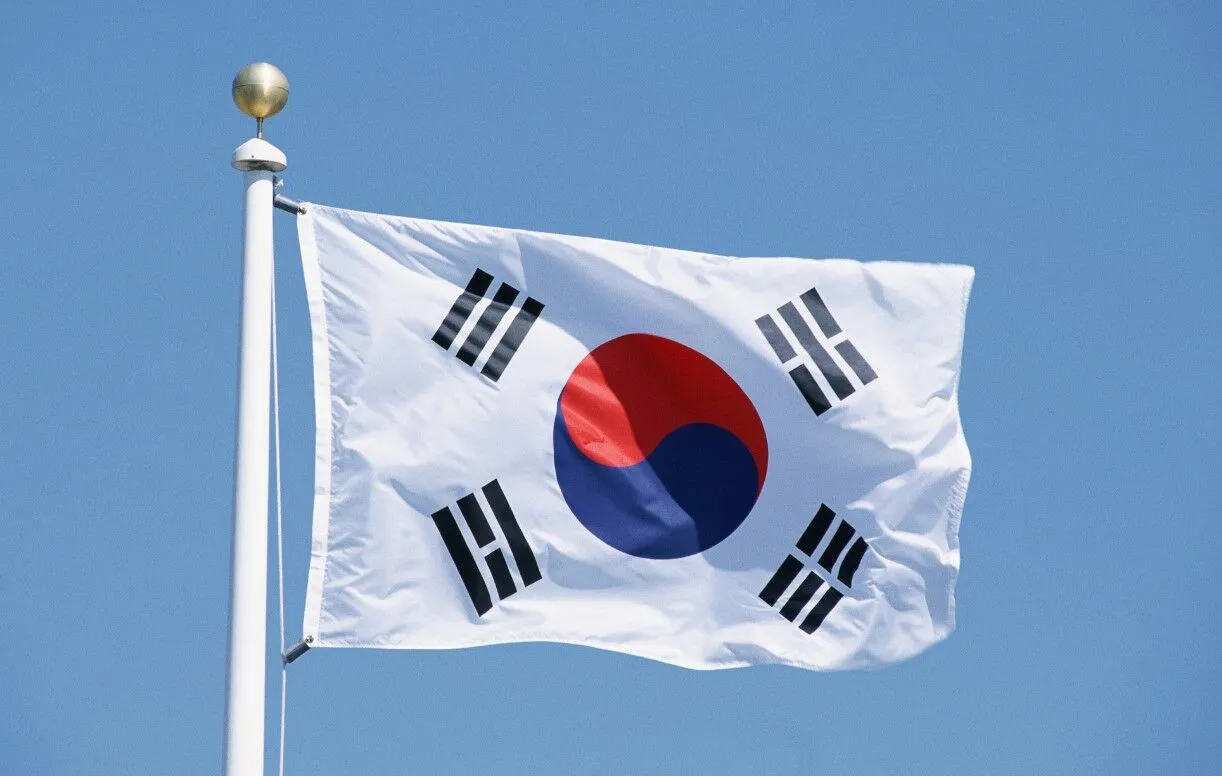
South Korea’s President Lee Vows Regulatory Easing and Tariff Talks to Support Trade

South Korean President Lee Jae-myung pledged on Friday that his administration would ease regulations and accelerate working-level tariff negotiations with Washington, as part of a broader effort to support South Korean businesses facing international trade challenges.

Speaking at a meeting with leaders of the country’s top conglomerates, President Lee emphasized that his government would work to minimize the difficulties companies encounter in global competition and help them expand their economic footprint. The gathering included prominent figures such as Samsung Electronics Chairman Jay Y. Lee and Hyundai Motor Group Executive Chair Euisun Chung.

“Our companies are struggling with international competition,” Lee told the business leaders, adding that his administration would adopt a “pragmatic, flexible” trade policy focused on national interests. His spokesperson, Kang Yu-jung, confirmed that Lee intends to expedite discussions on tariffs with Washington.

Since his election on June 3, Lee — a liberal who campaigned on a business-friendly platform — has prioritized economic issues, especially in light of South Korea’s export-driven economy. Key sectors such as semiconductors, automobiles, and shipbuilding are heavily reliant on global trade, making ongoing negotiations with the United States especially critical.

During the meeting, Lee invited executives to provide input on trade challenges. SK Group Chairman Chey Tae-won, who also heads the Korea Chamber of Commerce, voiced concerns about the uncertainty surrounding U.S. tariffs, which complicates corporate decision-making. Samsung’s Lee expressed hope that close cooperation between the government and private sector would help South Korea navigate what he described as a “multi-dimensional crisis.”

The U.S.-South Korea alliance also remains a focal point. On the same day, Seoul’s deputy minister for economic affairs Kim Hee-sang met with Sean O’Neill, a senior U.S. State Department official, to reaffirm bilateral cooperation. O’Neill emphasized opportunities to deepen collaboration in shipbuilding, economic security, and mutual investment.

The tariff negotiations come after President Lee and U.S. President Donald Trump agreed last week to work toward a swift deal during their first phone call since Lee assumed office.

Meanwhile, South Korea’s industry ministry announced plans to evaluate the impact of U.S. tariffs on domestic manufacturers, particularly in the home appliance sector, and to prepare targeted support measures.
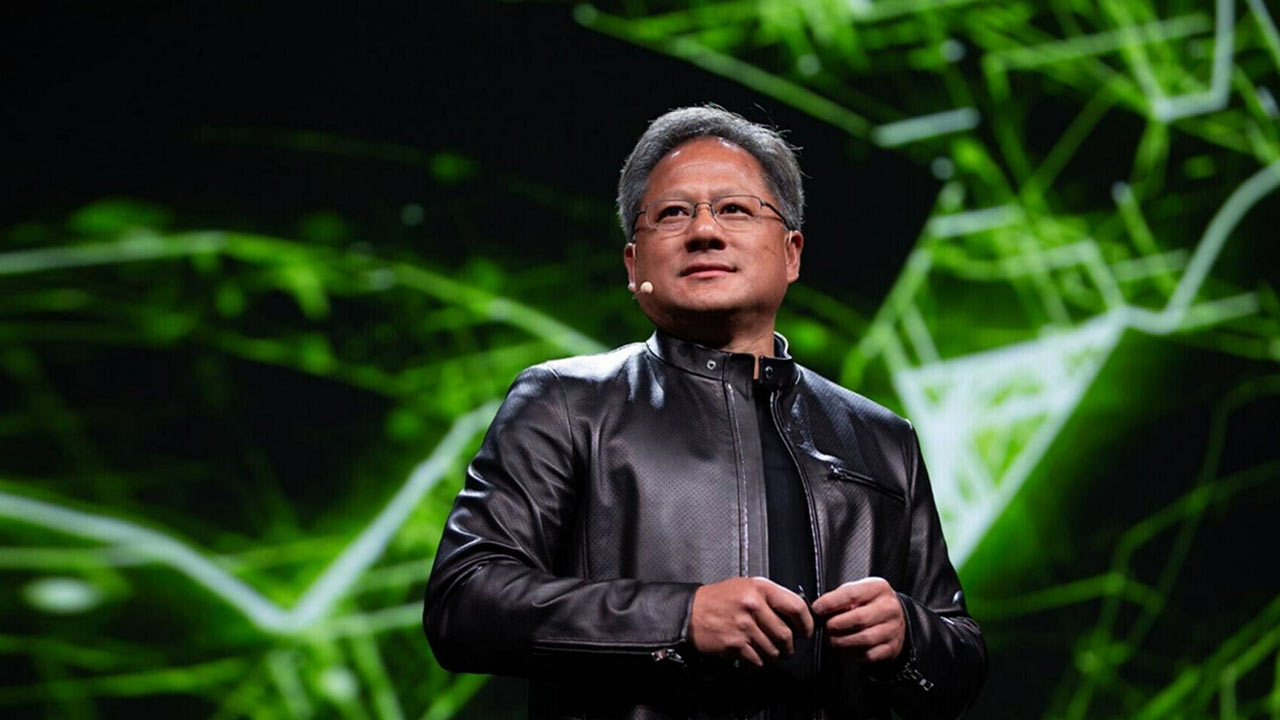

Nvidia CEO Jensen Huang Backs Trump’s Plan to Ease AI Chip Export Curbs

Nvidia CEO Jensen Huang has strongly criticized U.S. export restrictions on AI chips to China, calling them a “failure” that cost American firms billions in lost sales while accelerating China’s self-reliance in semiconductor development. Speaking at the Computex conference in Taipei, Huang welcomed the Trump administration’s decision to reverse some of the Biden-era controls, signaling a shift that could reshape global tech policy.

“The fundamental assumptions that led to the AI diffusion rule have been proven to be fundamentally flawed,” Huang said, referring to the Biden administration’s three-tiered export control regime, which entirely blocked sales of advanced chips to China.

Impact on Nvidia and U.S. Industry

Since the Biden administration’s controls came into effect, Nvidia’s market share in China fell from 95% to 50%, Huang revealed. Nvidia has been hit particularly hard, taking a $5.5 billion charge in April related to its blocked H20 chip, and Huang now estimates total revenue loss at $15 billion.

Despite these setbacks, Huang noted that AI research in China has continued unabated and is now being powered by local technologies, particularly chips from Huawei and other Chinese semiconductor designers. He estimated that China’s AI market will be worth $50 billion in 2025 and called the competition there “intense”.

“They would love for us never to go back to China,” he said.

Trump’s Strategy: A Shift in Direction

Huang praised the Trump administration’s plan to move away from rigid export tiers and toward a global licensing regime based on government-to-government agreements. The proposed shift could provide the U.S. more flexibility and leverage in trade negotiations while also easing pressure on U.S. tech firms.

“President Trump realises it’s exactly the wrong goal,” Huang said, arguing that isolating China from U.S. tech would not stop AI innovation and only encourage the growth of competitive alternatives.

Nvidia’s Workaround

Nvidia is now developing a new version of its Blackwell AI chip that includes slower memory, allowing it to comply with current U.S. restrictions while still serving key markets.

Rising Tensions

China responded sharply to recent U.S. moves that warned firms against using Chinese-made AI chips like Huawei’s Ascend, urging the U.S. to “immediately correct its wrongdoings.” Beijing warned that such measures violate trade agreements and undermine cooperation, threatening “resolute” countermeasures.

Industry Outlook

While the Biden administration had aimed to contain China’s semiconductor and military advancements, the unintended consequence appears to be a rapid buildup of China’s domestic AI and chipmaking capabilities. Huang’s remarks underscore the growing frustration within U.S. tech circles over policies they say are self-damaging.

Meanwhile, Nvidia continues to dominate the global AI infrastructure market, with new product announcements at Computex expected to further boost its $130.5 billion revenue base.

EU Proposes €2 Fee on Low-Value Parcels, Posing Challenge for Shein and Temu

The European Union is preparing to introduce a €2 ($2.27) handling fee on low-value e-commerce parcels entering the bloc, a move that could significantly impact fast-growing Chinese platforms like Shein and Temu. The measure is aimed at addressing a surge in online orders and leveling the playing field for European retailers.

In 2024, EU customs authorities processed 4.6 billion low-value parcels — double the figure from 2023 — with 91% arriving from China. The proposed fee, still pending approval by EU member states and the European Parliament, would be paid by the online retailers, not by consumers.

The European Commission said the fee would help fund compliance checks on the flood of packages, including regulations around toy safety and consumer protections. A smaller fee of €0.50 is also proposed for goods processed through EU-based warehouses, potentially favoring global firms with advanced logistics over smaller retailers.

“It’s fair to ask Alibaba, Temu, or Shein to pay their fair share,” said Bernd Lange, Chair of the European Parliament’s trade committee. He noted the burden these shipments place on customs authorities and the need for proper enforcement.

France has already voiced support for the measure, while the EU had previously announced plans to end the duty-free status of goods under €150 — but not until 2028.

Reactions from European retailers have been largely supportive. Zalando welcomed the proposal and called for fast-tracking the removal of the €150 customs exemption. Germany’s HDE retail association also endorsed the fee as a step toward curbing unfair competition.

However, concerns remain. Allegro, a leading Polish e-commerce platform, warned that the €0.50 fee for goods processed in EU warehouses might unintentionally benefit larger global players, while smaller firms would bear the full €2 cost. “The implementation details will be crucial,” said Allegro’s regulatory manager Ewelina Stepnik-Godawa.

Chinese companies have yet to respond, though China’s foreign ministry urged the EU to maintain a “fair, transparent and non-discriminatory” environment for Chinese businesses.

The proposal comes just weeks after the U.S. scrapped its own de minimis rule allowing duty-free entry for goods under $800, reflecting a broader global shift toward tighter e-commerce trade regulation.