Yazılar

ByteDance to retain 1 of 7 board seats under U.S.-China TikTok deal

A U.S.-China agreement on the future of TikTok’s U.S. operations will give ByteDance just one of seven board seats, with the other six held by American directors, a senior White House official said on Saturday.

The deal comes after months of tense negotiations to comply with a 2024 U.S. law requiring TikTok’s American assets to be divested from its Chinese parent or face a ban by January 2025. President Donald Trump has repeatedly delayed enforcement, with the latest pause expected to be extended 120 days into April 2025.

Key details of the agreement:

  • Board structure: 7 members, 6 American + 1 ByteDance representative.

  • Data storage: All U.S. user data to be housed on Oracle-run servers inside the U.S.

  • Algorithm control: TikTok’s recommendation algorithm will be secured, retrained, and supervised in the U.S. with American data, outside of ByteDance’s control.

  • Ownership: ByteDance will retain less than 20% of TikTok U.S., while American investors hold a majority stake.

  • Operations: The U.S. entity will be managed domestically by a board with national security and cybersecurity credentials.

Trump has called the deal “well on its way” and credited TikTok for helping his reelection campaign, noting his own 15 million followers on the app. The White House also recently launched an official TikTok account.

However, lawmakers remain skeptical. Rep. Frank Pallone (D) warned:

“We cannot allow China continued access to massive amounts of Americans’ personal data, and we cannot allow Trump to hand TikTok over to his tech bro buddies and turn it into a MAGA mouthpiece.”

Questions also remain over whether the current arrangement qualifies as a “full divestiture” under U.S. law, as required by Congress. Beijing has not confirmed the level of progress, with Chinese statements emphasizing only that business negotiations should respect market rules and domestic laws.

Despite these concerns, the agreement marks a rare breakthrough in U.S.-China relations, with both sides also planning a Trump-Xi summit in South Korea in late October to discuss TikTok, trade, and security issues.
Trump and Xi advance TikTok talks, plan South Korea summit

U.S. President Donald Trump and Chinese President Xi Jinping said they made progress toward a TikTok deal during their first phone call in three months, and agreed to meet face-to-face on October 31 in Gyeongju, South Korea, at the Asia-Pacific Economic Cooperation (APEC) forum.

Trump told reporters Xi had “approved the TikTok deal,” though China’s official statement stopped short, saying only that it respected company negotiations “based on market rules.” A final agreement remains elusive, with disputes over ownership, algorithm control, and congressional approval still unresolved.

Under pressure from Congress, ByteDance must divest TikTok’s U.S. assets by January 2025 or face a nationwide ban. Trump has delayed enforcement, citing concerns about angering TikTok’s 170 million American users and disrupting political communications. He hinted the U.S. may even take a multibillion-dollar broker’s fee for helping facilitate the deal.

The call also touched on trade, fentanyl exports, and the Russia-Ukraine war. Trump said Xi indicated he wanted the conflict “ended,” though no specifics emerged. Meanwhile, Trump’s sweeping tariff hikes against China remain in place, with rates at historic highs despite limited deals earlier this year that paused tit-for-tat escalation.

For Beijing, analysts say the dynamic is favorable: China projects patience while Washington seeks quick wins on TikTok and summit optics. Critics in the U.S. warn that leaving ByteDance’s algorithm under Chinese control could still allow Beijing to influence or surveil Americans. China dismisses those concerns as unfounded.

Both sides confirmed additional leader visits in 2025: Trump to Beijing early next year, and Xi to the U.S. later. But thorny issues — from tariffs to Taiwan and the South China Sea — remain unsettled, ensuring the rivalry continues beneath the cautious diplomatic thaw.

Trump slaps $100K annual fee on H-1B visas, rattling U.S. tech sector

The Trump administration on Friday announced a sweeping change to the H-1B visa program, saying companies will now have to pay $100,000 per year per visa—a move critics warn could devastate the U.S. tech industry’s access to global talent.

Commerce Secretary Howard Lutnick framed the move as part of Trump’s broader immigration crackdown, urging firms to “train Americans” instead of hiring foreign workers. But tech giants including Microsoft, Amazon, and JPMorgan quickly advised employees on H-1B visas to remain in the U.S. or return before the new fees take effect at midnight Saturday.

The H-1B program, which provides 85,000 visas annually for specialized workers, has long been dominated by Indian nationals (71% of approvals in 2024) and Chinese professionals (11.7%). In the first half of 2025 alone, Amazon received approval for more than 12,000 H-1B visas, with Microsoft and Meta securing over 5,000 each.

Under the new rules, the cost of a three-year H-1B stint would balloon to $300,000 per worker, compared with just a few thousand dollars under the current system. Analysts say this could force smaller firms and startups to offshore high-value work, weakening the U.S. in the global AI and tech race against China.

Industry figures voiced alarm. Venture capitalist Deedy Das warned the change “creates disincentive to attract the world’s smartest talent,” while eMarketer analyst Jeremy Goldman said Washington risks “taxing away its innovation edge, trading dynamism for short-sighted protectionism.”

The announcement sparked immediate financial fallout: shares of Cognizant sank nearly 5%, while Infosys and Wipro slipped 2–5% in U.S. trading.

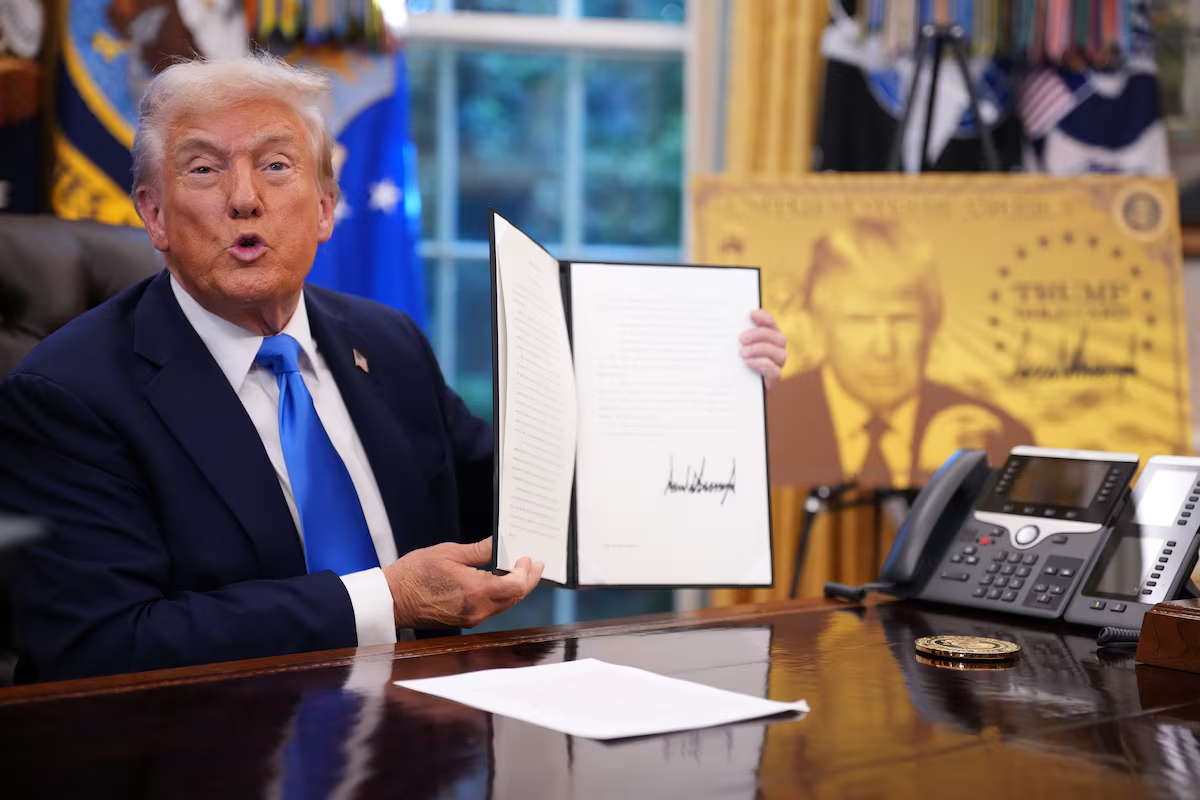
Meanwhile, Trump also signed an executive order creating a “gold card” residency program, offering permanent U.S. residency for those who can pay $1 million upfront.

Legal experts questioned the fee’s validity, noting Congress only authorizes visa fees to cover administrative costs, not as a revenue generator. Still, the administration insists “all the big companies are on board.”