Yazılar

ByteDance Shifts Chip Design Staff to Singapore Unit Amid U.S.-China Tensions

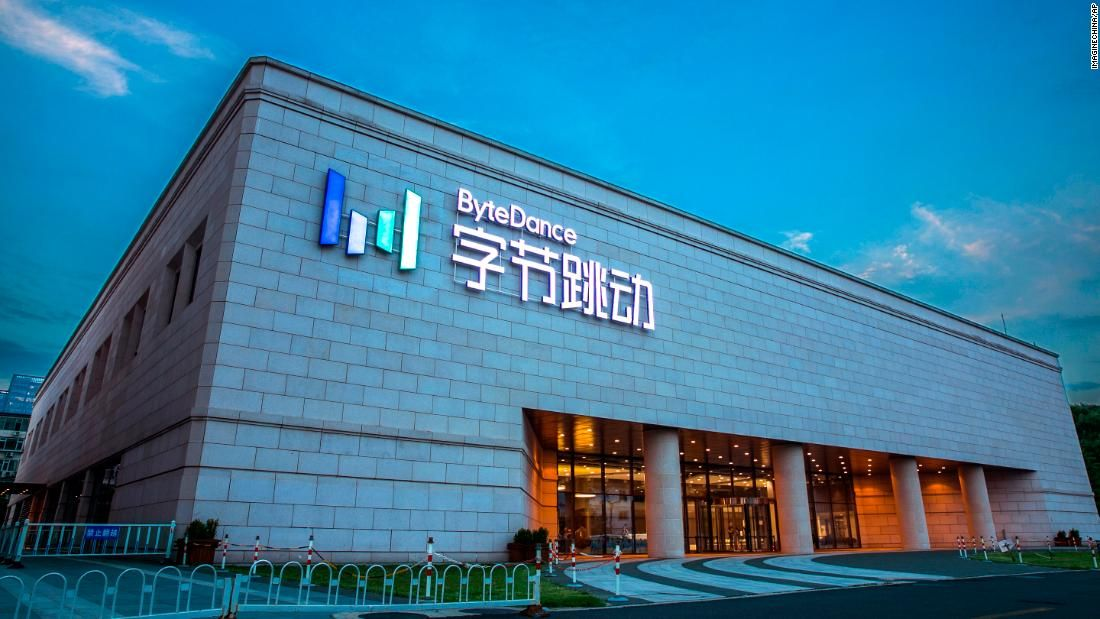
Chip designers at ByteDance, many based in Beijing and Shanghai, were surprised last week to learn they are officially reporting into a Singapore unit, according to three people familiar with the matter. The change became clear when staff were reassigned into a new group on the company’s internal messaging system.

Analysts suggest the restructuring could help ByteDance navigate U.S.-China trade restrictions on semiconductor access. Since late 2023, U.S. rules have barred mainland Chinese firms from using Taiwan’s TSMC to manufacture advanced AI chips above certain performance thresholds. Shifting oversight to Singapore may allow ByteDance more flexibility in securing partnerships and production.

ByteDance, best known globally for TikTok, has been expanding into proprietary chip design since 2022, developing application-specific integrated circuits (ASICs) to reduce reliance on suppliers like Nvidia. The company has worked with Broadcom on AI processors intended for TSMC fabrication, though it does not currently outsource manufacturing to the Taiwanese firm.

The Singapore entity may be linked to Picoheart, a ByteDance subsidiary registered in December 2023. Picoheart drew notice last year when it acquired a 9.5% stake in Chinese memory chipmaker Innostar. Singapore also hosts TikTok’s CEO Shou Zi Chew and some of ByteDance’s largest data centers.

So far, ByteDance’s chips are limited to inference tasks, such as video decoding and networking, rather than the more computationally intensive AI training workloads where rivals like Alibaba and Baidu have advanced further. Job postings indicate ByteDance is still hiring for its AI chip team as it tries to catch up in the strategic semiconductor race.

Trump to Hit Semiconductor Imports with Tariffs Unless Firms Build in U.S.

President Donald Trump announced Thursday that his administration will impose tariffs on semiconductor imports from companies that do not move production to the United States. Speaking ahead of a dinner with top tech CEOs, Trump said the tariffs would be “fairly substantial” but would not apply to companies already investing in U.S. manufacturing.

Trump framed the move as part of his broader strategy of using tariffs to pressure foreign companies and governments to shift production and jobs into the U.S. “If they are not coming in, there is a tariff,” he said. He singled out Apple CEO Tim Cook, noting that Apple’s $600 billion commitment to domestic investment puts it “in pretty good shape.”

The policy comes as global chipmakers respond to U.S. pressure. Taiwan’s TSMC, South Korea’s Samsung, and SK Hynix have all announced major U.S. semiconductor plant investments. Trump had previously floated a 100% tariff on imported chips but said exemptions would apply for companies producing or planning facilities inside the country.

The announcement underscores Trump’s second-term emphasis on tariffs as a cornerstone of economic and foreign policy, a tool he has wielded to renegotiate trade terms and gain leverage in geopolitical disputes. However, legal challenges loom: lower courts have invalidated parts of his earlier tariff regime, and the administration has asked the Supreme Court to uphold the sweeping emergency powers used to justify them.

OpenAI to Debut First AI Chip in 2026 With Broadcom Partnership

OpenAI will launch its first in-house artificial intelligence chip in 2026 through a partnership with U.S. semiconductor leader Broadcom (AVGO.O), according to the Financial Times. The chip will be used internally to power OpenAI’s own AI systems rather than being sold to external customers, people familiar with the matter said.

The move reflects OpenAI’s push to diversify away from Nvidia, whose GPUs currently dominate AI computing, and to lower infrastructure costs amid surging demand for training and running large-scale AI models like ChatGPT. OpenAI has previously collaborated with Broadcom and Taiwan Semiconductor Manufacturing Co. (TSMC) on design and fabrication, while also supplementing with AMD and Nvidia chips.

Reuters earlier reported that OpenAI was finalizing the design of its first custom silicon, to be manufactured at TSMC, with a focus on reducing reliance on outside suppliers. By developing its own chip, OpenAI joins rivals Google, Amazon, and Meta, which have already rolled out proprietary processors to handle escalating AI workloads.

The timing of the news coincides with Broadcom CEO Hock Tan’s announcement on Thursday that the company had secured over $10 billion in AI infrastructure orders from a new unnamed customer, set to drive significant revenue growth in fiscal 2026. Industry watchers say OpenAI could be that customer, given its scale and need for dedicated compute.

If successful, the partnership would not only help OpenAI gain greater control over its AI infrastructure but also cement Broadcom’s position as a leading custom silicon provider in the generative AI era.