Yazılar

TSMC to Phase Out 6-Inch Wafer Production Over Two Years

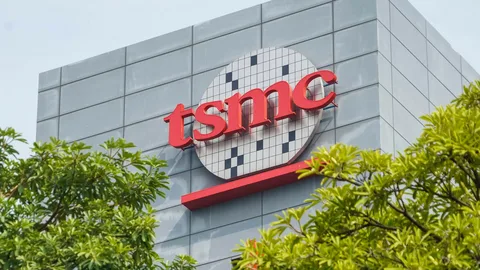
Taiwan Semiconductor Manufacturing Co. (TSMC) announced on Tuesday that it will gradually phase out its 6-inch wafer manufacturing business over the next two years, while continuing to consolidate 8-inch wafer production to improve operational efficiency.

STRATEGIC MOVE

  • The decision was made after a thorough evaluation of market conditions and aligns with TSMC’s long-term business strategy.

  • The company emphasized that the transition will be managed closely with customers to ensure their needs are met.

  • TSMC stated that this move will not impact previously announced financial targets.

MANUFACTURING CAPACITY

  • TSMC currently operates one 6-inch wafer fab and four 8-inch wafer fabs in Taiwan for mature-node chip production.

  • Advanced-node chip manufacturing, used by clients like Apple and Nvidia, is conducted in 12-inch fabs.

  • In July, TSMC forecasted annual revenue growth of approximately 30% in U.S. dollar terms.

RATIONALE
The phase-out reflects market trends and efficiency goals, allowing TSMC to focus resources on more in-demand wafer sizes and advanced technologies.

Trump Announces Proposed 100% Tariff on Imported Semiconductors, With Exemptions for U.S.-Based Manufacturers

President Donald Trump announced plans to impose a roughly 100% tariff on imported semiconductor chips, aiming to incentivize companies to manufacture in the United States. However, firms that have committed to or are already producing chips on U.S. soil—such as Apple, which pledged an additional $100 billion investment in America—would be exempt from the tariff.

Trump warned that companies making false commitments to build U.S. factories would face retroactive charges if they fail to deliver. His remarks were informal and details on implementation remain unclear, with a formal national security investigation on tariffs expected to conclude by mid-August.

Reactions from the global semiconductor industry and governments varied. South Korea’s trade envoy confirmed that major chipmakers Samsung Electronics and SK Hynix will be exempt under a U.S.-South Korea trade deal. In contrast, officials from the Philippines and Malaysia expressed concern that tariffs would severely harm their industries, risking competitiveness in the U.S. market.

Taiwanese companies, notably TSMC, which have established U.S. manufacturing facilities or partnerships, are expected to avoid significant impact. This benefits key U.S. customers like Nvidia, which plans major investments in American chip production.

Experts note that the tariffs favor large, financially strong firms able to build factories domestically, emphasizing a “survival of the biggest” dynamic. The U.S. government has supported this shift with a $52.7 billion semiconductor subsidy program to boost domestic chip production, which currently accounts for about 12% of global output, down from 40% in 1990.

The European Union has agreed to a 15% tariff on most U.S. exports, including chips, and Japan secured assurances against worse tariffs than other nations on semiconductor products.

Following the announcement, shares of Asian chipmakers with U.S. manufacturing plans rose significantly, reflecting market optimism over tariff exemptions.

AMD and Super Micro Shares Slide as AI Growth Expectations Dim After Data Center Results Miss

Shares of Advanced Micro Devices (AMD.O) and server maker Super Micro Computer (SMCI.O) fell sharply in early trading Wednesday after both companies reported weaker-than-expected results in their data center segments, casting doubt on their AI growth prospects and competitive standing. AMD shares dropped 5.1%, while Super Micro plummeted 18.2%, with the latter potentially losing over $6 billion in market value.

AMD’s data center revenue, driven by Instinct AI chips and server CPUs, grew 14% to $3.2 billion in Q2—slightly below analyst forecasts—and lagged far behind rival Nvidia’s 73% jump to $39.11 billion in the same segment. Jefferies analysts said the AI outlook failed to deliver the strong upside some investors anticipated. CEO Lisa Su cited U.S. export restrictions on AMD’s MI308 AI chips to China as a factor in year-over-year AI revenue declines, with no clear timeline for lifting those limits. HSBC noted that expectations for revenue recovery from lifting export restrictions appear muted.

The chip sector faces additional risks from impending U.S. tariffs on semiconductor imports and supply chain vulnerabilities tied to Taiwan Semiconductor Manufacturing Company (TSMC), which produces AMD’s advanced 3-nanometer wafers. Analyst Michael Ashley Schulman warned any slowdown at TSMC could disproportionately impact AMD.

Super Micro missed Q4 estimates amid intense competition from larger server makers Dell and HP, suffering from execution issues and Nvidia chip supply delays. Analyst Gil Luria of D.A. Davidson noted signs of market share loss. While over 70% of Super Micro’s Q4 revenue is linked to AI platforms, the company’s margins remain pressured by high AI server production costs and fierce rivalry. Bank of America analysts highlighted ongoing uncertainty over the gross margin impact this quarter.

Super Micro CEO Charles Liang expressed optimism about improved chip availability driving better growth going forward. Dell’s shares also declined 1.7% on the news.

AMD trades at a forward price-to-earnings multiple of 32.39, compared to Super Micro’s 19.69.