Yazılar

ASML poised to benefit from AI megadeals and chip expansion wave

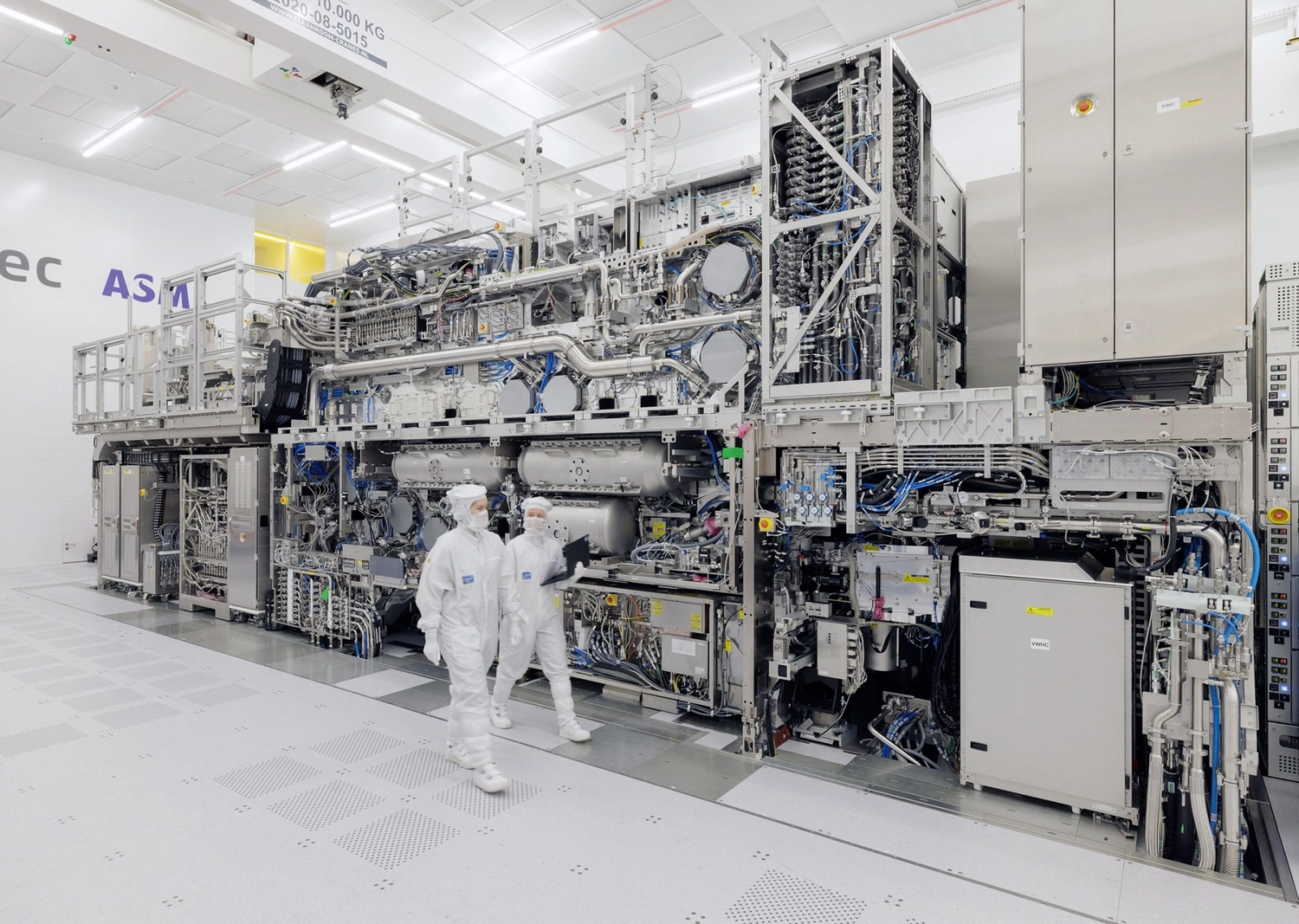
Dutch chipmaking equipment giant ASML is expected to benefit from a surge in AI-related megadeals between major technology firms and semiconductor manufacturers, with investors anticipating a strong outlook when it reports third-quarter earnings on Wednesday.

Analysts believe ASML’s top customers — including TSMC, SK Hynix, and Samsung — are preparing to ramp up production capacity through 2026 and beyond, driven by a global race to expand AI data centres. These expectations have already boosted ASML’s stock by 32% since early September, outpacing the Philadelphia Semiconductor Index, which rose 15% in the same period.

Forecasts compiled by Visible Alpha suggest new bookings — a key industry indicator — will total 5.36 billion euros ($6.21 billion) for the quarter, following 9.48 billion euros in the first half of the year. Meanwhile, net income is projected to rise 1.4% year-on-year to 2.11 billion euros, according to LSEG IBES data.

Recent multi-billion-dollar deals between NVIDIA, AMD, Intel, Samsung, Meta, and Oracle are fuelling optimism for ASML, whose machines — costing more than $300 million each — are essential for producing advanced chip circuitry.

However, analysts note that building fabrication plants can take several years. They want to hear whether ASML’s clients can accelerate these expansion plans amid rising demand. “Every memory chipmaker is likely to increase production capacity for AI,” said Michael Roeg of Degroof Petercam, citing Micron, SK Hynix, Samsung, and Chinese competitors.

Intel unveils Panther Lake, first chip built on next-gen 18A process

Intel has revealed new details of Panther Lake, its upcoming laptop processor and the first to be manufactured using the company’s next-generation 18A technology. The chip, aimed at AI-enabled premium PCs, marks a critical milestone in Intel’s bid to reclaim leadership in semiconductor manufacturing from AMD and TSMC.

According to Intel, Panther Lake’s integrated graphics and CPU deliver 50% faster performance than the current Lunar Lake line, which was largely produced by Taiwan’s TSMC. The new 18A process introduces a redesigned transistor structure and a more efficient power delivery system, allowing higher performance at lower energy costs.

The chip uses a system-on-chip architecture, combining CPU and GPU components into a single circuit to boost efficiency. Production ramps up this year, with first shipments expected by late 2025 and broad availability from January 2026.

Industry experts see Panther Lake as a major credibility test for Intel’s comeback strategy. “It’s a confirmation of Intel’s continued advancements in chip manufacturing,” said Bob O’Donnell, chief analyst at Technalysis Research.

New CEO Lip-Bu Tan, who took over amid leadership turmoil, has scaled back expansion plans while focusing on core innovation. Intel’s Arizona Fab 52 facility is now fully operational and will also produce the company’s Clearwater Forest server chips, slated for release in 2026.

As Intel seeks to reassert itself in both the PC and AI data center markets, Panther Lake’s success will be a key signal to investors that its long-promised manufacturing turnaround is finally taking shape.

TSMC Q3 revenue jumps 30% on AI-fueled chip demand, beats forecasts

TSMC, the world’s largest contract chipmaker, posted a 30% year-on-year surge in third-quarter revenue, driven by the global boom in artificial intelligence demand. The company’s performance outpaced analyst expectations, reaffirming its dominance in the semiconductor supply chain that powers AI leaders like Nvidia and Apple.

Revenue for the July–September period reached T$989.92 billion ($32.47 billion), surpassing the T$973.26 billion consensus estimate from 22 analysts compiled by LSEG SmartEstimate. The figure landed in the midpoint of TSMC’s July guidance of $31.8 billion–$33 billion, according to its previous earnings call.

The strong result underscores how AI-related chip demand is offsetting slower sales of consumer electronics such as smartphones and tablets. TSMC’s cutting-edge chips are essential for powering advanced AI systems and high-performance computing, both of which have fueled a new growth cycle for the company.

TSMC’s Taipei-listed shares have climbed 34% year-to-date, outpacing the broader Taiwan index’s 18.5% gain. Analysts expect the company’s October 16 earnings report to include a revised full-year outlook, likely reflecting continued AI-driven momentum.

The upbeat results mirror a wider surge across Taiwan’s tech sector: Foxconn, Nvidia’s largest server manufacturer, also posted record-high third-quarter revenue, signaling sustained strength in the AI hardware supply chain.