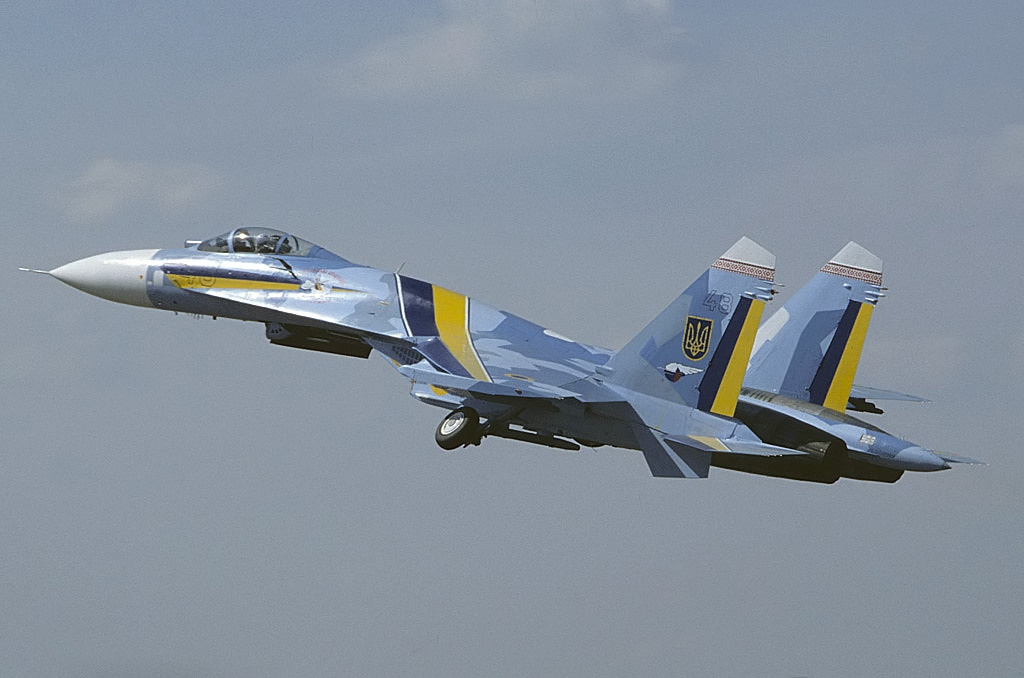

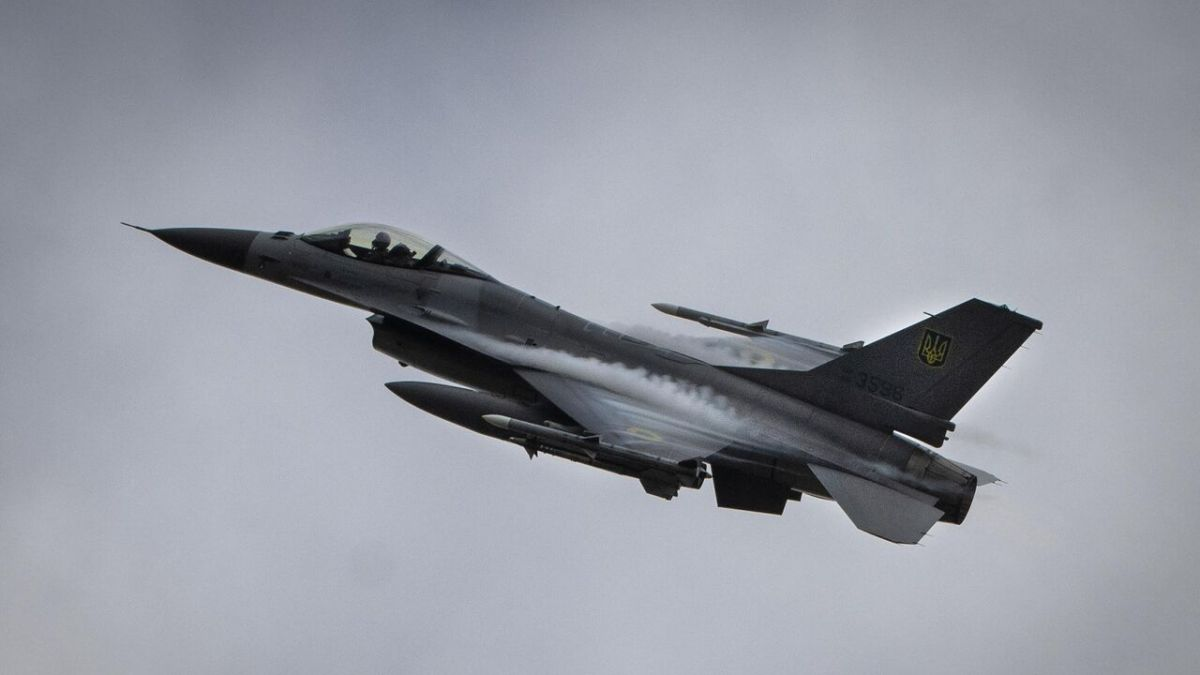
A Ukrainian F-16 fighter jet, recently supplied by NATO allies, was destroyed during a Russian missile barrage on Monday,. The crash resulted in the death of pilot Oleksiy Mes and marks the first loss of an F-16 since these aircraft were delivered earlier this month.
The Ukrainian military has clarified that the crash was not caused by a direct enemy missile strike. Instead, the pilot is credited with intercepting three cruise missiles and one drone during what is reported as Russia’s largest aerial assault to date. The Ukrainian Air Force honored Mes in a statement, acknowledging his sacrifice in protecting Ukrainian lives.
While the specific type of aircraft involved was not initially disclosed. Ukrainian President Volodymyr Zelensky confirmed the deployment of the US-made F-16s on Tuesday, emphasizing their role in countering Russian drones and missiles.
In a recent development, Dutch Chief of Defence Gen. Onno Eichelsheim announced that the Netherlands will provide Ukraine with 24 additional F-16s, alongside more weaponry, with no restrictions on their use beyond compliance with humanitarian law. This means Ukraine could potentially use these jets for deeper strikes into Russian territory.
Since August 2023, when US President Joe Biden authorized the transfer, approximately 65 F-16s have been pledged by NATO countries to Ukraine. These aircraft are working in conjunction with Western-supplied surface-to-air missile systems like Patriot and Nasams, enhancing Ukraine’s defense capabilities against Russian glide bombs and precision munitions.
The loss of the F-16 is a setback for Ukraine, as President Zelensky prepares to present a “victory plan” to US President Joe Biden next month. In addition, Zelensky recently disclosed the successful test of a domestically-produced ballistic missile, although further details remain confidential.
The ongoing military incursion by Ukraine into Russian territory in the Kursk region is occurring on land that witnessed one of the most significant Soviet victories against the German invaders during World War II. Historians argue that this victory, known as the Battle of Kursk, marked a turning point in the war in Europe, nearly a year before the D-Day invasion of Normandy.
While the June 6, 1944, landings in Normandy are often perceived as the decisive moment in the defeat of Nazi Germany, the Battle of Kursk, fought from July 5 to August 23, 1943, played a crucial role in shifting the tide of war. This battle involved millions of troops and thousands of tanks and armored vehicles.
The victory at Kursk allowed the Soviets to seize the initiative in the eastern front and maintain it until the end of the war.
The Battle of Kursk:
In the spring of 1943, Hitler‘s army in the east suffered heavy losses in the Battle of Stalingrad. The Germans lost almost a million men in their attempt to capture the city on the Volga River, defeat the Soviet army, and seize oil fields in the Caucasus.
Following the German retreat from Stalingrad, Hitler‘s generals sought to regain the initiative in the east. They targeted a 150-mile bulge in the German lines, defended by over a million Soviet troops, centered on Kursk.
The Germans planned to attack in the spring, but Hitler delayed the operation, known as Operation Citadel, to allow for the deployment of new tanks. This delay gave the Soviets ample time to prepare their defenses.
A Formidable Defense:
The Germans committed around 800,000 troops and 3,000 tanks to the attack. However, they faced a formidable defense. The Soviets had prepared a series of defensive lines, dug over 3,000 miles of trenches, and deployed anti-tank guns and artillery in depth. The Soviets also used their superior air power to disrupt German supply lines and support their ground troops.
The Battle of Kursk was a brutal and bloody affair. Both sides suffered heavy casualties, but the Soviets ultimately prevailed. The German defeat at Kursk marked a turning point in the war on the Eastern Front. It weakened the German army, allowed the Soviets to launch a series of offensives, and ultimately contributed to the eventual defeat of Nazi Germany.