Yazılar

Amazon’s Zoox Robotaxi Debuts Free Rides on Las Vegas Strip

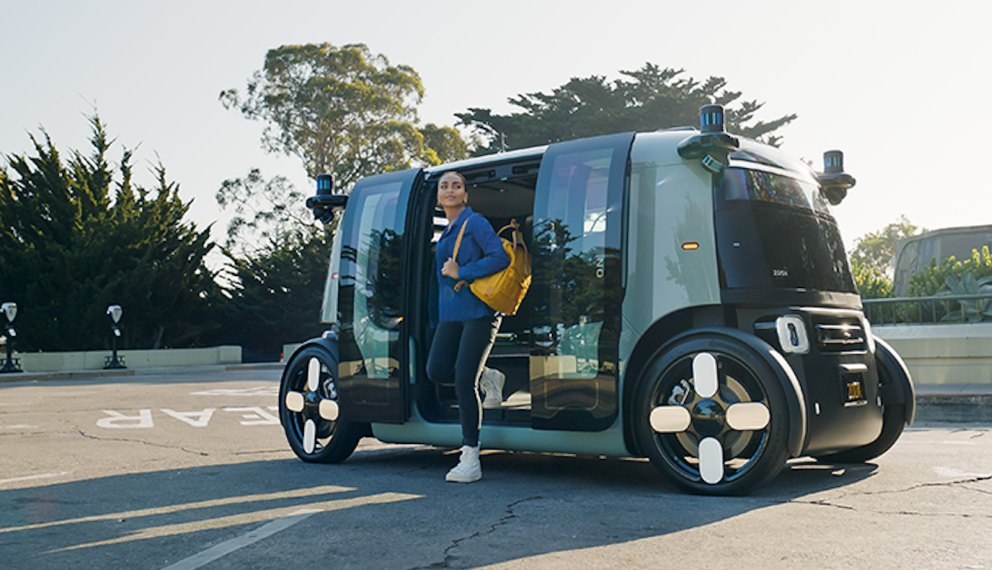
Amazon-owned Zoox has officially opened its robotaxi service to the public in Las Vegas, offering free rides on and around the Strip while awaiting regulatory approval to charge fares. The move positions Zoox against established rivals like Alphabet’s Waymo and Tesla in the race for autonomous ride-hailing dominance.

Key Details

  • Vehicle design: Unlike competitors, Zoox uses a purpose-built, fully autonomous pod with no steering wheel or pedals. Passengers sit facing each other, resembling a futuristic shuttle.

  • Free service: Current rides are complimentary to help familiarize the public and gather feedback.

  • Fleet: About 50 vehicles are in Zoox’s Las Vegas fleet, with thousands of riders each week during its casino-based test loop.

  • Expansion: Zoox plans to extend services soon to San Francisco, with future rollouts in Miami, Austin, Atlanta, and Los Angeles.

Industry Context

  • Waymo already runs paid robotaxi services in multiple U.S. cities with a fleet of around 2,000 vehicles.

  • Tesla operates a small number of robotaxis with safety drivers in Austin and has begun a Bay Area ride-hailing service.

  • Uber is also entering the space, integrating autonomous vehicles into its network through partnerships.

  • Commercializing robotaxis has been tough, with regulatory scrutiny, protests, and high costs forcing many startups to exit the field. Amazon acquired Zoox for $1.3 billion in 2020, betting on the long-term payoff.

Outlook

Zoox expects to begin charging fares within months once it secures regulatory approval. With its unique design and Amazon’s backing, Zoox could emerge as a serious challenger in the still-nascent robotaxi market, provided it scales safely and wins public trust.

US Grants Exemption for Zoox Self-Driving Vehicles, Ends Safety Probe

The National Highway Traffic Safety Administration (NHTSA) has certified Amazon’s (AMZN.O) self-driving unit Zoox vehicles for demonstration use and closed its investigation into whether the vehicles complied with federal safety standards.

The agency began probing in 2022 after questions arose about whether Zoox’s purpose-built autonomous vehicles, which lack traditional driving controls like steering wheels and brake pedals, met federal safety requirements under the company’s self-certification.

In June, Zoox applied for an exemption from some regulatory requirements, which NHTSA granted, allowing the vehicles to operate legally on U.S. public roads under this exemption. The agency also required Zoox to remove any claims that their vehicles fully comply with applicable federal motor vehicle standards.

The Trump administration had signaled in June an intent to accelerate approvals for self-driving vehicle exemptions, following stalled proposals by General Motors and Ford to deploy vehicles without steering wheels and pedals.

In May, Zoox recalled 270 driverless vehicles after an unoccupied robotaxi was involved in a crash in Las Vegas due to a scenario where the automated system might misjudge another vehicle approaching perpendicularly and failing to stop, potentially causing collisions. Zoox paused operations briefly, conducted a safety review, and deployed a software update to fix the issue.

NHTSA also closed a related probe from May 2024 into 258 Zoox vehicles after a software update resolved a braking problem that led to two rear-end collisions involving motorcyclists.

Tesla Invites Select Users to Texas Robotaxi Trial with Front Seat Safety Monitors

Tesla (TSLA.O) has invited a small group of users to participate in a limited test of its robotaxi service in Austin, Texas, tentatively scheduled to begin this Sunday, according to social media posts and email screenshots. The invitations indicate that a Tesla employee will accompany riders in the front passenger seat during the trial.

This trial in Austin is a critical step for Tesla as the company faces challenges including declining car sales linked to CEO Elon Musk’s political stances. Tesla has increasingly shifted focus from producing affordable electric vehicles to advancing robotics and artificial intelligence, a strategy that underpins much of its market valuation.

Elon Musk has emphasized safety for the trial, stating that the vehicles will be monitored remotely by humans and expressing confidence in scaling the robotaxi service quickly. The initial deployment will involve about 10 Model Y SUVs equipped with Tesla’s full self-driving driver assistance software.

The rollout could be delayed, and operations may be limited or suspended in poor weather conditions. Riders must be at least 18 years old. Tesla’s cautious approach to the robotaxi launch drew approval from X.com user Omar Qazi (@WholeMarsBlog), who received an invitation and noted, “Tesla is rolling out the Robotaxi service extremely cautiously, which is good. Baby steps.” Musk responded, “Very much so.”

Despite the enthusiasm, commercializing autonomous vehicles remains costly and risky. Tesla, along with competitors like Alphabet’s Waymo (GOOGL.O) and Amazon’s Zoox (AMZN.O), has faced federal probes and recalls linked to crashes involving self-driving cars.

Experts have raised concerns about Tesla’s heavy reliance on cameras and AI, without backup sensors such as lidar or radar, warning that adverse weather like fog, heavy rain, or sun glare could compromise safety.

Recently, a group of Democratic lawmakers from Austin urged Tesla to postpone the rollout until September, when new state regulations on autonomous vehicles will come into effect.

Users in Austin who receive invitations can download Tesla’s Robotaxi app to summon a vehicle. One screenshot shared online stated, “Through this exclusive preview, you’ll have the opportunity to provide valuable feedback on our Robotaxi service.” Reuters was unable to immediately verify the screenshots’ authenticity.