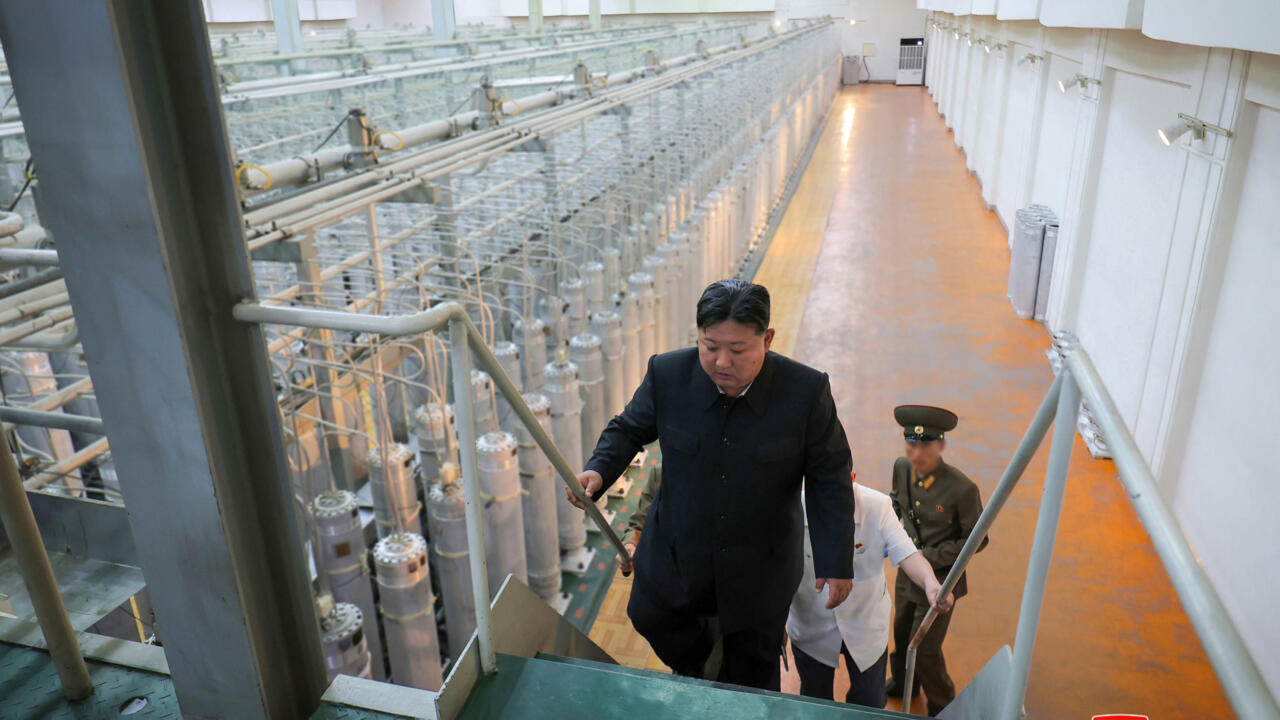
For the first time, North Korea has publicly shared images of its uranium enrichment facility, a critical component of its nuclear weapons program. The photos were released on Friday as North Korean leader Kim Jong Un visited the site and urged the production of more weapons-grade material to strengthen the country’s nuclear arsenal. These images provide a rare glimpse into North Korea’s nuclear activities, which are prohibited by several United Nations Security Council resolutions.
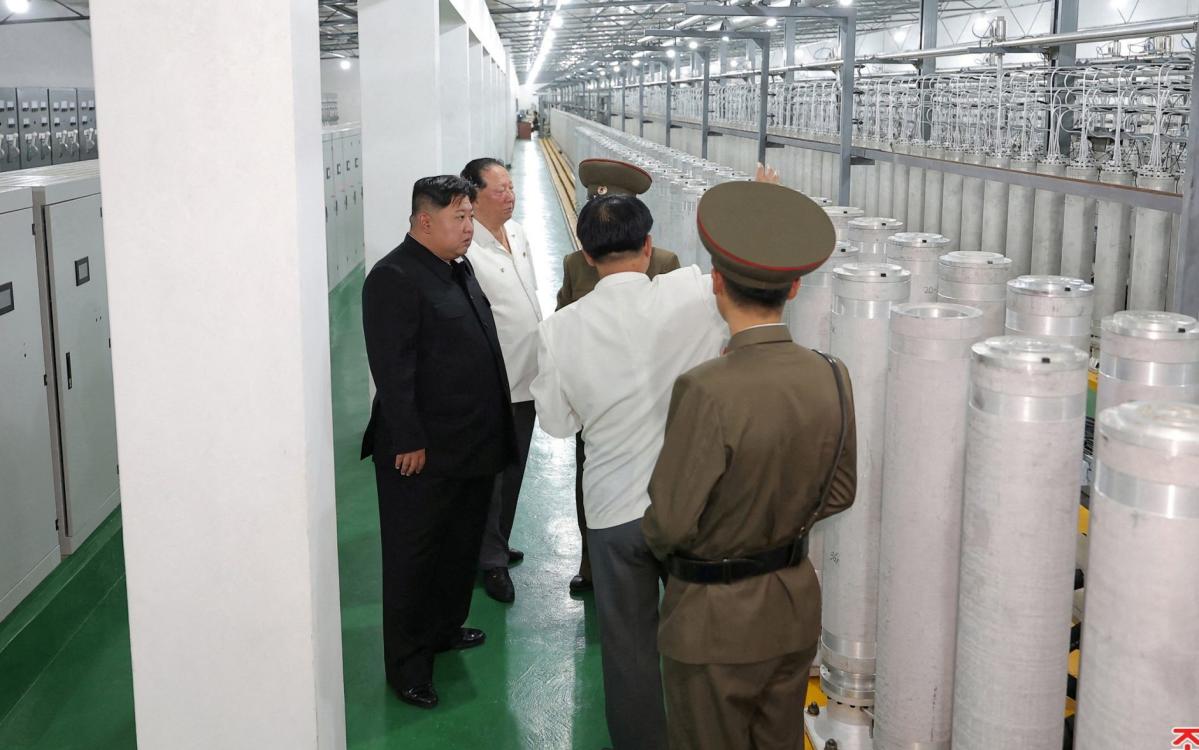
The state media report accompanying the photos showed Kim inspecting rows of centrifuges, the machinery used to enrich uranium for nuclear weapons. The exact location and date of the visit were not disclosed, but Kim emphasized the need to produce more material for tactical nuclear weapons, calling them essential for “self-defense and the capability for a preemptive attack.”
Kim’s remarks also referenced what he called escalating “anti-DPRK nuclear threats” from the United States and its allies, indicating that North Korea views its growing nuclear arsenal as a response to these perceived threats.
Expansion of North Korea’s Nuclear Program
Analysts have long suspected that North Korea operates multiple uranium enrichment sites. Commercial satellite imagery has shown recent construction activity at the Yongbyon Nuclear Scientific Research Center, the country’s primary nuclear facility. This suggests that North Korea is expanding its enrichment capabilities. The International Atomic Energy Agency (IAEA) confirmed that it has observed activity consistent with the operation of both a reactor and an enrichment facility at Yongbyon.
Kim’s visit highlighted efforts to “exponentially increase” nuclear production by scaling up the number of centrifuges and using a new type of centrifuge to boost the production of weapons-grade uranium. Experts note that North Korea appears to be advancing its nuclear fuel cycle capabilities. Ankit Panda, from the Carnegie Endowment for International Peace, pointed out that Kim’s comments suggest North Korea’s tactical nuclear weapons may rely primarily on uranium cores, which are easier to produce in large quantities compared to plutonium.
Implications for North Korea’s Nuclear Arsenal
The publication of these photos marks the first visual confirmation of North Korea’s centrifuges since foreign scientists were invited to visit the Yongbyon facility in 2010. Jenny Town, from the U.S.-based Stimson Center, noted that these images demonstrate how far North Korea has advanced in its enrichment capabilities, lending greater credibility to its claims of expanding its nuclear weapons arsenal.
Estimates of North Korea’s nuclear stockpile vary. A July report by the Federation of American Scientists estimated that the country may have produced enough fissile material for up to 90 nuclear warheads, though it likely has around 50 assembled. North Korea has previously displayed images of what it claimed were nuclear warheads, and the country has conducted six underground nuclear tests between 2006 and 2017.
Military Activities and International Reactions
In addition to his visit to the uranium enrichment facility, Kim Jong Un oversaw the test launch of a new 600mm multiple launch rocket system on Thursday and visited an army training base earlier in the week. These developments come as North Korea continues to express hostility toward international efforts to strengthen defenses on the Korean Peninsula.
A recent defense meeting between member states of the U.S.-led United Nations Command in Seoul drew particular ire from Pyongyang, with North Korea’s foreign ministry denouncing the command as a “war organization.” Last month, Germany joined the command, becoming the 18th nation in the group that helps manage the heavily fortified border between North and South Korea and has pledged to defend the South in the event of conflict.