Yazılar

Trump jokes about AI “taking over the world” as U.S. and U.K. sign tech deal

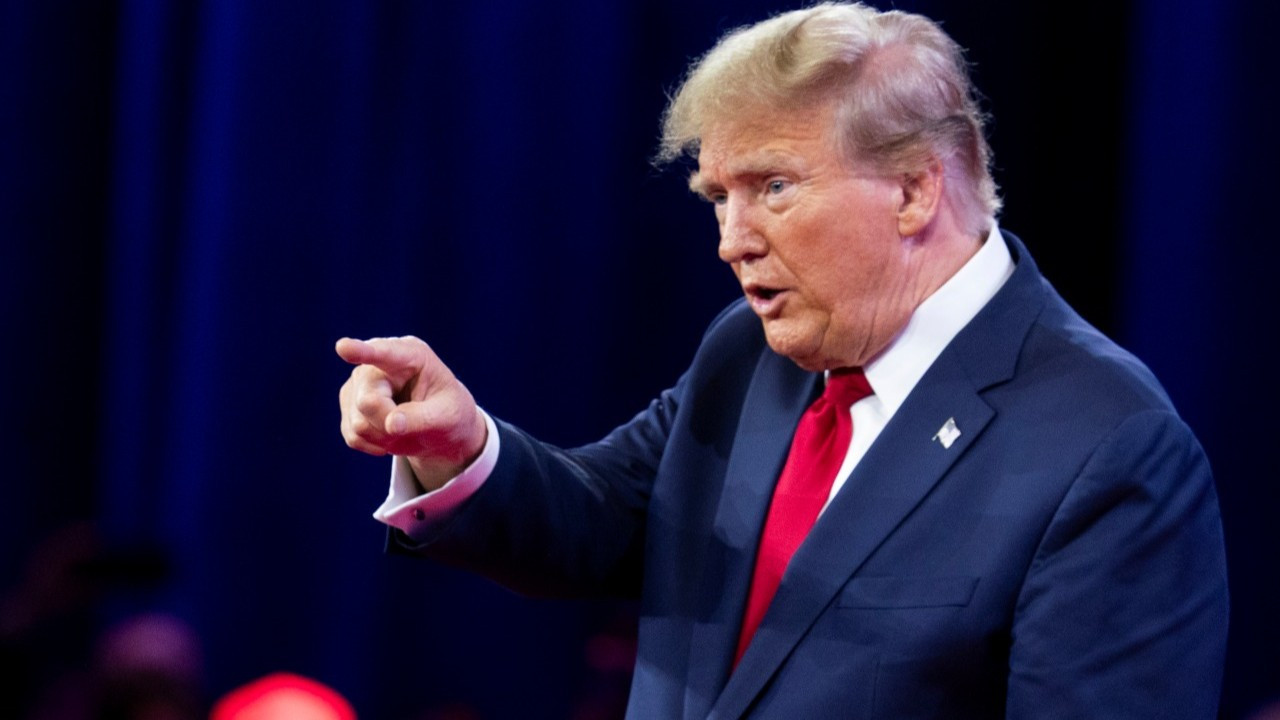
U.S. President Donald Trump, speaking alongside U.K. Prime Minister Keir Starmer in London, quipped that artificial intelligence was “taking over the world” and admitted he hoped tech leaders understood it better than he did. The remarks came during Trump’s second state visit to Britain, at an event attended by Nvidia CEO Jensen Huang and other industry figures.

Departing from prepared remarks on the strength of U.S.-U.K. relations and new tech investments, Trump turned to Huang with a laugh: “Jensen, I don’t know what you’re doing here. I hope you’re right. All I can say is, we both hope you’re right.” His comments drew laughter from Starmer and the audience.

The two leaders signed a “Tech Prosperity Deal”, pledging deeper cooperation on artificial intelligence, quantum computing, and civil nuclear projects. Under the agreement, Nvidia will deploy 120,000 GPUs across Britain, marking its largest European rollout to date.

Trump, characteristically playful, joked with Treasury Secretary Scott Bessent before signing: “Should I sign this? If the deal’s no good, I’m blaming you, Scott.”

The partnership aims to strengthen transatlantic research and industry collaboration while addressing the disruptive potential of AI—a technology Trump acknowledged as both transformative and unsettling.
Larry Ellison reemerges as tech and media power player

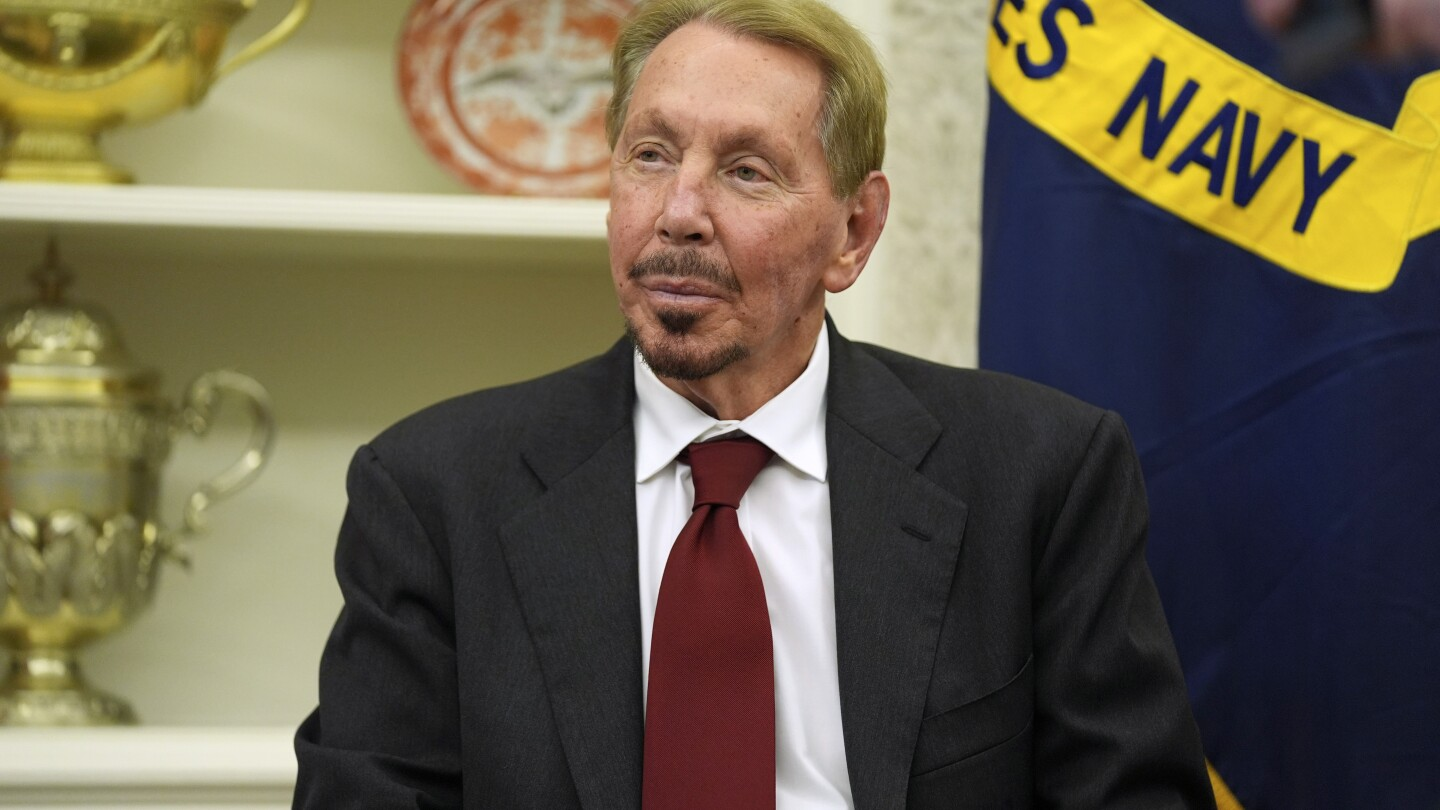
Forty-eight years after co-founding Oracle, Larry Ellison is once again at the center of global business headlines. Oracle’s stock surged 35.9% on the back of blockbuster cloud computing deals tied to AI, propelling Ellison’s net worth to nearly $400 billion—second only to Elon Musk.

Adding to his influence, Ellison’s family-controlled Paramount is preparing a bid for Warner Bros Discovery, a move that could dramatically reshape Hollywood. At the same time, his son David Ellison has begun steering CBS News with a more conservative tilt, hiring former Hudson Institute CEO Kenneth Weinstein as ombudsman and reportedly courting journalist Bari Weiss for a leadership role.

Ellison has also entrenched Oracle in the TikTok saga, providing U.S. infrastructure for the Chinese-owned app since 2022 amid national security scrutiny. Behind the flash of yachts, Hawaiian islands, and movie cameos—he played himself in Iron Man 2—Ellison has steadily bet big on AI.

Oracle became a major AI landlord, securing marquee clients including Meta, Elon Musk’s xAI, and OpenAI, which committed to a $300 billion compute deal over five years. This pivot helped Oracle’s booked revenue soar more than four-fold to $455 billion.

Unlike rivals Microsoft, Amazon, and Google, Oracle chose not to build custom AI chips, instead deepening ties with Nvidia. At a 2024 dinner with Musk and Nvidia CEO Jensen Huang, Ellison reportedly said, “Please take our money”—and soon after, Oracle secured GPU supplies that fueled the Stargate project with OpenAI.

Oracle’s cloud revival—after a failed 2016 launch—has proven cheaper and more adaptable. Its rapid scaling during the Zoom pandemic traffic surge and smooth takeover of TikTok’s U.S. user data in 2022 highlighted technical strength.

Still, huge risks remain. Oracle outsources critical infrastructure like land, data centers, and power, making it reliant on partners. Analysts warn that dependence on a small group of AI clients—particularly OpenAI—could expose Oracle to shocks if those firms stumble.

Ellison’s career has long swung between hubris and vindication, but with AI reshaping the tech landscape, the Silicon Valley “bad boy” may yet have the last laugh.

Taiwan leverages chip power for diplomacy at Semicon trade show

At this year’s Semicon trade show in Taipei, Taiwan elevated its “chip diplomacy” strategy, using its dominance in the semiconductor industry to strengthen diplomatic ties with both established allies and new partners.

Taiwan’s TSMC, the world’s largest contract chipmaker, sits at the center of global supply chains but Taiwan itself remains diplomatically isolated due to China’s sovereignty claims. To counter this, Taiwan’s foreign ministry co-sponsored a Semicon geopolitics panel for the first time, where Foreign Minister Lin Chia-lung described semiconductors and AI as “strategic resources” and stressed the need for trusted, “non-red” supply chains outside China.

The outreach comes as Taiwan courts “like-minded” democracies in Central and Eastern Europe, where sympathy has grown following Russia’s invasion of Ukraine. Czech Science Minister Marek Zenisek, speaking alongside President Lai Ching-te, highlighted shared democratic values and pitched his country as a supplier for TSMC’s first European fab in Dresden, Germany.

But Semicon also drew less expected guests. Costa Rica, which cut ties with Taiwan in 2007 in favor of China, attended for the first time with a national pavilion. And in another first, a group of 10 African tech entrepreneurs joined, supported by the French-African Foundation. Joelle Itoua Owona, CEO of AfriWell Health in the Republic of Congo, said African governments want to diversify partnerships beyond China, calling Taiwan “an additional friend.”

With 17 country pavilions—the most ever— this year’s Semicon showcased how Taiwan’s chip industry has become a powerful diplomatic tool. Beyond chips and AI, the trade show highlighted Taiwan’s role in building global coalitions at a time of intensifying pressure from Beijing.