
Yazılar

Could Powerful Lasers Unlock Affordable Fusion Power?

In the 1980s, secret nuclear fusion experiments conducted deep beneath Nevada showed promise, sparking the curiosity of physicists Conner Galloway and Alexander Valys. They realized fusion, the same process that powers the sun, had been ignited in a lab setting. This discovery led to the creation of the National Ignition Facility (NIF) in California, where, in late 2022, researchers achieved a breakthrough: the first fusion reaction that produced more energy than the lasers input.

However, NIF’s laser was barely powerful enough to achieve this result. Galloway and Valys, now co-founders of Xcimer in Denver, believe that more powerful lasers could unlock the potential for fusion power to fuel the electricity grid. They are developing lasers capable of up to 20 megajoules of energy—ten times more powerful than NIF’s laser—and plan to experiment with larger, simpler fuel capsules.

Xcimer joins a growing global effort to build a working fusion reactor. They plan to use molten salt to absorb heat from the fusion reaction and protect the reactor from damage caused by high-energy particles. The goal is to build a reactor that could be connected to the power grid by the mid-2030s.

However, skepticism remains. Some experts, like Prof. Ian Lowe, argue that fusion technology might not be commercially viable soon enough to address climate change, as decarbonization is needed much sooner than the projected timeline for fusion reactors.

Nonetheless, fusion startups like Xcimer remain optimistic, driven by the promise of cheap, carbon-free energy that could dramatically change the future.

 

Hottest Summer on Record for the Second Year Running Signals Escalating Climate Crisis

The summer of 2024 has officially become the hottest on record, continuing an alarming trend that points to the likelihood of this year being the hottest in human history. According to data released by the European Union’s Copernicus Climate Change Service (C3S), the global average temperature for the Northern Hemisphere’s summer months, from June through August, was the highest ever recorded. This year’s temperatures were found to be 0.69 degrees Celsius above the 1991-2020 average, surpassing the previous record set just a year earlier by 0.03 degrees Celsius.

C3S deputy director Samantha Burgess emphasized that the world witnessed a series of record-breaking temperature events within the span of just three months, including the hottest day, June, and August on record. These extreme heat events have significantly increased the likelihood of 2024 being the hottest year on record, Burgess stated in a written release.

The extreme heat seen this summer is a direct consequence of the climate crisis, driven largely by the continued burning of fossil fuels. Climate scientists have long warned that rising global temperatures are linked to an increase in extreme weather events, such as the unprecedented heatwaves observed across several continents this year. These events are expected to intensify further if decisive action is not taken to reduce greenhouse gas emissions, which are the key drivers of climate change.

As global temperatures continue to rise, the impact on ecosystems, economies, and public health is becoming increasingly severe. The sweltering conditions have already shattered national heat records and underscored the urgent need for governments to commit to more aggressive emissions reductions. Without meaningful intervention, the escalating climate crisis will only worsen, posing significant risks for future generations and the planet.

Experts agree that while the data provided by C3S underscores the gravity of the situation, it also serves as a critical call to action for policymakers worldwide. Immediate and sustained efforts to reduce greenhouse gas emissions are essential if we are to prevent global temperatures from reaching even more dangerous levels in the years to come.

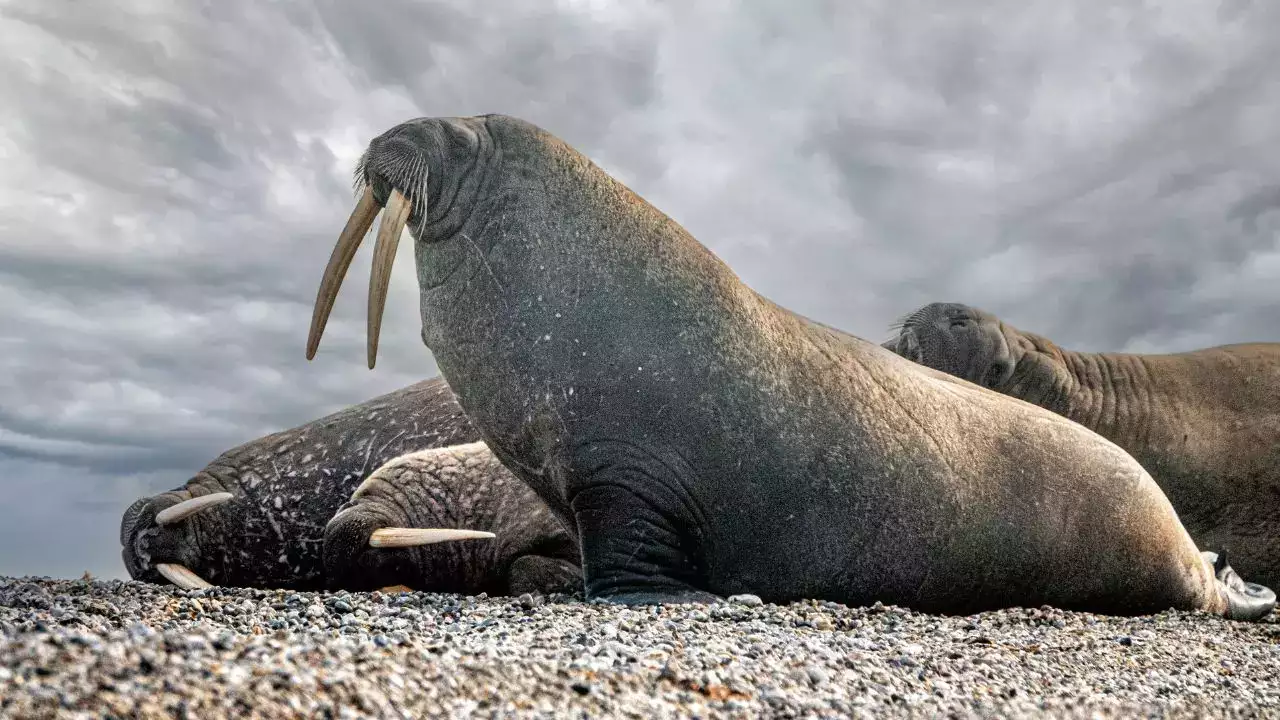
Ancient Walrus-Like Mammal Found in Atlantic Reveals New Marine Evolutionary Insights

Ontocetus posti: An Extinct Walrus-Like Mammal Unveils New Perspectives on Marine Evolution Devamını Oku