Yazılar

Nissan and Monolith Expand AI Collaboration to Speed Up Car Development

Nissan has expanded its partnership with UK software company Monolith to accelerate car development using artificial intelligence. The collaboration aims to reduce the need for physical testing by applying AI-driven data analysis, significantly shortening the time it takes for new models to reach the market.

The renewed partnership follows the successful use of Monolith’s AI to cut testing time for chassis bolt tightening on the new electric Nissan Leaf — a process that will now be applied to upcoming European models as well.

Emma Deutsch, Director of Customer-Oriented Engineering and Test Operations at Nissan Technical Centre Europe, noted that Chinese automakers can develop a new model in just 18 months, adding, “We’ve got to get vehicles to market quicker.” By applying Monolith’s AI to physical test data collected since the 1992 launch of the Nissan Micra, the company managed to shorten bolt-tightening tests from six months to five, with a goal to cut them further to three months.

Nissan is now working with Monolith on additional projects to reduce testing times for tyres and batteries. These AI applications could help Nissan reduce overall vehicle testing by 20%. Monolith’s recent acquisition by AI data centre operator Coreweave is expected to further enhance R&D efficiency in the automotive sector.

Tesla Profit Misses Expectations Despite Record Sales and Revenue

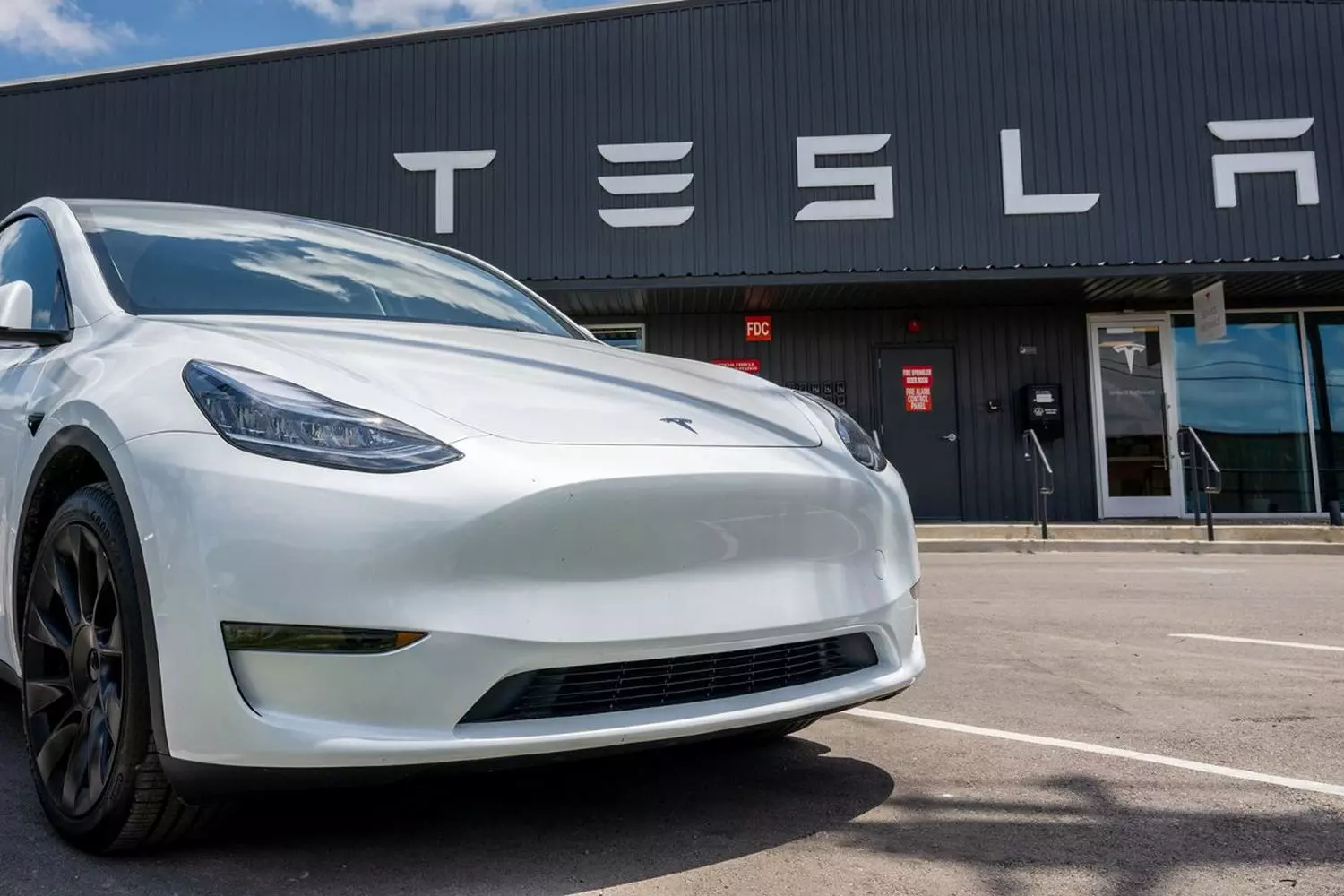
Tesla posted record third-quarter revenue of $28.1 billion, surpassing analyst estimates of $26.37 billion, but profits fell short due to rising costs, tariffs, and shrinking regulatory credit income. Shares dropped 4% in extended trading as investors reacted to the weaker earnings and fading government incentives that have long supported electric vehicle demand.

Profit per share came in at 50 cents, below the expected 55 cents. The company cited over $400 million in tariff-related costs and a 50% increase in R&D spending, largely tied to AI and robotics projects. Regulatory credit sales fell to $417 million from $739 million a year earlier, signaling continued decline.

Tesla’s gross margin stood at 18%, slightly above estimates, while automotive margins excluding credits reached 15.4%. To sustain demand amid expiring U.S. tax credits, Tesla launched lower-cost “Standard” versions of its Model 3 and Model Y, though analysts warned the move could compress profits further.

Despite the short-term challenges, Tesla remains focused on expansion. CEO Elon Musk said production of the Cybercab robotaxi, Semi truck, and Megapack 3 battery is set for 2026. The company’s energy division grew 81% in storage deployments, and Musk confirmed plans for mass production of the humanoid robot Optimus by late 2026.

Tesla Set for Strong Quarter as Buyers Rush to Beat Expiring U.S. EV Tax Credit

Tesla is expected to post a strong third-quarter performance, boosted by a surge in U.S. sales as customers rushed to buy electric vehicles before the $7,500 federal EV tax credit expired. The results, due later on Wednesday, will be closely watched for signals on how CEO Elon Musk plans to sustain growth amid tightening competition and political controversy.

The company’s new, cheaper “Standard” versions of its Model 3 and Model Y have driven fresh demand. These models are roughly $5,000 to $5,500 cheaper than earlier trims, featuring smaller batteries, weaker motors, and stripped-down interiors that omit rear screens and seat pockets. Tesla also temporarily reduced lease prices on premium versions to clear inventory.

However, these aggressive price cuts and feature reductions have squeezed profit margins, a growing concern for investors. Analysts estimate Tesla’s automotive gross margin, excluding regulatory credits, will fall to 15.6%, down from 17.05% a year earlier.

Tesla’s overall revenue is expected to rise 4.2% year-on-year to $26.24 billion, according to LSEG data, though analysts will also look for signs that sales of pollution credits — which Tesla sells to gasoline carmakers — have tapered off following Trump administration policy changes.

Beyond financials, investors are eager for updates on Tesla’s robotaxi rollout, which Musk has described as the company’s next growth engine. He has claimed Tesla’s robotaxis could serve half the U.S. population by year-end, though specifics remain elusive. Analysts at Cantor Fitzgerald said the top questions now involve “fleet size, cumulative miles, and service territories” expected by Q4 and 2026.

Despite a slowdown in sales of its aging lineup and consumer backlash linked to Musk’s far-right political rhetoric, Tesla shares have risen nearly 10% this year, buoyed by a proposed $1 trillion pay package for Musk. Still, Tesla remains one of the weaker performers among the “Magnificent 7” tech giants.

The earnings call, set for 5:30 p.m. EDT, may offer a clearer view of how Musk plans to balance his AI and robotics ambitions with Tesla’s core vehicle business — the source of most of its revenue today.