Yazılar

T-Mobile Expands Satellite Network to Support WhatsApp, X, and Google Maps in Remote Areas

T-Mobile announced on Wednesday that its satellite-to-cell network—developed in partnership with SpaceX’s Starlink—now supports popular apps such as WhatsApp, Google Maps, and X, expanding mobile connectivity for users in dead zones and remote regions.

The service, known as T-Satellite, initially launched commercially in July 2024 with limited capabilities, allowing only SMS texting, MMS, photo messages, and short audio clips when users were outside the range of traditional mobile networks.

Now, T-Mobile says the system can support a dozen widely used apps, including Apple Music, Samsung Find, Pixel Weather, AccuWeather, and AllTrails, alongside its new flagship “Experience Beyond” plan.

“We’ve worked closely with Apple and Google to create frameworks for SAT mode so that any app can access the data channel when connected to the satellite,” said Jeff Giard, T-Mobile’s Vice President of Strategic Partnerships and Product Innovation, in an interview with Reuters.

HOW IT WORKS

The network relies on more than 650 Starlink direct-to-cell satellites, which automatically connect when a user’s device loses a terrestrial signal.
Apps that are “satellite-ready” provide essential services such as navigation, communication, and weather updates — though not full, data-heavy features like high-definition video streaming.

T-Mobile customers under the Experience Beyond plan can access the network at no extra charge, while users from AT&T and Verizon can subscribe for $10 per month.

EXPANDING DEVELOPER ACCESS

Giard said that both the App Store and Google Play Store now support SAT mode integration through a dedicated API, enabling developers to make their apps satellite-compatible.
T-Mobile is working with app makers to encourage adoption, especially for tools that provide critical communications and safety features.

“People are excited that their regular phone can now connect to space,” Giard said. “They essentially get a satellite phone experience—without having to buy new equipment.”

With this expansion, T-Mobile strengthens its push toward universal mobile connectivity, aiming to make complete coverage a reality even in the world’s most remote areas.

Apple and OpenAI Seek Dismissal of Elon Musk’s Antitrust Lawsuit

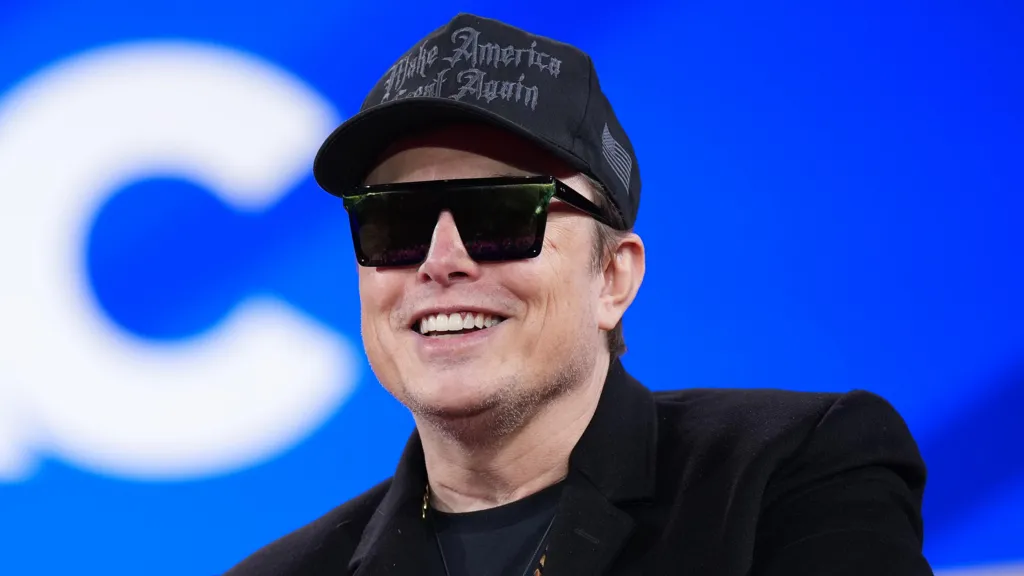
Apple and OpenAI have jointly asked a U.S. judge to dismiss a lawsuit filed by Elon Musk’s xAI, which accuses the two companies of engaging in anticompetitive behavior through their AI partnership.

The lawsuit, filed in August, alleges that Apple’s deal with OpenAI — which integrates ChatGPT into iPhones, iPads, and Macs — is “exclusive” and unfairly limits competition by sidelining Musk’s X platform and its Grok chatbot.

APPLE AND OPENAI REJECT CLAIMS OF MONOPOLY

In court filings on Tuesday, Apple’s lawyers stated that the company’s deal with OpenAI is not exclusive and does not restrict competition in any way.

“Apple and OpenAI’s agreement is expressly not exclusive, and it is public and widely known that Apple intends to partner with other generative AI chatbots,” Apple’s filing said.

OpenAI echoed this argument, accusing Musk of engaging in a “campaign of lawfare” — using lawsuits to attack competitors — and said xAI had failed to demonstrate any concrete harm.

“Musk’s claims are purely speculative,” OpenAI’s attorneys wrote. “xAI has not alleged any direct or anticompetitive harm resulting from ChatGPT’s integration as an option on certain iPhones.”

BACKGROUND OF THE DISPUTE

Apple and OpenAI’s collaboration, announced in June 2024, made ChatGPT accessible across Apple’s ecosystem, allowing users to access the chatbot through Siri and other built-in applications.

Musk, who co-founded OpenAI in 2015 as a nonprofit before it transitioned into a for-profit structure under CEO Sam Altman, has since become one of its harshest critics. He argues that OpenAI has abandoned its original mission of open and safe AI development.

Musk’s company xAI, launched in 2023, operates the Grok chatbot integrated into his social media platform X (formerly Twitter). xAI’s lawsuit seeks billions in damages, claiming Apple’s partnership with OpenAI harms fair market competition.

Musk is also pursuing a separate lawsuit against OpenAI and Altman in California federal court, seeking to reverse the company’s for-profit conversion.

xAI has not yet responded publicly to Apple and OpenAI’s latest motion for dismissal.

Tesla Raises U.S. Lease Prices After EV Tax Credit Expiration

Tesla (TSLA.O) has increased lease prices across all its models in the United States following the expiration of the $7,500 federal electric vehicle (EV) tax credit, which had significantly boosted EV demand over the past two years. The company’s website showed the new rates on Wednesday.

The price adjustment comes after Congress allowed key EV incentives to expire on September 30, ending tax breaks of $7,500 for new EVs and $4,000 for used EVs that were introduced under earlier clean energy legislation. Tesla and other automakers had used these credits to offer more attractive leasing options to consumers.

Higher Lease Prices Across the Lineup

Tesla’s Model Y, its best-selling vehicle, now leases for $529–$599 per month, up from $479–$529 previously. The Model 3, which recently underwent a design refresh, saw lease prices climb to $429–$759 per month, from $349–$699 before.
Despite these leasing changes, vehicle purchase prices remain unchanged on Tesla’s official site.

Market Pressure Mounts as Incentives Fade

The expiration of federal tax credits threatens to cool U.S. demand for electric vehicles, which had already shown signs of slowing after years of rapid expansion. Industry executives and analysts have warned that the loss of subsidies could deter new buyers, especially as higher interest rates and economic uncertainty weigh on household budgets.

According to Cox Automotive, Tesla’s U.S. market share fell to 38% in August, its lowest level in nearly eight years — a sharp decline from the over 80% share it once commanded. The fall reflects growing competition from established automakers like Ford, Hyundai, and GM, as well as new entrants from China and Europe.

Analysts said the lease price hike may further limit Tesla’s competitiveness in the short term, especially as rivals introduce lower-cost EV models and attractive financing options to capture former Tesla customers.