Yazılar

How the World’s Top Ad Agencies Colluded to Fix Prices in India

Internal communications revealed that major global advertising firms secretly coordinated to rig ad prices in India’s vast market, undermining competition and client choice.

In October 2023, Omnicom Media’s India CEO, Kartik Sharma, expressed frustration in a WhatsApp group after a rival agency attempted to poach a client by offering lower rates—violating an industry-wide agreement on pricing.

The WhatsApp group, formed in August 2023 and including top executives from WPP’s GroupM, Omnicom Media, IPG Mediabrands, Publicis, Havas Media, Japan’s Dentsu, and India’s Madison World, discussed coordinating pricing strategies and responses to clients. According to evidence reviewed by Reuters and obtained from India’s Competition Commission (CCI), the agencies agreed not to undercut each other, colluded with broadcasters to penalize non-compliant firms, and coordinated financial terms for at least four major Indian clients.

The cartel was facilitated by two industry bodies—the Advertising Agencies Association of India (AAAI) and the Indian Broadcasting & Digital Foundation (IBDF)—both led by senior executives from WPP Media India and Reliance-Disney respectively. The AAAI circulated guidelines requiring agencies to charge minimum commissions on digital and traditional ads and agreed with broadcasters not to offer unilateral discounts.

The CCI dossier revealed discussions about client pitches involving firms like Swiggy, Cipla, Meesho, and Kshema Insurance. For example, the AAAI arranged a Zoom call to unify the industry’s stance on rebates for Swiggy’s ad campaign. A Dentsu executive noted on WhatsApp that the agencies would retain 30% commission and pass back 70% to clients as rebates.

In August 2023, AAAI’s president urged broadcasters like Walt Disney to withhold business from agencies breaking the cartel agreements. Tensions rose when Omnicom Media learned that ITW Consulting had bypassed these pacts with a direct deal on Disney’s Hotstar streaming platform during the Cricket World Cup.

Despite these revelations, the foreign headquarters of the involved agencies have not confirmed awareness of the collusion. Dentsu India disclosed its involvement under the CCI’s leniency program aimed at reforming industry practices from within. Other agencies declined comment, and the regulator has yet to conclude its probe.

This investigation adds to ongoing scrutiny of ad agency practices globally, with similar probes underway in the U.S. following suspicions of anti-competitive behavior.
India’s TCS Confirms No Systems Compromised in Marks & Spencer Cyberattack

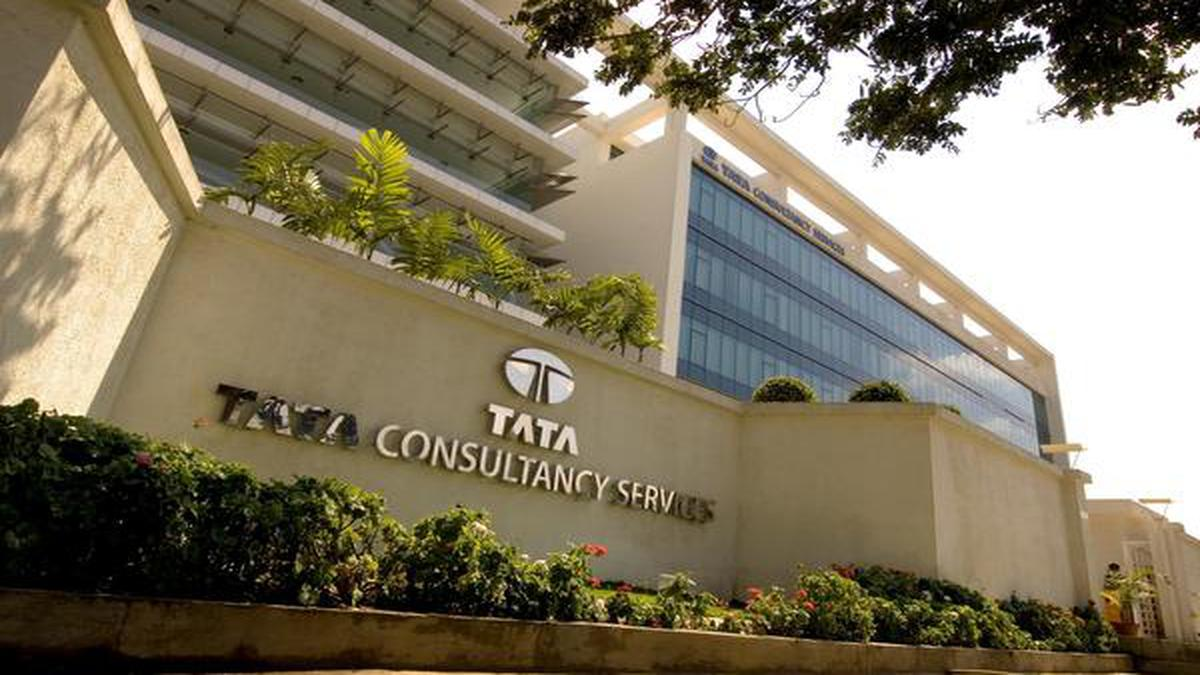
Tata Consultancy Services (TCS) stated that none of its systems or users were compromised in the recent cyberattack affecting British retailer Marks & Spencer (M&S), a client of over ten years.

At its annual shareholder meeting, independent director Keki Mistry said, “As no TCS systems or users were compromised, none of our other customers are impacted.” He added that the ongoing investigation into the M&S breach does not involve TCS systems.

This marks the first public comment from India’s largest IT services firm on the cyberattack. M&S did not immediately respond to requests for comment.

TCS provides technology services to M&S and secured a $1 billion contract in early 2023 to modernize the retailer’s legacy technology, focusing on supply chain and omnichannel sales improvements.

The cyberattack, disclosed by M&S in April, is described as “highly sophisticated and targeted.” It is expected to cost M&S approximately £300 million ($403 million) in lost operating profit, with online service disruptions anticipated until July.

Last month, the Financial Times reported that TCS was internally investigating whether its systems were used as a gateway for the cyberattack.

Mistry chaired the shareholder meeting, while Tata Group Chairman N Chandrasekaran was absent due to urgent matters related to a recent Air India plane crash in Ahmedabad, which killed 241 of the 242 passengers onboard.

Foxconn Sends 97% of India iPhone Exports to U.S. as Apple Navigates Trump’s Tariffs

Foxconn, Apple’s key contract manufacturer, shipped nearly all of the iPhones exported from India to the United States between March and May 2025, according to customs data reviewed by Reuters. The figure reached 97%, significantly higher than the 2024 average of about 50%, highlighting Apple’s strategic effort to bypass steep U.S. tariffs imposed on imports from China.

During this three-month period, Foxconn exported iPhones worth $3.2 billion from India, with shipments to the U.S. totaling nearly $1 billion in May alone—the second-highest monthly export value on record. Overall, Foxconn’s India-to-U.S. iPhone exports totaled $4.4 billion in the first five months of 2025, already surpassing the entire 2024 value of $3.7 billion.

Apple has been accelerating iPhone production in India as a means to reduce the impact of U.S. tariffs on Chinese-made devices, which Trump’s administration set as high as 55% on some Chinese goods. India faces a baseline 10% tariff and has been negotiating to avoid a 26% “reciprocal” tariff that the U.S. temporarily paused earlier this year.

Despite Apple CEO Tim Cook’s push for expanded production in India, former President Donald Trump criticized the move in May, insisting Apple should manufacture more phones in the U.S. rather than abroad.

Efforts to speed exports include Apple chartering cargo flights transporting billions worth of iPhone models directly to the U.S. and lobbying for faster customs clearance at Chennai airport, a critical hub for iPhone exports in southern India.

Analysts expect “Made-in-India” iPhones to represent 25-30% of global shipments in 2025, up from 18% in 2024, signaling a growing shift in Apple’s supply chain strategy.

Another supplier, Tata Electronics, part of India’s Tata Group, also exports mostly to the U.S., sending about 86% of its iPhone shipments from India there during March and April.

Despite government efforts to promote India as a smartphone manufacturing center, higher component import duties keep production costs relatively elevated compared to other countries. Apple continues to rely heavily on Chinese manufacturing, with around 80% of iPhones sold in the U.S. still produced there.