Yazılar

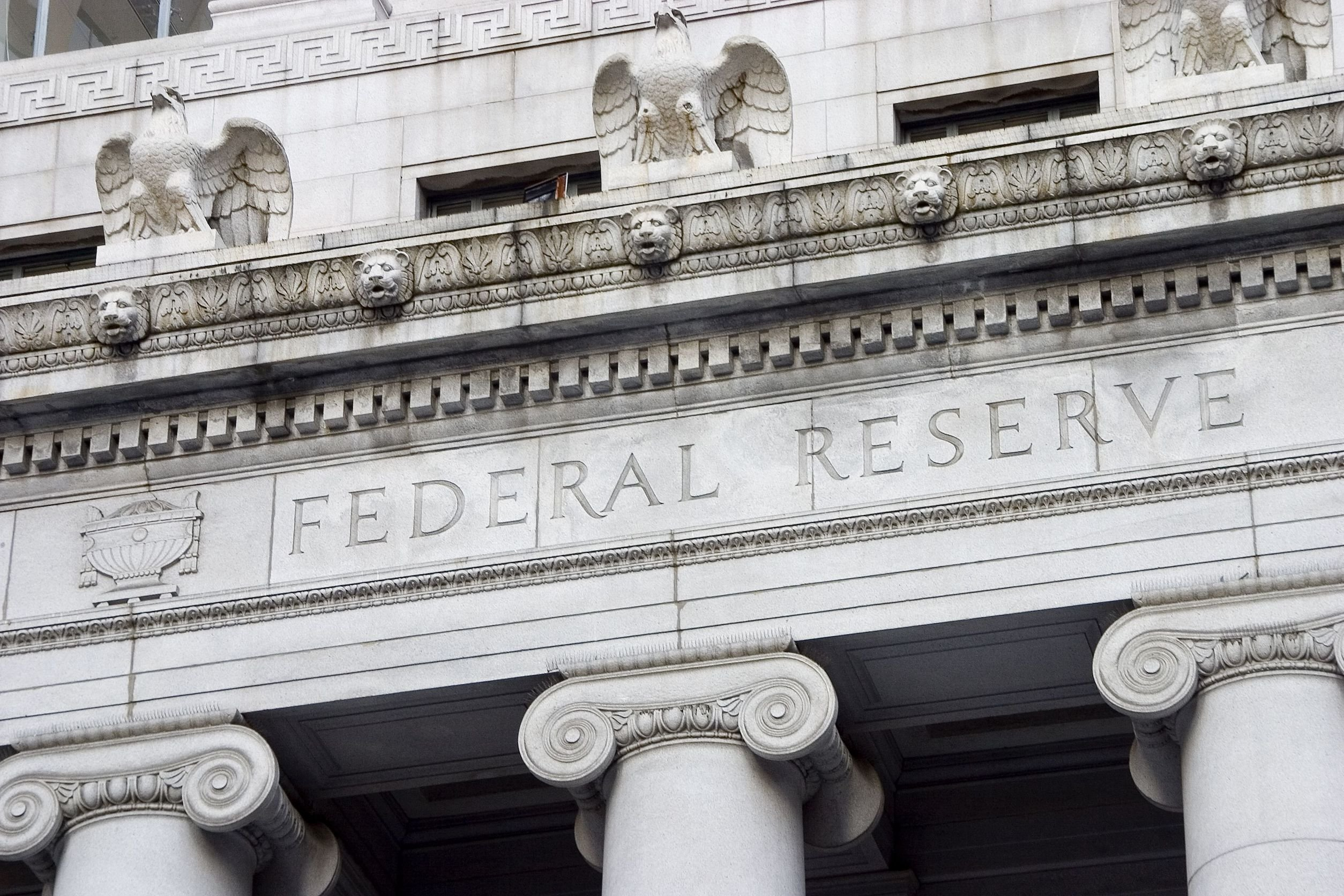
Federal Reserve to Adopt Slow Policy Easing Due to Inflation Concerns, Says Fitch

The U.S. Federal Reserve is expected to begin its rate-cutting cycle with a slower approach than in previous decades, according to a recent report by Fitch Ratings. The rating agency projects that the central bank will begin easing at its September policy meeting, starting with a 25-basis-point cut, followed by another in December. Further gradual cuts are expected through 2025 and 2026, totaling 250 basis points over 25 months, much slower than the historical median of 470 basis points over eight months.

Inflation Still a Concern

Fitch emphasized that inflation remains a concern, particularly core inflation, which excludes food and energy prices. While inflation dropped to its lowest since February 2021, standing at 2.5% year-on-year in August, it remains above the Fed’s 2% target. The report points out that the recent decline in core inflation was primarily due to falling automobile prices, which may not be sustainable.

The Fed’s cautious approach is also driven by the inflation challenges it faced over the past few years, highlighting gaps in understanding the drivers of inflation. With core CPI still elevated at 3.2% on an annual basis, Fitch expects the Fed to proceed slowly with rate cuts to avoid reigniting inflationary pressures.

Global Monetary Policy Divergence

While the Fed is expected to proceed with slow easing, other global central banks are taking different approaches. In China, Fitch foresees continued rate cuts by the People’s Bank of China (PBOC) as deflationary pressures deepen. The PBOC’s recent cuts and declining core inflation, now at 0.3%, signal further easing to combat economic challenges. Fitch predicts China’s inflation to drop to 0.5% in 2024, with additional rate cuts through 2025.

Conversely, Japan’s central bank is adopting a more hawkish stance. The Bank of Japan (BOJ) has aggressively raised rates, reflecting its growing confidence that inflation is firmly entrenched. Core inflation in Japan has been above the BOJ’s target for 23 months, supported by ongoing wage growth. Fitch expects the BOJ’s policy rate to reach 0.5% by the end of 2024, rising to 1% by 2026, a shift that could have broader global economic impacts.


 

Asia-Pacific Markets Mixed as China Rebounds and Australia Nears Record High

Asia-Pacific markets showed mixed results on Friday, with mainland Chinese markets recovering from a six-year low and Australia approaching a near-record high.

China’s CSI 300 index edged up after closing at its lowest level since January 2019, at 3,127.47 on Thursday. Meanwhile, Australia’s S&P/ASX 200 gained 0.21%, pushing closer to its all-time high of 8,148.7.

Market Performance Overview

In South Korea, the Kospi index dropped by 0.26%, while the Kosdaq, focusing on small-cap stocks, declined 0.42%. Samsung Electronics saw nearly a 3% dip due to an ongoing workers’ strike at its India plant.

Japan’s Nikkei 225 fell 0.89%, with the broader Topix down 0.84%. In currency markets, the yen strengthened 0.49% against the U.S. dollar, sitting at 141.1, close to its nine-month low of 140.7 reached earlier this week.

Hong Kong’s Hang Seng index gained 1.11%, contributing positively to the mixed performance across the region.

Global Market Context

In the U.S., major indices performed well overnight. The S&P 500 extended its winning streak to four days, rising by 0.75%, while the Dow Jones Industrial Average increased by 0.58%. The Nasdaq Composite led with a 1% gain.

These developments come ahead of next week’s Federal Reserve meeting, following data on the U.S. producer price index (PPI) showing a 0.2% month-on-month increase, matching forecasts. On an annual basis, the PPI rose by 1.7%.


European Central Bank Set to Slash Interest Rates Ahead of U.S. Federal Reserve’s Decision

The European Central Bank (ECB) is expected to cut interest rates by 25 basis points this Thursday, just days before the U.S. Federal Reserve (Fed) begins its own rate-cutting cycle. This move follows a series of aggressive rate hikes in the euro area, as both central banks respond to shifting economic conditions and inflationary pressures.

According to market expectations, the Fed is likely to follow suit with its own rate cut during its upcoming meeting on September 17-18. While the ECB’s decision has been widely anticipated, the Fed’s move could mark the start of a broader trend of monetary easing in advanced economies.

Holger Schmieding, chief economist at Berenberg Bank, described the ECB’s decision as “largely uncontroversial,” noting that recent remarks from ECB officials, including Bundesbank President Joachim Nagel, have indicated broad support for a rate cut. The ECB’s current interest rate sits at 3.75%, following years of aggressive rate hikes aimed at controlling inflation, but with recent inflation data showing a decline, the central bank is ready to shift gears.

Inflation in the eurozone has softened, with headline figures in August reaching a three-year low of 2.2%. However, core inflation remains slightly elevated at 2.8%, driven by the services sector. The ECB’s rate cut is seen as a response to these mixed signals, as well as to concerns about weakening domestic demand and slowing confidence in key economic sectors.

The ECB is also expected to release updated staff projections this Thursday, but analysts don’t foresee major revisions to inflation or growth figures. However, some economists, such as Anatoli Annenkov from Société Générale, warn that the outlook for growth may be more pessimistic than it was in July, with weakening confidence and sluggish demand raising concerns about the broader economic landscape.

As the ECB prepares to act, attention will shift to what comes next. While the central bank is likely to pause rate cuts in October, there is an outside chance that further reductions could come sooner. ECB Chief Economist Philip Lane has hinted at the possibility of a faster rate-cutting cycle to avoid the risks of keeping rates too high for too long. He also stressed that the ECB needs to ensure inflation stays at its 2% target once it reaches that level, avoiding both over- and undershooting the mark.

With the ECB navigating these complexities, the central bank’s moves are being closely watched as it seeks to balance growth concerns with inflationary pressures across the euro area.