Yazılar

Trump Administration Renegotiates Biden-Era Chips Act Grants, Says Commerce Secretary Lutnick

The Trump administration is actively renegotiating semiconductor manufacturing grants originally awarded under the Biden-era CHIPS and Science Act, according to U.S. Commerce Secretary Howard Lutnick. Speaking before the Senate Appropriations Committee on Wednesday, Lutnick indicated that some of these awards may be significantly altered or even cancelled as part of efforts to secure better terms for U.S. taxpayers.

“Some of the Biden-era grants just seemed overly generous, and we’ve been able to renegotiate them,” Lutnick told lawmakers, emphasizing that the renegotiations aim to deliver greater value to the American public. “All the deals are getting better, and the only deals that are not getting done are deals that should have never been done in the first place.”

$52.7 Billion CHIPS Act Under Review

The $52.7 billion CHIPS and Science Act, signed by President Biden in 2022, was designed to bolster domestic semiconductor manufacturing and reduce reliance on Asia, particularly Taiwan and South Korea. Under the program, billions of dollars in grants were awarded to both U.S. and foreign chipmakers, including Taiwan’s TSMC, South Korea’s Samsung and SK Hynix, as well as U.S.-based Intel and Micron.

Though many of these awards were signed before Biden left office, most of the funds have yet to be fully disbursed. The grant payments are generally structured to be released as companies meet specific production and investment milestones tied to their U.S. plant expansions.

TSMC Award Revised Amid Expanding U.S. Investment

Lutnick cited Taiwan Semiconductor Manufacturing Co. (TSMC) as an example of successful renegotiation. Under the original agreement, TSMC was awarded $6 billion to support its U.S. manufacturing expansion. Lutnick revealed that TSMC subsequently increased its planned investment from $65 billion to $165 billion, while still receiving the same $6 billion in federal funds.

Although TSMC confirmed in March that it would invest an additional $100 billion in the U.S., the company has not commented on whether the new investment was directly tied to renegotiated CHIPS Act terms.

White House Seeking Delays and New Terms

The renegotiation efforts are not new. In February, Reuters reported that the White House was already seeking to renegotiate several awards and delay some upcoming disbursements to ensure better returns on government spending.

Lutnick’s comments suggest that the Trump administration intends to continue scrutinizing past agreements to maximize taxpayer value and may block deals it deems wasteful or excessive.

AI Computing Capacity Also a Focus

During the hearing, Lutnick also addressed concerns about the global race for artificial intelligence computing capacity. He emphasized the administration’s commitment to ensuring that over 50% of global AI compute power remains based in the United States. This statement comes amid criticism of a Trump administration deal allowing the United Arab Emirates to purchase advanced American AI chips, raising fears about exporting critical technology.

SK Hynix Reports Early Orders Ahead of Potential US Tariffs

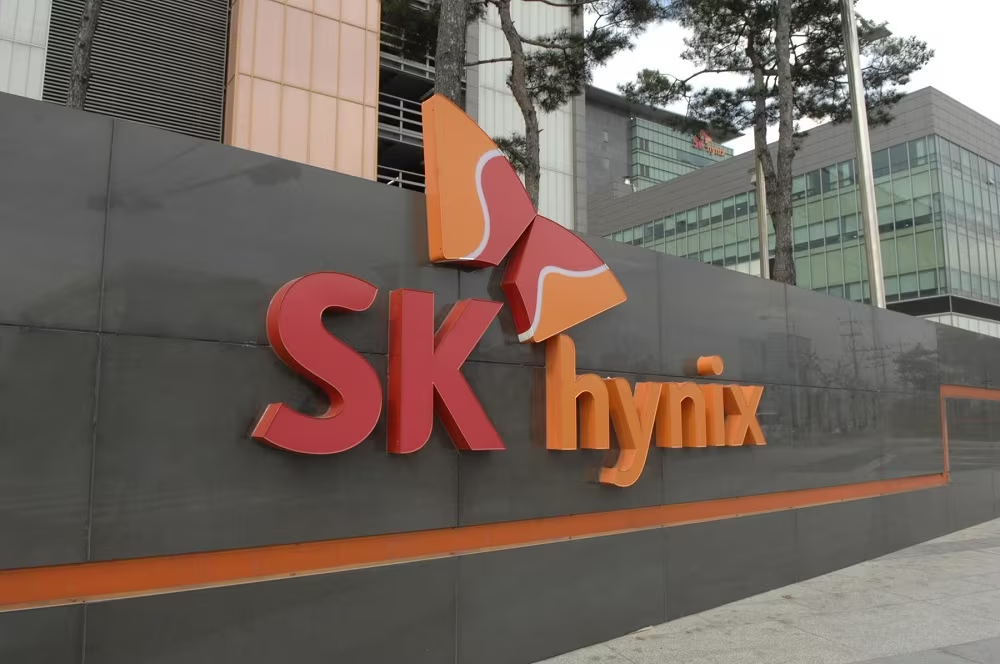
South Korean memory chipmaker SK Hynix announced on Thursday that some customers have accelerated their orders in anticipation of potential US tariffs on semiconductors. Speaking at the company’s annual shareholder meeting, Lee Sang-rak, Head of Global Sales and Marketing, attributed recent favorable market conditions to this “pull-in” effect and reduced customer inventory levels. However, he cautioned that it remains uncertain whether this trend will continue.

In January, SK Hynix projected a 10%-20% drop in DRAM and NAND flash memory shipments for Q1 2024. However, demand from the AI sector has contributed to price increases by competitors such as Micron, SanDisk, and China’s YMTC. Reports suggest that fears of impending US semiconductor tariffs, potentially reaching 25%, have led to increased inventory transfers to the US.

Despite concerns about AI hardware spending, SK Hynix remains optimistic about explosive growth in high bandwidth memory (HBM) chip demand, especially as a key supplier to Nvidia. CEO Kwak Noh-Jung confirmed that HBM sales for 2025 have already been fully booked, with negotiations for 2026 volume expected to conclude in the first half of this year.

China to Lead in Chipmaking Investment in 2025, SEMI Reports

China is set to continue its dominance in global chipmaking investments in 2025, despite a notable year-over-year decline, according to a report from industry group SEMI. The country is expected to outpace all other regions in spending on new computer chipmaking equipment, followed by Taiwan and Korea.

Global Investment Growth

SEMI’s forecast for global fabrication plant investments shows a 2% increase in 2025, reaching $110 billion. This marks the sixth consecutive year of growth, driven largely by the demand for tools needed to produce chips for artificial intelligence (AI). SEMI predicts that the AI boom will have an even stronger impact on the industry in 2026, with an expected investment growth of 18%.

China’s Strategic Push and Decline in Investment

China has been the largest consumer of chips for years, and its chipmaking sector saw a massive push starting in mid-2023. With government support, China has accelerated efforts to reduce its dependence on imported chips, particularly in response to U.S. restrictions. Despite this surge, SEMI forecasts that China’s chipmaking spending will drop by 24% in 2025, falling to $38 billion from $50 billion in 2024. However, this still keeps China ahead of other major chip-producing countries like Korea, where SK Hynix and Samsung are expanding memory chip production, with investments projected at $21.5 billion.

Spending in Other Key Regions

Taiwan, home to TSMC, a major foundry for AI chips, is projected to spend $21 billion on chipmaking equipment in 2025. In comparison, spending in Korea will be significant, but not as high as China’s, with $21.5 billion expected. The Americas and Japan are each expected to invest $14 billion, while Europe’s investment is projected at $9 billion.

Key Players in the Equipment Market

The top players in the chip equipment market include ASML, Applied Materials, KLA, LAM Research, and Tokyo Electron. ASML, the largest chip equipment manufacturer, anticipates sales of €32-38 billion in 2025, maintaining a dominant market share in the lithography sector. Chinese equipment makers, such as Naura, AMEC, and SiCarrier (affiliated with Huawei), are also gaining traction in the market.