Yazılar

SBI Denies Report on Negotiations with SK Hynix and UMC for Japan Chip Plant

SBI Holdings (8473.T) has refuted a report from the Nikkan Kogyo newspaper that suggested the company was in talks with South Korea’s SK Hynix (000660.KS) and Taiwan’s UMC (2303.TW) to collaborate on a chip manufacturing plant in Japan’s Miyagi prefecture. A spokesperson for the financial firm clarified on Friday that the report was inaccurate.

According to the Nikkan Kogyo report, which did not specify sources, SBI was purportedly negotiating partnerships with SK Hynix for back-end DRAM processes and UMC for chips intended for the automotive sector. However, SBI has firmly denied these claims, stating that no such discussions are taking place.

Earlier, in September, SBI announced it was dissolving its joint venture with Taiwan’s Powerchip Semiconductor Manufacturing Corp (6770.TW). The companies had previously been working toward securing government subsidies to build a foundry in northern Japan. Following the dissolution of this partnership, SBI indicated that it would explore potential collaborations with other firms in the semiconductor industry.

South Korea Blocks DeepSeek Amid Security Concerns, Following Global Warnings

South Korea’s industry ministry has temporarily blocked employee access to the Chinese artificial intelligence startup DeepSeek due to security concerns, marking the latest move by governments to restrict the use of certain AI services. A ministry official confirmed on Wednesday that the ban was implemented in response to growing apprehension surrounding generative AI technologies.

On Tuesday, the South Korean government issued a notice urging caution among ministries and agencies regarding the use of AI services such as DeepSeek and ChatGPT in work-related tasks. The notice followed earlier actions by state-run entities, with Korea Hydro & Nuclear Power confirming it had blocked access to DeepSeek earlier this month.

The country’s defense ministry also took action, blocking access to DeepSeek on military computers, while the foreign ministry restricted its use on devices connected to external networks, according to Yonhap News Agency. However, the foreign ministry did not provide further details regarding the specific security measures taken.

DeepSeek, which was not immediately available for comment, joins a growing list of companies facing scrutiny over potential security risks. Both Australia and Taiwan have recently banned the AI service from government devices, citing similar security concerns. In January, Italy’s data protection authority ordered DeepSeek to block its chatbot after the company failed to address privacy issues raised by regulators.

In addition to government actions, private companies in South Korea are also taking precautions. Kakao Corp, a major South Korean chat app operator, instructed employees to refrain from using DeepSeek due to security fears, particularly following its partnership with OpenAI. Other South Korean tech giants, including SK Hynix and Naver, have also restricted or limited access to generative AI services, citing concerns about data security and privacy.

The scrutiny of DeepSeek follows the company’s claim that its AI models are on par with or superior to products developed in the U.S., while being significantly cheaper to produce. South Korea’s information privacy watchdog has announced plans to inquire with DeepSeek about its user data management practices, adding another layer of regulatory attention on the Chinese startup.


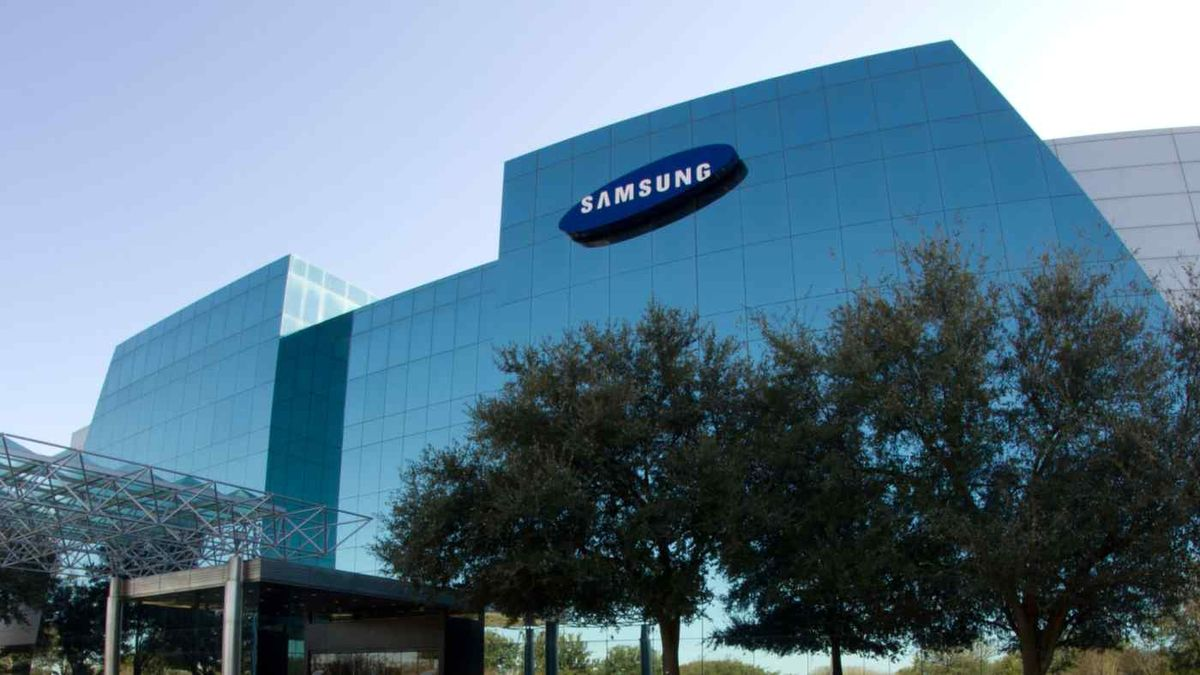
Samsung Faces AI Chip Sales Slowdown Amid U.S. Export Restrictions

Samsung Electronics warned on Friday that its AI chip sales will be sluggish in the first quarter due to U.S. export restrictions on China, as well as a shift in demand toward more advanced chips. The company is working to launch an improved version of its high-bandwidth memory (HBM) chips in March to address these challenges.

Samsung’s struggles are compounded by its reliance on Chinese customers, who accounted for about 20% of its HBM sales. The U.S. government’s expanded restrictions on semiconductor exports have put additional pressure on the company, unlike its competitor SK Hynix, which remains Nvidia’s primary supplier of HBM chips for AI applications.

Kim Jae-june, Samsung’s executive vice president of memory, acknowledged that “temporary restrictions” would impact HBM sales but expressed optimism about future improvements. Meanwhile, Nvidia CEO Jensen Huang recently indicated that Samsung needs to “engineer a new design” to meet Nvidia’s standards.

Despite these efforts, Samsung reported a 29% decline in operating profit for Q4, totaling 6.5 trillion won ($4.48 billion). The company also faces headwinds in the mobile market, where competition from Apple and Chinese rivals has eroded profits. Samsung’s decision to use Qualcomm processors for its entire Galaxy S25 lineup, instead of its in-house Exynos chips, represents another setback for its semiconductor division.

While AI-driven demand for memory chips is expected to recover from Q2 onward, Samsung’s long-term performance will depend on its ability to mass-produce advanced 12-layer HBM3E chips for Nvidia.