Yazılar

Malaysia to discuss semiconductor tariffs with U.S. at ASEAN summit next week

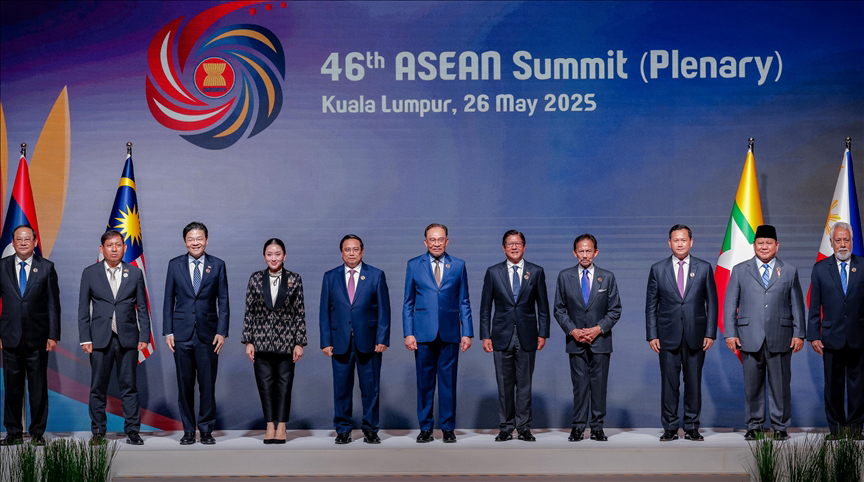
Malaysia plans to hold talks with U.S. Commerce Secretary Howard Lutnick next week on sectoral tariffs, including those on semiconductors, during the ASEAN Leaders Summit in Kuala Lumpur, state media reported on Wednesday.

The discussions come amid rising trade tensions after President Donald Trump’s administration imposed a 19% tariff on Malaysian exports to the U.S. in August. While semiconductors are currently exempt, they remain under review as part of a U.S. national security probe.

Malaysia is the world’s sixth-largest semiconductor exporter, and officials have warned that removing exemptions on chip exports could hurt competitiveness and disrupt global supply chains. Trade Minister Tengku Zafrul Aziz said he expects to finalize tariff negotiations with Washington during the summit, scheduled for October 26–28.

“I will hold discussions with Lutnick. He will also be attending the ASEAN Leaders Summit next week,” Tengku Zafrul told state news agency Bernama, adding that a final tariff agreement could be signed during the event.

The minister said Malaysia’s agriculture, industrial, and manufacturing sectors, as well as those engaged in U.S. trade and investment, are likely to benefit from the upcoming agreement. Several other ASEAN members are also expected to sign bilateral trade deals with Washington at the summit.

Under current U.S. policy, most Southeast Asian nations face tariffs between 19% and 20%, with Singapore receiving a 10% rate, while Laos and Myanmar have been hit with 40% tariffs.

Bitcoin, ether slide as U.S.-China tensions reignite, wiping out earlier gains

Bitcoin and ether fell sharply on Tuesday as rising U.S.-China trade tensions erased the previous day’s rebound, underscoring the crypto market’s fragility following last week’s record liquidation event.

Bitcoin dropped as low as $110,023.78 before recovering slightly to $113,129, down 2.3%, while ether slid 3.7% to $4,128.47 after hitting an intraday low of $3,900.80. The world’s largest cryptocurrency has fallen more than 12% since reaching a record $126,000 on October 6.

The renewed decline came as both the U.S. and China imposed new port fees on ocean shipping companies, escalating their trade dispute and disrupting global supply chains. Analysts said the move transformed maritime trade into a new battleground in the ongoing economic conflict between the world’s two biggest economies.

Altcoins bore the brunt of the sell-off, with some tokens plunging as much as 80% on certain exchanges. Analysts said automated liquidations on leveraged platforms further amplified volatility as margin calls forced traders to unwind positions.

“As long as U.S.-China relations remain tense and equities are heavily concentrated in tech, crypto will struggle,” said Juan Perez, director of trading at Monex USA. “When fundamentals weaken, bitcoin and ether lose their footing because their value depends on broader investor confidence.”

The slump follows last Friday’s $19 billion crypto liquidation, the largest in market history, which was triggered by Trump’s 100% tariff threat on Chinese imports and Beijing’s retaliatory rare earth export restrictions.

IMF economist warns AI boom may echo dot-com bust but unlikely to trigger financial crisis

The U.S. artificial intelligence investment boom could end in a dot-com-style market correction, but it is unlikely to spark a systemic financial crisis, according to Pierre-Olivier Gourinchas, chief economist at the International Monetary Fund (IMF).

Speaking at the start of the IMF and World Bank annual meetings in Washington, Gourinchas told Reuters that the AI frenzy mirrors the late 1990s internet bubble, with surging stock valuations and paper wealth driving consumption and inflation. “This is not financed by debt,” he said, adding that a potential crash would hurt shareholders and equity holders, but not destabilize the broader banking system.

The IMF said investment in AI chips, data centers, and computing infrastructure has fueled optimism about future productivity gains, though these benefits have yet to materialize. Unlike the dot-com era — when technology investment jumped 1.2% of U.S. GDP between 1995 and 2000 — AI-related spending has so far increased by only 0.4% of GDP since 2022.

While the IMF does not expect a direct threat to financial stability, Gourinchas cautioned that a correction could trigger a broader repricing of assets and stress on non-bank financial institutions.

The IMF’s latest World Economic Outlook noted that AI investment, alongside lower-than-expected tariffs and easier financial conditions, has helped sustain global growth. However, Gourinchas warned that AI-driven spending and consumption could add to inflation pressures without corresponding productivity gains.

The IMF now projects U.S. inflation to ease more slowly, reaching 2.7% in 2025 and 2.4% in 2026, above the Federal Reserve’s 2% target. He added that the lingering effects of tariffs and reduced immigration are constraining supply and keeping prices elevated.