Yazılar

Crypto traders rush to hedge after record $19 billion market wipeout

After the largest crypto liquidation in history, investors in the options market are scrambling to protect themselves from another potential collapse in bitcoin and ether, bracing for heightened volatility following last week’s dramatic sell-off.

More than $19 billion in leveraged crypto positions were liquidated last Friday as panic selling and thin liquidity triggered violent swings. Analysts said the 24-hour liquidation was nine times larger than the February 2025 crash and 19 times greater than the 2020 and FTX meltdowns combined. The sell-off was sparked by U.S. President Donald Trump’s announcement of 100% tariffs on Chinese imports and threats of export controls on critical software.

Bitcoin plunged as low as $104,782, down over 14% from its recent record high of $126,000. It has since recovered to around $115,700. Ether also dropped more than 12%, while altcoins such as DOGE, HYPE, and AVAX saw losses exceeding 50% before partially rebounding.

Options traders have since piled into put contracts — which grant the right to sell — at strike prices of $115,000 and $95,000 for bitcoin and $4,000 and $3,600 for ether, signaling rising bearish sentiment through year-end, according to data from Derive.xyz.

Despite the turmoil, on-chain analyst Willy Woo said bitcoin’s investor flows have remained relatively stable compared to other assets, suggesting capital may be rotating from altcoins into bitcoin rather than exiting crypto altogether. Still, analysts caution that bitcoin must overcome key resistance levels before regaining upward momentum.

Ericsson’s shares surge 13% after profit beat and minimal tariff concerns

Swedish telecoms giant Ericsson saw its shares soar more than 13% on Tuesday, marking its strongest single-day rise since 2018, after the company reported better-than-expected quarterly earnings and dismissed concerns over U.S. tariffs.

Adjusted EBIT (earnings before interest and taxes) — excluding restructuring costs — reached 15.4 billion Swedish crowns ($1.62 billion) for the quarter ending September, exceeding analysts’ forecasts of 14.1 billion crowns, according to an Infront poll.

The company attributed its strong performance to ongoing cost savings and its leading market share in North America, where it has outpaced rival Nokia in the race to deploy 5G infrastructure. Ericsson’s finance chief Lars Sandström told Reuters that while no firm is entirely immune to tariffs, the company currently sees “no additional impact going forward.”

Although total net sales fell 9% year-on-year to 56.2 billion crowns, they still surpassed expectations of 55.7 billion. Sales in the Americas declined 8% compared to 2024’s strong performance, which benefited from major customer investments and network deliveries.

Ericsson also announced a new five-year partnership with Vodafone to modernize programmable networks and confirmed the completion of its Iconectiv sale, generating a one-off profit of 7.6 billion crowns — potentially paving the way for higher dividends or a share buyback program.

Taiwan Weighs High-Tech Strategic Partnership with the U.S. Amid Tariff Talks

Taiwan is considering the creation of a high-tech strategic partnership with the United States, as Washington seeks greater Taiwanese investment and industrial cooperation, Taiwan’s top tariff negotiator said on Thursday.

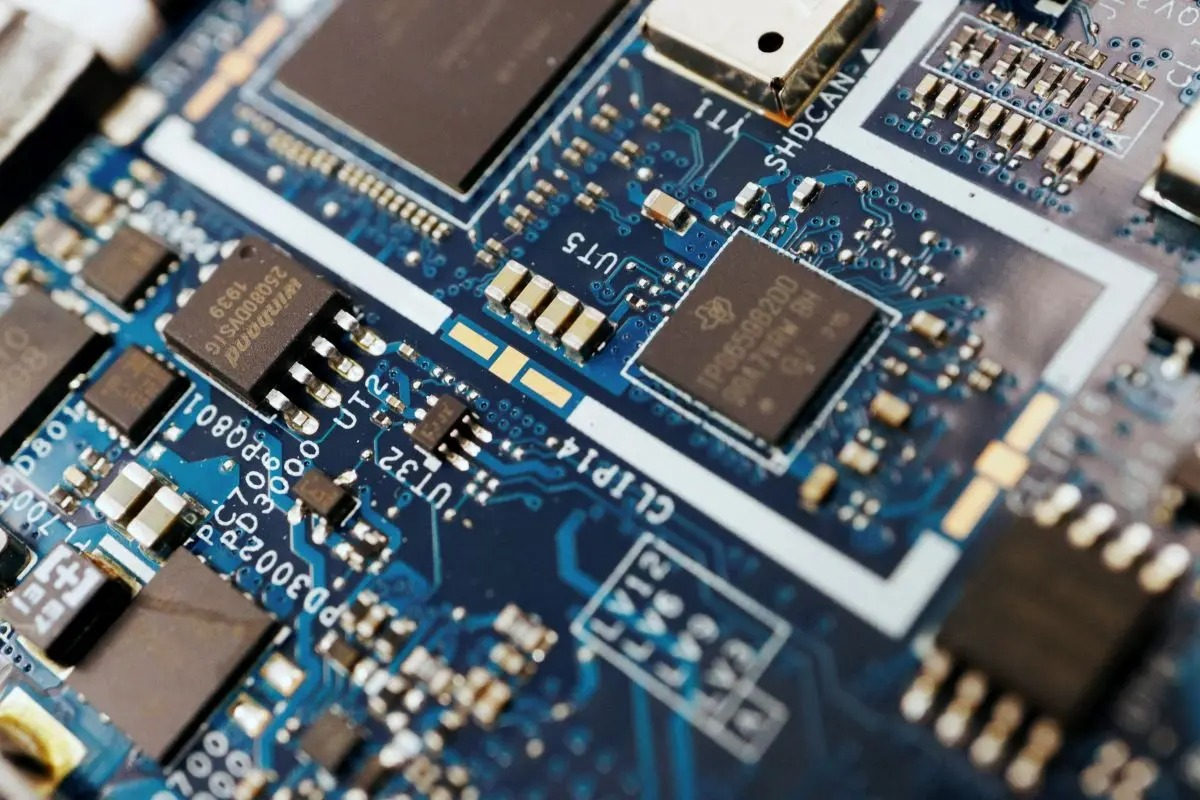
Taiwan — home to the world’s leading contract chip manufacturer, TSMC — currently faces a 20% U.S. tariff on its exports and is looking to negotiate a reduction. The initiative comes as both economies explore deeper technological collaboration amid growing global competition over semiconductor supply chains.

Vice Premier Cheng Li-chiun, who heads Taipei’s delegation in the ongoing tariff talks, said she remains optimistic about reaching a consensus with the U.S. on what she called a “Taiwan model” for investment.

“The current negotiation focus is that the United States expects us to expand investments and engage in supply chain cooperation,” Cheng told reporters in Taipei after returning from Washington.

She emphasized that Taiwan’s approach would not involve relocating its core supply chains, but rather expanding production capacity on U.S. soil in strategic sectors. The plan would include export credit guarantees, joint R&D projects, and the co-development of industrial clusters between the two countries.

TSMC’S ROLE AND THE U.S. EXPECTATIONS

While the U.S. has expressed interest in more domestic semiconductor production, Cheng clarified that TSMC was not directly involved in the latest negotiation round. The company, currently investing $165 billion in chip plants in Arizona, continues to keep most of its production operations in Taiwan.

She also dismissed recent reports that U.S. Commerce Secretary Howard Lutnick had proposed a 50-50 chip production split, saying:

“That idea was not raised in our talks, and it is not something Taiwan would agree to.”

Cheng noted that Washington’s priority appears to be strengthening its domestic chip production to reduce supply chain dependence on Asia, while Taiwan’s long-term strategy is to stay rooted at home but expand globally through bilateral cooperation.

INDUSTRIAL PARTNERSHIP, NOT RELOCATION

The envisioned “Taiwan model,” Cheng said, represents a strategic partnership framework—one where the island’s companies would invest in R&D and manufacturing capacity abroad, supported by governmental financial and policy mechanisms, without shifting their operational core from Taiwan.

Neither the U.S. Commerce Department nor the Office of the U.S. Trade Representative has commented publicly on the discussions, which continued as the U.S. government entered a temporary shutdown this week.

With Taiwan’s semiconductor industry playing a pivotal role in the global AI and electronics boom, both Taipei and Washington are looking to balance national security priorities with economic growth.

“Our aim,” Cheng concluded, “is to remain rooted in Taiwan, deploy around the world, and build bilateral strategic cooperation that supports both sides’ technological ambitions.”