Yazılar

Trump’s Nvidia Deal Sparks Corporate and National Security Concerns

U.S. President Donald Trump has created a highly unusual precedent by allowing Nvidia (NVDA.O) and AMD (AMD.O) to resume AI chip exports to China in exchange for a 15% revenue cut to the U.S. government, raising questions about corporate risk and national security.

KEY DETAILS

  • Historically, U.S. export controls on sensitive technologies were non-negotiable, meaning companies could not circumvent restrictions through payments.

  • Trump’s move reverses a prior ban on H20 chips and suggests a potential future sale of scaled-down Blackwell chips to China.

  • The administration claims the national security risks are minimal, noting the H20 is Nvidia’s “fourth-best chip” and widely available in China.

REACTIONS FROM LAWMAKERS AND EXPERTS

  • Bipartisan U.S. lawmakers expressed concern about creating a “pay-for-play” framework for sensitive technology exports.

    • Rep. John Moolenaar: “Export controls are a frontline defense in protecting our national security.”

    • Rep. Raja Krishnamoorthi: “Putting a price on our security concerns signals that national security principles are negotiable.”

  • Legal experts question the arrangement’s legality, debating whether it constitutes an export tax, which the U.S. Constitution prohibits.

  • Analysts warn it could pressure chipmakers’ margins and create a precedent for taxing strategic U.S. exports to China.

CORPORATE IMPLICATIONS

  • Nvidia confirmed compliance with U.S. export rules but did not detail the revenue-sharing mechanism.

  • AMD noted approval for chip exports but also did not clarify financial terms.

  • Analysts predict the 15% remittance could reduce margins for China-bound processors by 5–15 percentage points, impacting overall profitability.

CONCLUSION
Trump’s intervention marks a rare case of direct government influence on corporate exports, blending national security policy with financial leverage. Observers warn it could reshape how U.S. companies approach sales of sensitive technology in global markets.
Brazil’s Lula Announces Social Media Regulation Proposal Ready for Congress

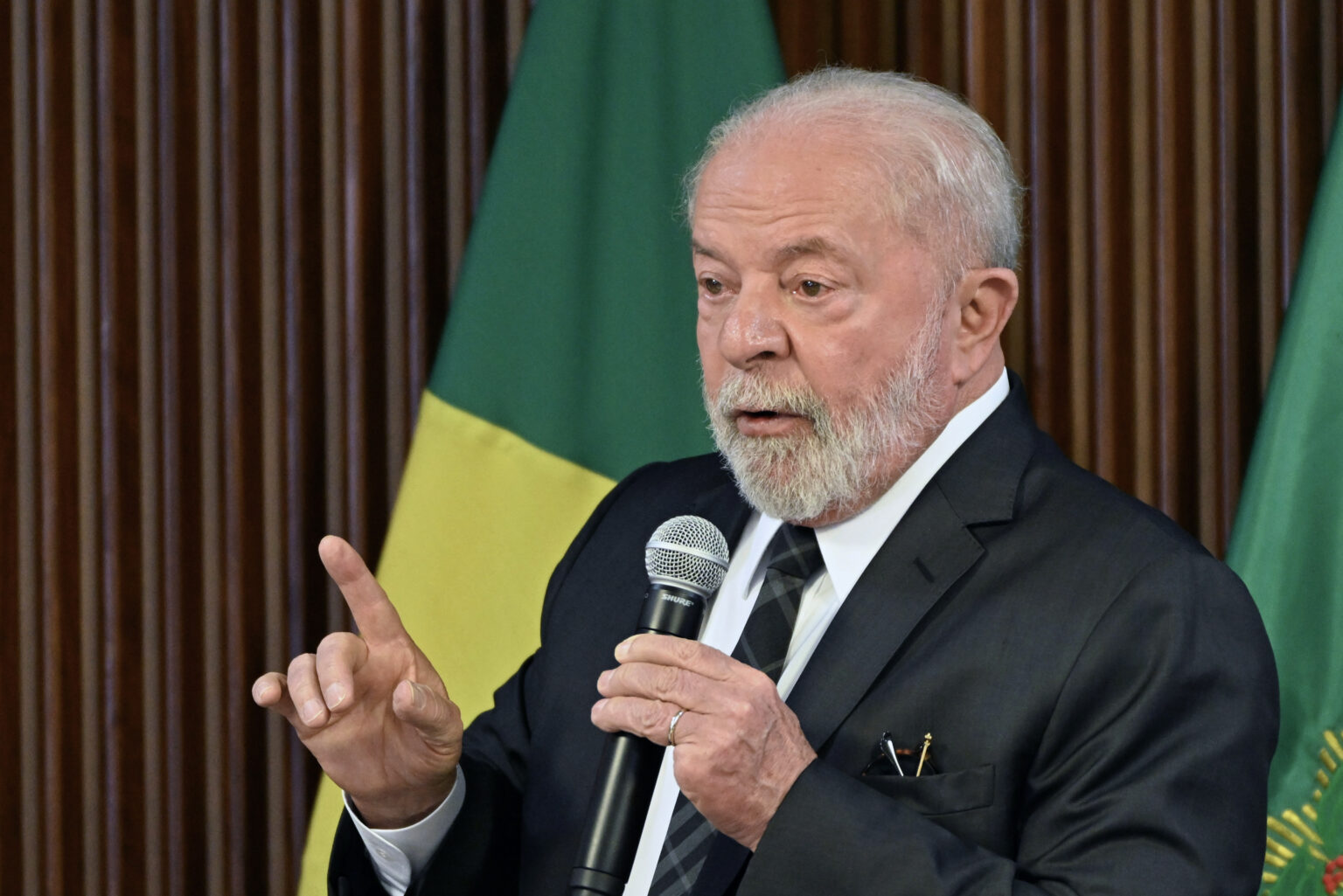
Brazilian President Luiz Inacio Lula da Silva stated on Tuesday that a proposal to regulate social media platforms in Brazil is finalized and will be sent to Congress shortly.

KEY DETAILS

  • Lula told BandNews the proposal will be on his desk on Wednesday afternoon, enabling the government to forward it to lawmakers.

  • The initiative comes amid ongoing global discussions on digital regulation and content moderation.

TRADE AND DIPLOMACY CONTEXT

  • Earlier this month, U.S. President Donald Trump imposed 50% tariffs on Brazilian imports, citing “unfair trade practices” in digital trade and political tensions related to former President Jair Bolsonaro.

  • Lula expressed willingness to meet Trump, emphasizing a civilized dialogue between heads of state.

  • The Brazilian leader also confirmed sending an invitation to Trump for COP30, the global climate summit to be hosted in Brazil later this year.

  • Lula plans to call leaders from France, Germany, and the EU next week to discuss ongoing negotiations between the EU and the South American Mercosur bloc.

CONCLUSION
The proposal marks a significant step in Brazil’s efforts to regulate digital platforms, amid rising international attention on social media governance and trade relations with the United States.

Trump Suggests Allowing Scaled-Down Nvidia AI Chips Sales to China Amid Security Concerns

U.S. President Donald Trump signaled on Monday that he may permit Nvidia to sell a reduced-performance version of its next-generation Blackwell AI chips in China, raising alarms in Washington about Beijing’s potential access to cutting-edge computing power.

Trump told reporters that Nvidia CEO Jensen Huang had discussed a “somewhat enhanced-in-a-negative-way Blackwell,” explaining it would carry 30–50% less computing power than the U.S. flagship model. “That will be an unenhanced version of the big one,” Trump said, suggesting the proposal remains under review.

The Trump administration also confirmed an unprecedented deal with Nvidia and AMD that requires them to give the U.S. government 15% of revenue from China chip sales. The move follows last month’s approval for Nvidia’s H20 chips, a lower-performance variant developed under Biden-era export restrictions, to resume shipping to China.

Security experts warn the policy could still advance Beijing’s AI capabilities. Saif Khan, a former White House tech security director, cautioned that China could buy enough scaled-down Blackwell chips to build frontier-level AI supercomputers, potentially leapfrogging U.S. progress.

Currently, the H20 is the most advanced chip allowed for Chinese markets, though Trump called it “obsolete,” noting Beijing already has access. Nvidia unveiled its flagship Blackwell chip in March, boasting performance up to 30 times faster than its predecessor.

While Nvidia has not confirmed a China-only Blackwell variant, Reuters reported in May that a lower-cost, scaled-down version was being prepared. China’s foreign ministry did not immediately comment.

Meanwhile, critics highlight Trump’s unusual interventions in corporate strategy, from demanding revenue-sharing to pressuring Intel’s CEO Lip-Bu Tan to resign over his ties to Chinese firms. The Commerce Department has begun issuing licenses for H20 exports, insisting national security remains safeguarded.

Nvidia and AMD both stated they will comply with U.S. rules, while China has accused Washington of using tech restrictions to “maliciously contain and suppress” its development.