Yazılar

Russia Launches Mass Cyberattack on Ukraine’s State Registries, Disrupting Services

Russia has launched a major cyberattack on Ukraine’s state registries, causing significant disruptions to vital services, Ukrainian Deputy Prime Minister Olha Stefanishyna announced late on Thursday. The registries, which hold critical data on Ukrainian citizens, including birth, death, marriage records, and property ownership, were temporarily suspended as a result of the attack.

Impact and Response

Stefanishyna described the cyberattack as the largest external attack on Ukraine’s infrastructure in recent times. She confirmed that the cyberstrike targeted the Ministry of Justice’s unified and state registries, leading to their temporary suspension.

The Deputy Prime Minister stated that the attack was clearly aimed at disrupting Ukraine’s crucial infrastructure. She added that it would take approximately two weeks to fully restore operations, although some services would begin resuming on Friday. Initial assessments indicated that other state services remained unaffected by the attack.

Future Protection Measures

Once restoration efforts are complete, Stefanishyna noted that a thorough investigation of the cyberattack would be conducted. The goal of this analysis will be to enhance Ukraine’s defenses against similar attacks in the future.

Ongoing Cyber Conflict

This attack comes amid a long-standing cyber conflict between Russia and Ukraine, with both countries’ institutions facing significant cyber threats. Notable incidents include a mass attack on Ukrainian mobile provider Kyivstar in December 2023, as well as a series of cyberattacks on Russian ministries in June 2023.
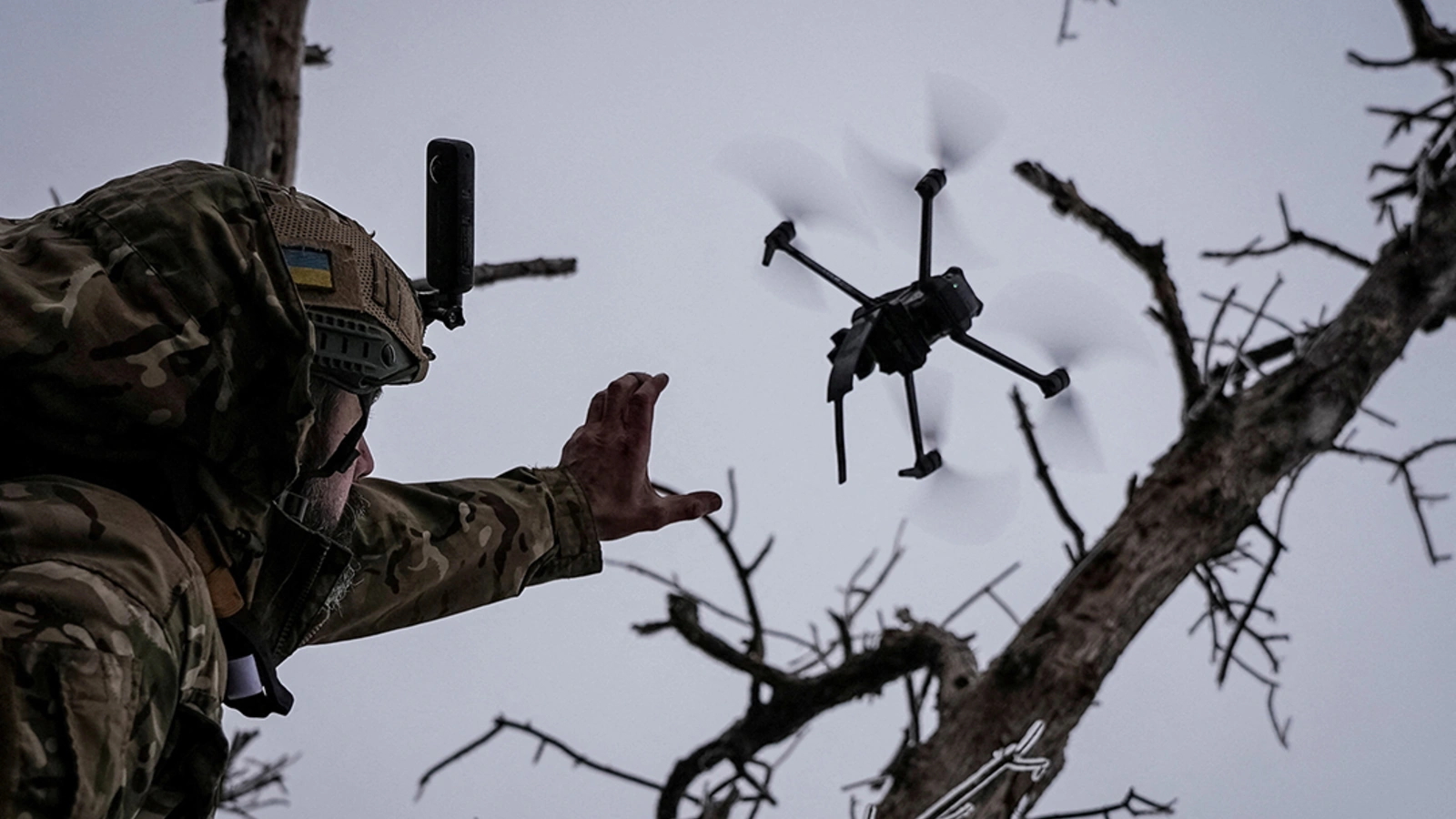

 

Ukraine Leverages Massive Drone Data Trove to Advance AI for Battlefield Applications

In its ongoing conflict with Russia, Ukraine has amassed an unprecedented resource: a trove of over 2 million hours of drone footage that is now being utilized to train artificial intelligence (AI) systems for battlefield decision-making. This immense dataset offers potential advancements in combat tactics, target identification, and weapon system analysis, highlighting the increasing role of AI in modern warfare.

Oleksandr Dmitriev, the founder of OCHI, a Ukrainian non-profit organization, explained that his system centralizes and analyzes video feeds from more than 15,000 frontline drone crews. Originally developed in 2022 to provide military commanders with real-time battlefield overviews, OCHI has since evolved into a repository of valuable combat data. According to Dmitriev, “This is food for the AI: If you want to teach an AI, you give it 2 million hours (of video), it will become something supernatural.”

The footage enables AI models to learn how to identify targets, evaluate combat strategies, and optimize weapon trajectories. Dmitriev likened this process to transforming human battlefield experience into mathematical models. On average, the OCHI system collects five to six terabytes of new drone footage daily, further enriching the dataset.

Experts agree on the significance of this data pool. Samuel Bendett, a senior fellow at the U.S.-based Center for a New American Security, emphasized the importance of training AI systems to distinguish between various battlefield elements such as roads, natural obstacles, and ambush sites. Meanwhile, Kateryna Bondar from the Wadhwani AI Center stressed that the dataset’s size and image quality are crucial for enabling AI models to recognize targets based on shapes and colors accurately.

In addition to OCHI, Ukraine’s Ministry of Defense has developed another AI-driven system called Avengers. While specific details about Avengers remain classified, the ministry previously revealed that it uses AI tools to identify up to 12,000 Russian military assets weekly.

AI is also being integrated into other military technologies in Ukraine. Thousands of drones are already operating autonomously, executing missions without human pilots. Ukrainian developers are exploring drone swarms—interlinked systems of drones capable of coordinated operations under a unified command. AI is further assisting in demining efforts to clear war-torn territories.

Russia, too, has been leveraging AI on the battlefield. Notably, its Lancet strike drones use AI for target recognition, demonstrating lethal effectiveness against Ukrainian armored vehicles.

With foreign allies showing interest in Ukraine’s AI capabilities, Dmitriev’s OCHI system exemplifies how technological innovation is reshaping the dynamics of modern warfare.


Ukrainian-American Group Opposes SpaceX Starlink Expansion Over Musk’s Alleged Russia Ties

SpaceX’s plan to expand its Starlink satellite network with 22,488 additional satellites is facing formal opposition from the Ukrainian Congress Committee of America (UCCA), which has raised concerns about Elon Musk’s connections to Russia and the use of Starlink technology by Russian forces. The UCCA filed a petition with the Federal Communications Commission (FCC) on Wednesday, requesting that the agency block the expansion.

The UCCA’s objections center around Musk’s alleged interactions with Russian President Vladimir Putin and the use of Starlink in military operations. Musk’s decision to prevent Ukraine from launching an attack on Russia’s Black Sea fleet in 2022, by disabling Starlink service over Crimea, has been a major point of contention. The UCCA’s President, Michael Sawkiw, Jr., expressed concern about the potential national security implications, stating that if Starlink is found to have aided Russia, it would be detrimental to Ukrainian-American interests and U.S. national security.

The UCCA also highlighted other issues, including Musk’s potential conflicts of interest arising from his new role with the incoming Trump administration’s Department of Government Efficiency (DOGE). This advisory body could influence regulations and government spending, including decisions related to SpaceX and its contracts. The UCCA argues that Musk’s involvement with DOGE poses a risk of bias and financial conflict, particularly with his companies receiving government contracts while benefiting from FCC actions.

In addition, the UCCA raised environmental concerns related to SpaceX’s rocket launches in Texas. The Boca Chica site, where SpaceX conducts many of its launches, is in a biologically sensitive area, home to endangered species. The group noted that past launches had led to the destruction of bird nests, exacerbating concerns about the environmental impact.

The petition requests that the FCC delay SpaceX’s expansion plans until an environmental review is conducted and any conflicts of interest surrounding Musk are resolved. This move follows earlier comments from the UCCA opposing SpaceX’s previous requests for additional spectrum for Starlink.

While the petition brings attention to Musk’s relationships and SpaceX’s practices, it is not the only controversy surrounding the company. Musk has previously denied claims that Starlink terminals were sold or used by Russian forces, though multiple reports have suggested otherwise. Additionally, Musk’s business dealings and statements continue to draw scrutiny, with calls for investigations into his ties with Russia.