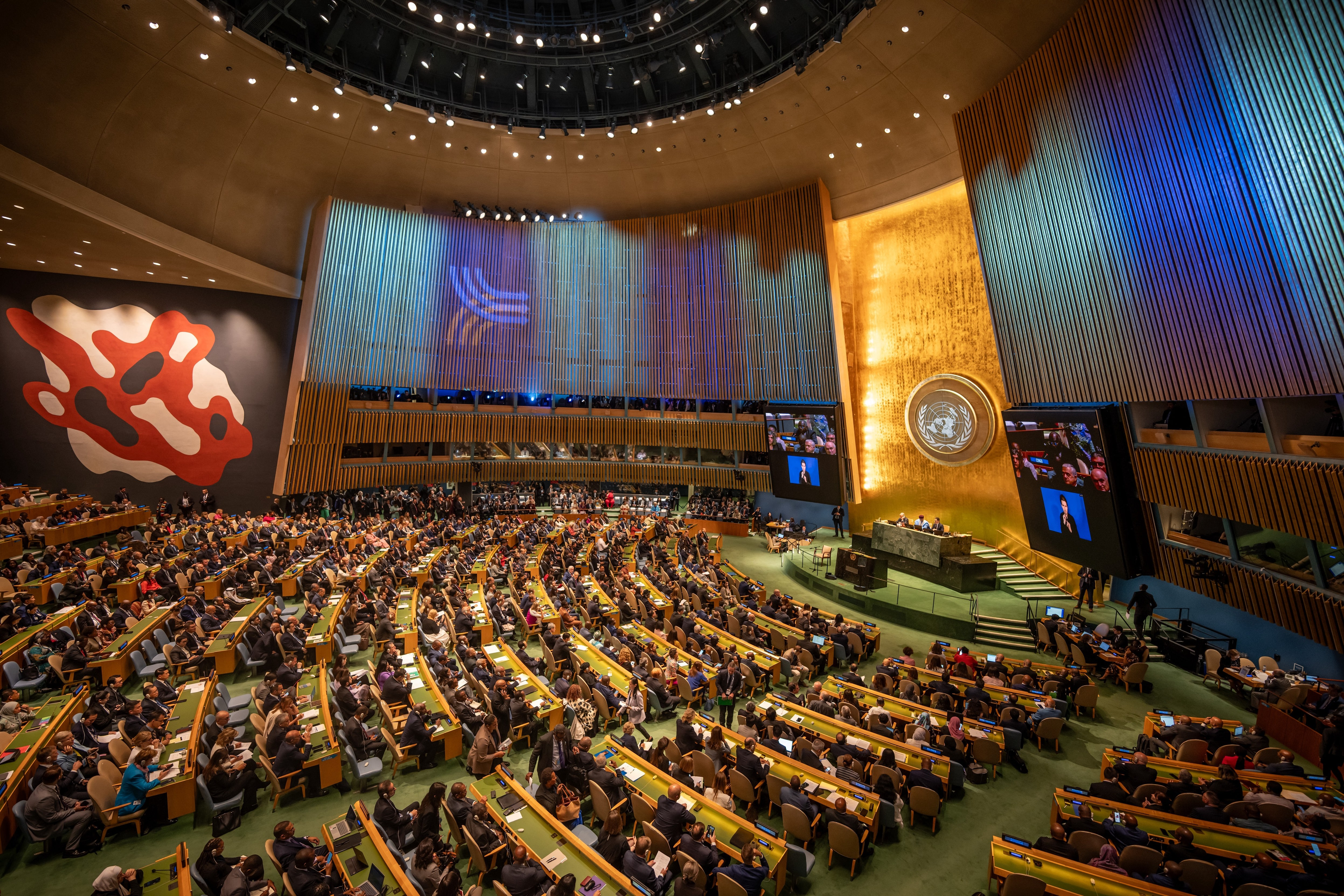
The United Nations General Assembly adopted a historic “Pact for the Future” on Sunday, marking a significant milestone toward enhanced global cooperation. U.N. Secretary-General Antonio Guterres hailed the agreement as a “step-change towards more effective, inclusive, networked multilateralism,” aimed at addressing the world’s most pressing challenges. The pact, adopted without a vote at the start of the two-day Summit of the Future, is the result of nine months of intense negotiations.
Guterres emphasized the urgency of the pact, stating, “We are here to bring multilateralism back from the brink.” He has long advocated for the summit and the agreement, which encompasses key themes such as peace and security, global governance, climate change, digital cooperation, human rights, gender equality, youth, and future generations. The pact includes 56 broad actions that nations have committed to implementing.
Why is it important?
The “Pact for the Future” is a timely response to mounting global crises that demand stronger multilateralism and U.N. reform. It focuses on reinforcing the multilateral system, with the United Nations and its Charter at its core, ensuring that international institutions remain fit for purpose in a rapidly changing world. The pact also includes a framework for responsible and sustainable digital cooperation, reflecting the increasing importance of technology governance.
Key Quotes from the Pact for the Future:
“We recognize that the multilateral system and its institutions, with the United Nations and its Charter at the centre, must be strengthened to keep pace with a changing world. They must be fit for the present and the future – effective and capable, prepared for the future, just, democratic, equitable and representative of today’s world, inclusive, interconnected and financially stable.
“Today, we pledge a new beginning in multilateralism. The actions in this Pact aim to ensure that the United Nations and other key multilateral institutions can deliver a better future for people and planet, enabling us to fulfil our existing commitments while rising to new and emerging challenges and opportunities.”
Context:
Global challenges such as ongoing wars in Ukraine, Gaza, and Sudan, insufficient climate change mitigation efforts, growing national debt issues, and rapid technological advancements without adequate governance have underscored the need for U.N. reform and a reimagined global cooperation framework.
Despite widespread support for the pact, Russia’s Deputy Foreign Affairs Minister Sergey Vershinin criticized the negotiations and the adoption of the agreement. Russia’s attempt to include an amendment—backed by countries like North Korea, Syria, Nicaragua, Belarus, and Iran—failed. The amendment sought to explicitly state that “the United Nations and its system shall not intervene in matters which are essentially within the domestic jurisdiction of any state.”